It has been a couple days, but I want to say something about the death of Stanley Cavell. He was, as I have said before, near and dear to my film loving heart. He was formative for me, along with Sarris and Ray Carney and Audie Bock, one of the critics who formed how I looked at and thought about films. But he was also probably definitive - one of the critics who became a constant touchstone for how I thought about film - Cavell and Bordwell, Burch, Kracauer, Pasolini.... Everything I saw, I filtered through Cavell - every comedy and melodrama at least, and those are, in the end, my favorite types of films. He was an inspiring critic, and he was a superb writer. A philosopher and a film writer, an academic - that can lead into some dark corners in the world of prose - but Cavell was very readable, without sacrificing any of his ideas. He makes sense of films he talked about in a way almost no other critics did.
Also part of one of those fun days you get in places like Cambridge. There was a night, a dozen years or so ago, when the Harvard Film Archive showed three Laura Mulvey shorts, with Mulvey speaking - and the Brattle was showing a Barbara Stanwyck double bill, Baby Face and Night Nurse, and Cavell was in the audience. Ah, the missed opportunities, I thought then.... I am lucky, too, that I did hear Cavell speaks couple times - an essay on O Brother Where Art Thou, for instance, a film he properly believed was a masterpiece. Well.
Cavell was one of the best. I will miss him, and continue to treasure his work.
Showing posts with label criticism. Show all posts
Showing posts with label criticism. Show all posts
Sunday, June 24, 2018

Thursday, April 04, 2013
Roger Ebert
I imagine every film blogger will write something about Mr. Ebert's passing. (I suppose as it happens that included Roger Ebert himself.) What can I add? Well - that, for me at least, it is right that the internet be full of Ebert today. I was not a fan of his before the internet. I watched Siskel and Ebert on TV, fairly faithfully at times, especially when it was on PBS, and the first few years afterwards - but stopped somewhere in the late 80s. Sometime after Blue Velvet came out - an important point. I remember that episode - I remember being somewhat awed by the clips from the film. I had to see it; I did; I loved it. It is ironic, because Ebert hated it - and when I read his review of it, in one of his books - it soured me completely on Ebert. Blue Velvet was one of the films that made a real film lover out of me - and he was on the wrong side.
So I put him down as a middlebrow bore, a TV personality whose influence came from the fact that everyone had heard of him. It didn't help that I came across something he wrote against Kiarostami in the late 90s - by which time I was eye-deep in art films, and loved Iranian films. But -
The internet happened. Ebert's reviews showed up on the web. You could find them and read them. And this is the thing: once I read Ebert, I understood Ebert. I didn't always share his taste, and I have too say - for a first rate critic, he screwed up more details in films than anyone I know of... But almost no one, and certainly no popular, mainstream film reviewers, could match his ease with the language - and none of them could get their personalities into their prose like he could. And - none of them had his kind of personality, his generosity, curiosity, enthusiasm for film. Though even there - I found that though I came to respect his film reviews (they form a kind of baseline - when I check a films reviews, I always check his - they are a kind of baseline for opinion, and they always give you an idea of what the film is like), what I really loved were his other writings. Essays, on films or other subjects - the kinds of memoirs he has been writing in the last few years - blog posts - I found as his focus broadened, his best qualities were more and more evident. He's a solid reviewer, a decent critic - he's obviously a profoundly important figure in the film world - but he was a genuinely outstanding writer.
I will end with this. I saw him once, at Million Year Picnic, a comic book store in Harvard Square. He was with Andy Ihnatko, a computer writer - they were talking about Love and Rockets, leafing through the books. I didn't bother them - may have nodded as I passed them, on the way to buy whatever I was buying at the time (probably something like Richard Sala or Julie Doucet, this being the late 90s, and that's what I remember reading then) - but it made me very happy. Maybe that's when I became a fan - if he liked the Brothers Hernandez, I could forgive him for hating Blue Velvet. In any case - the world will be poorer without him.
So I put him down as a middlebrow bore, a TV personality whose influence came from the fact that everyone had heard of him. It didn't help that I came across something he wrote against Kiarostami in the late 90s - by which time I was eye-deep in art films, and loved Iranian films. But -
The internet happened. Ebert's reviews showed up on the web. You could find them and read them. And this is the thing: once I read Ebert, I understood Ebert. I didn't always share his taste, and I have too say - for a first rate critic, he screwed up more details in films than anyone I know of... But almost no one, and certainly no popular, mainstream film reviewers, could match his ease with the language - and none of them could get their personalities into their prose like he could. And - none of them had his kind of personality, his generosity, curiosity, enthusiasm for film. Though even there - I found that though I came to respect his film reviews (they form a kind of baseline - when I check a films reviews, I always check his - they are a kind of baseline for opinion, and they always give you an idea of what the film is like), what I really loved were his other writings. Essays, on films or other subjects - the kinds of memoirs he has been writing in the last few years - blog posts - I found as his focus broadened, his best qualities were more and more evident. He's a solid reviewer, a decent critic - he's obviously a profoundly important figure in the film world - but he was a genuinely outstanding writer.
I will end with this. I saw him once, at Million Year Picnic, a comic book store in Harvard Square. He was with Andy Ihnatko, a computer writer - they were talking about Love and Rockets, leafing through the books. I didn't bother them - may have nodded as I passed them, on the way to buy whatever I was buying at the time (probably something like Richard Sala or Julie Doucet, this being the late 90s, and that's what I remember reading then) - but it made me very happy. Maybe that's when I became a fan - if he liked the Brothers Hernandez, I could forgive him for hating Blue Velvet. In any case - the world will be poorer without him.
Thursday, February 28, 2013
Donald Richie Appreciation
I am sorry to say that a month into my resolution to write Favorite Director post every month, I am already off track. I don't have any good reasons - at least I can come up with a decent substitute though. Donald Richie's death is important to note. He was a giant, obviously, in the process of bringing Japanese films to the United States - opening for this country what I have to consider one of the three truly consistently great film cultures (along with the US and France.) He championed Japanese films, he wrote about them, providing excellent introductions to a number of the most important filmmakers - in the age of DVDs, providing the voice for many commentaries on Japanese films. I am fairly certain that he would have been the first writer I read on Japanese films, and always there as a guide. He was not, I have to admit, the most important critic of Japanese films I read - I was much more influenced by reading Audie Bock and Noel Burch - but he was still very important to me, as well as crucial to the world of film.
My favorite of Richie's books was, in fact, The Japanese Film - I found a used copy of the 1959 edition, and read it with delight. It's a great book, well researched, well written, comprehensive, covering film as art as well as the history of the industry, which was very useful information. It reminded me of Andrew Sarris - sharing Sarris' auteurism, and willing to do the work, seeing the films, tracking down the industrial information (something Sarris did less of, but is a big part of this one.) A very useful reference. And a fascinating document, especially that 1959 edition - that puts it right on the cusp of something. It's right on the edge of the new wave revolution, well into the critical part of the change - by then, the French had established a lot of the premises of the new wave: championing directors, genre films, pictorialism, realism, trash (all at the same time) - elements that seem to be just outside Richie and Anderson's book. You can see too that the critical divisions that would form over Japanese films were appearing. The French had formed opinions by then, based, I fear, on a very scant exposure to Japanese films - they had already taken sides for Mizoguchi and against Kurosawa. Not so Richie and Anderson. They did not share the French passion for taking sides - they praised Mizoguchi and Kurosawa - and of course they had seen more than just the festival films, and knew, for example, that Ozu was in their class as well. But they were also pretty clearly in awe of Kurosawa.
Though what is even stranger to read now, after the fact, is the way they characterize the Japanese film industry in 1959. They lament that no new talents have emerged since Kurosawa and Kinoshita (and their treatment in Kinoshita is interesting itself; he has been somewhat forgotten, surpassed in reputation - certainly availability in the states - by the old guard (even Naruse), by Kobayashi and Ichikawa, by their successors - Oshima and Imamura, even Shinoda, Tesugahara, and Suzuki, are all far more available.) They lament that the system does not seem likely to produce any new talent soon - that it is stagnating - that there have been no more movements lately. All this is in 1959 - and 1960 saw 3 revolutionary Oshima films, a couple Yoshida films, Pigs and Battleships came out in 61, etc. The 60s were a burst of energy - the Ofuna new wave - Imamura, the revitalization of some of the older directors in response to this - an increased sense of command by some of the directors they mention (Ichikawa and Kobayashi especially) - they said things in 1959 that by 1961 would sound insane.
But thinking about this - another superb book on Japanese film, Mitsuhiro Yoshimoto's Kurosawa book, suggests that the discovery of Japanese film in Europe and America begat film studies as a discipline. It showed a mature industry/art that existed outside western culture - that could not be studied along with Welles or Godard without positing a different way of studying film than through culture. This was, you could say, the time when film had to be taken seriously as an art - treated, in fact, as an independent art, the way music or literature or theater were. Japanese film was a surprise - it showed a different way of doing things, though not unrecognizable - it certainly fit the theories of people at the time - Mizoguchi was tailor made for auteurists. So was Ozu, when they found him. But maybe even more than this - the attention given to Japanese films in the west was reciprocated by attention to western films (and theorists) in Japan. These things indicated an exchange of information between Japan and the rest of the world - an exchange going both ways. So while in 1959 the Japanese filmmaking system seemed increasingly static - bureaucratic, commercial, slow to change, with no way out of the cycle it was in - the mere presence of Americans writing about Japan indicates contact with the rest of the world - and Japanese were reading Americans. And while it is true that Ofuna new wave came out of itself, without a lot of push from the west (Oshima and Imamura and others were independent and tough and had their own ideas) - but they were able to piggy back what they did on the French new wave (they stole the word!); they did what the French did - they started theorizing their work. They connected what they were doing to the rest of the world.
And that brings us back to where we started - because Donald Richie was as important as one man could possibly be in making that connection.
And now? in his honor - and since this is, in fact, meant as a kind of series of lists - here is a list - the 10 Best Japanese films... sort of. I limited myself to one per director, to get past Ozu, which is always a challenge....
1. Early Summer - Ozu
2. Seven Samurai - Kurosawa Akira
3. The Pornographers - Imamura
4. Ugetsu Monagatari - Mizoguchi
5. Late Chrysanthemums - Naruse
6. Fires on the Plain - Ichikawa
7. Ceremony - Oshima
8. The Emperor's Naked Army Marches on - Hara
9. Charisma - Kurosawa Kiyoshi
10. Fighting Elegy - Suzuki
My favorite of Richie's books was, in fact, The Japanese Film - I found a used copy of the 1959 edition, and read it with delight. It's a great book, well researched, well written, comprehensive, covering film as art as well as the history of the industry, which was very useful information. It reminded me of Andrew Sarris - sharing Sarris' auteurism, and willing to do the work, seeing the films, tracking down the industrial information (something Sarris did less of, but is a big part of this one.) A very useful reference. And a fascinating document, especially that 1959 edition - that puts it right on the cusp of something. It's right on the edge of the new wave revolution, well into the critical part of the change - by then, the French had established a lot of the premises of the new wave: championing directors, genre films, pictorialism, realism, trash (all at the same time) - elements that seem to be just outside Richie and Anderson's book. You can see too that the critical divisions that would form over Japanese films were appearing. The French had formed opinions by then, based, I fear, on a very scant exposure to Japanese films - they had already taken sides for Mizoguchi and against Kurosawa. Not so Richie and Anderson. They did not share the French passion for taking sides - they praised Mizoguchi and Kurosawa - and of course they had seen more than just the festival films, and knew, for example, that Ozu was in their class as well. But they were also pretty clearly in awe of Kurosawa.
Though what is even stranger to read now, after the fact, is the way they characterize the Japanese film industry in 1959. They lament that no new talents have emerged since Kurosawa and Kinoshita (and their treatment in Kinoshita is interesting itself; he has been somewhat forgotten, surpassed in reputation - certainly availability in the states - by the old guard (even Naruse), by Kobayashi and Ichikawa, by their successors - Oshima and Imamura, even Shinoda, Tesugahara, and Suzuki, are all far more available.) They lament that the system does not seem likely to produce any new talent soon - that it is stagnating - that there have been no more movements lately. All this is in 1959 - and 1960 saw 3 revolutionary Oshima films, a couple Yoshida films, Pigs and Battleships came out in 61, etc. The 60s were a burst of energy - the Ofuna new wave - Imamura, the revitalization of some of the older directors in response to this - an increased sense of command by some of the directors they mention (Ichikawa and Kobayashi especially) - they said things in 1959 that by 1961 would sound insane.
But thinking about this - another superb book on Japanese film, Mitsuhiro Yoshimoto's Kurosawa book, suggests that the discovery of Japanese film in Europe and America begat film studies as a discipline. It showed a mature industry/art that existed outside western culture - that could not be studied along with Welles or Godard without positing a different way of studying film than through culture. This was, you could say, the time when film had to be taken seriously as an art - treated, in fact, as an independent art, the way music or literature or theater were. Japanese film was a surprise - it showed a different way of doing things, though not unrecognizable - it certainly fit the theories of people at the time - Mizoguchi was tailor made for auteurists. So was Ozu, when they found him. But maybe even more than this - the attention given to Japanese films in the west was reciprocated by attention to western films (and theorists) in Japan. These things indicated an exchange of information between Japan and the rest of the world - an exchange going both ways. So while in 1959 the Japanese filmmaking system seemed increasingly static - bureaucratic, commercial, slow to change, with no way out of the cycle it was in - the mere presence of Americans writing about Japan indicates contact with the rest of the world - and Japanese were reading Americans. And while it is true that Ofuna new wave came out of itself, without a lot of push from the west (Oshima and Imamura and others were independent and tough and had their own ideas) - but they were able to piggy back what they did on the French new wave (they stole the word!); they did what the French did - they started theorizing their work. They connected what they were doing to the rest of the world.
And that brings us back to where we started - because Donald Richie was as important as one man could possibly be in making that connection.
And now? in his honor - and since this is, in fact, meant as a kind of series of lists - here is a list - the 10 Best Japanese films... sort of. I limited myself to one per director, to get past Ozu, which is always a challenge....
1. Early Summer - Ozu
2. Seven Samurai - Kurosawa Akira
3. The Pornographers - Imamura
4. Ugetsu Monagatari - Mizoguchi
5. Late Chrysanthemums - Naruse
6. Fires on the Plain - Ichikawa
7. Ceremony - Oshima
8. The Emperor's Naked Army Marches on - Hara
9. Charisma - Kurosawa Kiyoshi
10. Fighting Elegy - Suzuki
Tuesday, August 07, 2012
Sight & Sound Poll Reflections
It's been a week or so since Sight & Sound released the attest iteration of their Greatest Films poll. The internets are full of commentary, and I can't help joining in - not that I have anything profound to say about it...
The big story, I guess, is that Vertigo replaced Citizen Kane at the top, a position Welles had held since 1962. I suppose that's a big deal, though it's not exactly surprising - Vertigo has been on the rise in the last couple decades, especially since its big restoration - it got to #2 last time out, and now is over the hump... It is a bit odd, I suppose - me, personally, I like Vertigo better (it's top 10 for me, too), but somehow, Citizen Kane seems a more likely film to top a list like this. But there you have it. Now Tokyo Story - well - hanging on to #3, and this time around, the directors put it at the top of their list - that's a choice I can endorse! Though, being a bit perverse, it's not the Ozu film I would put in the top 10...
There are other changes on these lists - the critics have added a third silent film to their top ten, replacing the musical, at that. And switched out the second silent film - Battleship Potemkin gone, Man With the Movie Camera in - an interesting change itself. Getting past the top 10, the top 50 films are reasonable enough. I suppose if you were of a mind you could find plenty to discuss, in perceived omissions and bad habits by the voters: not enough comedy; only one musical; the waxing and waning of reputations - one Bergman in that top 50? one Lang, and not the Lang(s) many of us Lang enthusiasts would pick? Chaplin reduced to clinging to the 50th spot; no Hawks? Rohmer? Altman? Griffith? Herzog? Or the positives - the newer, or more challenging films that did make it - Satantango, Jeanne Dielman, Mulholland Drive, In the Mood for Love, La Jetee, Close Up; the fact that Godard tops all directors with four, including Histoire(s) du Cinema. These last choices suggest that the expanded voting bloc might have had an affect - Jonathan Rosenbaum raises (or quotes Nicole Brenez raising) the point that the increased film teachers might have helped the more experimental films, and maybe pushed that third silent higher... could be.
Still - there remains a certain air of old hat about it all - I miss the days when a 2 year old film could get to #2, or a 4 year old film to #1. It is strange - you do hear people go on about new films as if they were the culmination of the promise of the medium - you can find plenty of hyperbolic praise for Tree of Life, to name one - but that kind of talk doesn't seem to translate into votes these days. I find this a bit fascinating - why has this list gotten so stuck?
I have theories... 1) film history is twice as long now as when this list started. There are that many more films to consider. The top 50 now is about the equivalent of the top 10 in 1952. 2) Technology - in 1952, it was very hit or miss what you could actually see; now, in 2012, you can see just about everything. And that means you are voting against the whole of film history, and you can vote against all of it fresh - you are able to see anything you would consider, rather than vote against your memory of something you saw 20 years ago. 3) And then - I think voters do put value on novelty - on being the first to do something. To do something new; to embody an emerging synthesis; to break with conventions - or all at once (like Citizen Kane). Later films fight against film history - it is harder all the time to break with film history, harder to seem new - harder, probably, to convince viewers that they are seeing something new. Voters vote for the first film(s) to do something - and they vote for the films that are accepted as being the first to do it. 4) And one more idea - that the film culture has changed - that viewers no longer expect to see anything new, and don't value it the same.
The upshot is that the culture is mature - that it is easier to view the sweep of history as one thing. And that there is no longer the pressures for novelty - no one is expected to reinvent the medium, viewers don't value innovation the way they used to. When films do things differently - Inland Empire, Uncle Boonmee, Tree of Life, say - critics find it easier to assimilate them to film history - even if that means, to a tradition of novelty, or something strange like that. I don't think this is as much as change in how films work as it seems - films like Citizen Kane were not really reinventing film, you could see its antecedents and influences then - but there is an assumption that films in the 30s and 40s were still inventing the medium, and films now are rearranging the elements of an established form. Taking voters back to the notion of being the first - reinventing the medium now is old hat - it's been done so many times before.
So to end - people come up with ideas about how to get fresher films on the list - one I like, practiced by Rosenbaum (per his post on the list), cited by Jim Emerson, suggested by Kristen Thompson, is to make the vote something like a hall of fame. You vote, you have a top 10 - and those films are no longer eligible to be voted for. That would be a cool list to see maintained - but the truth is, there's a reason people care about Sight and Sound's list. The history of the list making matters - it is great fun comparing this year's choices with all the past ones - watching tastes shift. It's also true, and less admirable, that the lists themselves condition subsequent lists - people vote for (or against) Citizen Kane because it has been number one (and isn't anymore.) But that too is part of the interest - you have to weigh this decade's choices against all those previous polls. I can't wait to see what's on 2022's list...
Finally - the lists - and mine. First the critics:
1) "Vertigo" (Alfred Hitchcock, 1958)
2) "Citizen Kane" (Orson Welles, 1941)
3) "Tokyo Story" (Yasujiro Ozo, 1953)
4) "Rules of the Game" (Jean Renoir, 1939)
5) "Sunrise" (F.W. Murnau, 1927)
6) "2001: A Space Odyssey" (Stanley Kubrick, 1968)
7) "The Searchers" (John Ford, 1956)
8) "Man with a Movie Camera" (Dziga Vertov, 1929)
9) "The Passion of Joan of Arc" (Carl Theodor Dreyer, 1928)
10) "8 1/2" (Federico Fellini, 1963)
The directors:
1) "Tokyo Story" (Ozu, 1953)
2) "2001: A Space Odyssey" (Kubrick, 1968), "Citizen Kane" (Welles, 1941) [tie]
4) "8 ½" (Fellini, 1963)
5) "Taxi Driver" (Martin Scorsese, 1980)
6) "Apocalypse Now" (Francis Ford Coppola, 1979)
7) "The Godfather" (Coppola, 1972), "Vertigo" (Hitchcock, 1958) [tie]
9) "Mirror" (Andrei Tarkovsky, 1974)
10) "Bicycle Thieves" (Vittorio De Sica, 1948)
And finally - all this poll talk, and all this comparing and considering, makes it impossible not to think about what I would have voted for. (The House Next Door, at Slant, is running just such a series with their writers...) And as I have not posted anything like a top ten of my own since 2007 - why not? and since I posted a list of my own (on AOL, where I did most of my film arguing back in the day) in 2002 - it is a chance to consider what might have changed.
2012:
1. M - Fritz Lang
2. It's a Wonderful Life - Frank Capra
3. Rules of the Game - Renoir
4. Early Summer - Yasujiro Ozu
5. McCabe and Mrs. Miller - Robert Altman
6. The General - Buster Keaton & Clyde Bruckman
7. The Maltese Falcon - John Huston
8. Celine and Julie Go Boating - Jacques Rivette (as expected - seeing it again this weekend pushed it way up. Seeing it twice, actually - nothing else seemed necessary, so I went Saturday and Sunday.)
9. Late Spring - Ozu
10. Vertigo - Hitckcock
in 2002:
1 It’s a Wonderful Life
2 M
3 Rules of the Game
4 Mr Smith Goes to Washington
5 McCabe and Mrs Miller
6 Pierrot le Fou
7 The General
8 Early Summer
9 The Maltese Falcon
10 Vertigo
There are not a lot of changes - Godard and the second Capra are off, to Rivette and the second Ozu. Those are pretty arbitrary selections, though. That 2002 list lasted a long time, actually - most of it was there in 97 or 98; Early Summer got in somewhere in that period (about the time I saw it in a movie theater, which I think was around 2000), the Godard slot fluctuated for a long time between Pierrot and Vivre Sa Vie - but - I didn't play around with it much for a long time. When I did - I don't know... I am very much aware of how arbitrary and pointless such listings are. But it still - maps something, in what I value in films. What I am thinking about, my experiences. I think, at some level, letting your experiences, your momentary obsessions and what not turn up in things like this has a point. The differences are small - though I know that M's return to the top is a result of seeing a bunch of German films, and Lang, reading and writing about Lang and German films - Rivette's appearance reflects the absolute joy of discovering him in the last 5 years... and so on. So - there you have it.
The big story, I guess, is that Vertigo replaced Citizen Kane at the top, a position Welles had held since 1962. I suppose that's a big deal, though it's not exactly surprising - Vertigo has been on the rise in the last couple decades, especially since its big restoration - it got to #2 last time out, and now is over the hump... It is a bit odd, I suppose - me, personally, I like Vertigo better (it's top 10 for me, too), but somehow, Citizen Kane seems a more likely film to top a list like this. But there you have it. Now Tokyo Story - well - hanging on to #3, and this time around, the directors put it at the top of their list - that's a choice I can endorse! Though, being a bit perverse, it's not the Ozu film I would put in the top 10...
There are other changes on these lists - the critics have added a third silent film to their top ten, replacing the musical, at that. And switched out the second silent film - Battleship Potemkin gone, Man With the Movie Camera in - an interesting change itself. Getting past the top 10, the top 50 films are reasonable enough. I suppose if you were of a mind you could find plenty to discuss, in perceived omissions and bad habits by the voters: not enough comedy; only one musical; the waxing and waning of reputations - one Bergman in that top 50? one Lang, and not the Lang(s) many of us Lang enthusiasts would pick? Chaplin reduced to clinging to the 50th spot; no Hawks? Rohmer? Altman? Griffith? Herzog? Or the positives - the newer, or more challenging films that did make it - Satantango, Jeanne Dielman, Mulholland Drive, In the Mood for Love, La Jetee, Close Up; the fact that Godard tops all directors with four, including Histoire(s) du Cinema. These last choices suggest that the expanded voting bloc might have had an affect - Jonathan Rosenbaum raises (or quotes Nicole Brenez raising) the point that the increased film teachers might have helped the more experimental films, and maybe pushed that third silent higher... could be.
Still - there remains a certain air of old hat about it all - I miss the days when a 2 year old film could get to #2, or a 4 year old film to #1. It is strange - you do hear people go on about new films as if they were the culmination of the promise of the medium - you can find plenty of hyperbolic praise for Tree of Life, to name one - but that kind of talk doesn't seem to translate into votes these days. I find this a bit fascinating - why has this list gotten so stuck?
I have theories... 1) film history is twice as long now as when this list started. There are that many more films to consider. The top 50 now is about the equivalent of the top 10 in 1952. 2) Technology - in 1952, it was very hit or miss what you could actually see; now, in 2012, you can see just about everything. And that means you are voting against the whole of film history, and you can vote against all of it fresh - you are able to see anything you would consider, rather than vote against your memory of something you saw 20 years ago. 3) And then - I think voters do put value on novelty - on being the first to do something. To do something new; to embody an emerging synthesis; to break with conventions - or all at once (like Citizen Kane). Later films fight against film history - it is harder all the time to break with film history, harder to seem new - harder, probably, to convince viewers that they are seeing something new. Voters vote for the first film(s) to do something - and they vote for the films that are accepted as being the first to do it. 4) And one more idea - that the film culture has changed - that viewers no longer expect to see anything new, and don't value it the same.
The upshot is that the culture is mature - that it is easier to view the sweep of history as one thing. And that there is no longer the pressures for novelty - no one is expected to reinvent the medium, viewers don't value innovation the way they used to. When films do things differently - Inland Empire, Uncle Boonmee, Tree of Life, say - critics find it easier to assimilate them to film history - even if that means, to a tradition of novelty, or something strange like that. I don't think this is as much as change in how films work as it seems - films like Citizen Kane were not really reinventing film, you could see its antecedents and influences then - but there is an assumption that films in the 30s and 40s were still inventing the medium, and films now are rearranging the elements of an established form. Taking voters back to the notion of being the first - reinventing the medium now is old hat - it's been done so many times before.
So to end - people come up with ideas about how to get fresher films on the list - one I like, practiced by Rosenbaum (per his post on the list), cited by Jim Emerson, suggested by Kristen Thompson, is to make the vote something like a hall of fame. You vote, you have a top 10 - and those films are no longer eligible to be voted for. That would be a cool list to see maintained - but the truth is, there's a reason people care about Sight and Sound's list. The history of the list making matters - it is great fun comparing this year's choices with all the past ones - watching tastes shift. It's also true, and less admirable, that the lists themselves condition subsequent lists - people vote for (or against) Citizen Kane because it has been number one (and isn't anymore.) But that too is part of the interest - you have to weigh this decade's choices against all those previous polls. I can't wait to see what's on 2022's list...
Finally - the lists - and mine. First the critics:
1) "Vertigo" (Alfred Hitchcock, 1958)
2) "Citizen Kane" (Orson Welles, 1941)
3) "Tokyo Story" (Yasujiro Ozo, 1953)
4) "Rules of the Game" (Jean Renoir, 1939)
5) "Sunrise" (F.W. Murnau, 1927)
6) "2001: A Space Odyssey" (Stanley Kubrick, 1968)
7) "The Searchers" (John Ford, 1956)
8) "Man with a Movie Camera" (Dziga Vertov, 1929)
9) "The Passion of Joan of Arc" (Carl Theodor Dreyer, 1928)
10) "8 1/2" (Federico Fellini, 1963)
The directors:
1) "Tokyo Story" (Ozu, 1953)
2) "2001: A Space Odyssey" (Kubrick, 1968), "Citizen Kane" (Welles, 1941) [tie]
4) "8 ½" (Fellini, 1963)
5) "Taxi Driver" (Martin Scorsese, 1980)
6) "Apocalypse Now" (Francis Ford Coppola, 1979)
7) "The Godfather" (Coppola, 1972), "Vertigo" (Hitchcock, 1958) [tie]
9) "Mirror" (Andrei Tarkovsky, 1974)
10) "Bicycle Thieves" (Vittorio De Sica, 1948)
And finally - all this poll talk, and all this comparing and considering, makes it impossible not to think about what I would have voted for. (The House Next Door, at Slant, is running just such a series with their writers...) And as I have not posted anything like a top ten of my own since 2007 - why not? and since I posted a list of my own (on AOL, where I did most of my film arguing back in the day) in 2002 - it is a chance to consider what might have changed.
2012:
1. M - Fritz Lang
2. It's a Wonderful Life - Frank Capra
3. Rules of the Game - Renoir
4. Early Summer - Yasujiro Ozu
5. McCabe and Mrs. Miller - Robert Altman
6. The General - Buster Keaton & Clyde Bruckman
7. The Maltese Falcon - John Huston
8. Celine and Julie Go Boating - Jacques Rivette (as expected - seeing it again this weekend pushed it way up. Seeing it twice, actually - nothing else seemed necessary, so I went Saturday and Sunday.)
9. Late Spring - Ozu
10. Vertigo - Hitckcock
in 2002:
1 It’s a Wonderful Life
2 M
3 Rules of the Game
4 Mr Smith Goes to Washington
5 McCabe and Mrs Miller
6 Pierrot le Fou
7 The General
8 Early Summer
9 The Maltese Falcon
10 Vertigo
There are not a lot of changes - Godard and the second Capra are off, to Rivette and the second Ozu. Those are pretty arbitrary selections, though. That 2002 list lasted a long time, actually - most of it was there in 97 or 98; Early Summer got in somewhere in that period (about the time I saw it in a movie theater, which I think was around 2000), the Godard slot fluctuated for a long time between Pierrot and Vivre Sa Vie - but - I didn't play around with it much for a long time. When I did - I don't know... I am very much aware of how arbitrary and pointless such listings are. But it still - maps something, in what I value in films. What I am thinking about, my experiences. I think, at some level, letting your experiences, your momentary obsessions and what not turn up in things like this has a point. The differences are small - though I know that M's return to the top is a result of seeing a bunch of German films, and Lang, reading and writing about Lang and German films - Rivette's appearance reflects the absolute joy of discovering him in the last 5 years... and so on. So - there you have it.
Wednesday, June 20, 2012
Andrew Sarris
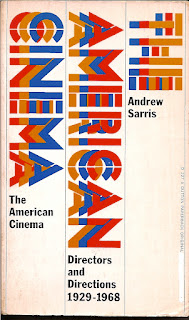
Andrew Sarris has died. I am not alone in considering this to be holy writ:
I read that devotedly, especially in the early days of my full scale cinephilia, generally taking Sarris' judgments as starting points for my own, though coming to an understanding of my own tastes and ideas about films quite often by way of arguing with him. He wrote in a way that invited argument, I think - stating a position, but in a way that left of room for counter positions, that were, themselves, easier to state because of the clarity with which he made his case. It felt that way to me. I always found his opinions generous and open, and grounded in curiosity and joy in watching films - he was a perfect guide. It helped that his tastes and mine ran together - but like I say, even when they didn't (and I doubted from the start his assessment of people like Frank Capra, John Huston, Billy Wilder - especially Capra, who I believed then and now was the greatest American filmmaker of them all), I found his case against them necessary to consider. And so it goes.
That's just me - but I know enough people who could probably say something close to the same (my long time internet friend Joseph B, for example...). Whether The American Cinema, or his reviews, or the sum total of his writing - he has been as influential as critics come.
And one more thing - that book: that is a cover for the ages. Everyone seems to be posting a scan or picture or something of their copy - that's what you see above. They all seem to be similar - a bit battered, discolored, a book likely to have spent a fair amount of time stuck in back pockets and such (it's the perfect size). Most of the pictures are straight on, like mine, which perhaps obscures the condition of the pages - downturned and stained and stuck through with bookmarks (there's a stub from Kenneth Brannagh's Hamlet, 10:00 AM show, 1/26/97, $4.75 (matinee price), marking the Preston Sturges entry, in mine)... It is a thing of beauty, and one as much used as any book I own.

I read that devotedly, especially in the early days of my full scale cinephilia, generally taking Sarris' judgments as starting points for my own, though coming to an understanding of my own tastes and ideas about films quite often by way of arguing with him. He wrote in a way that invited argument, I think - stating a position, but in a way that left of room for counter positions, that were, themselves, easier to state because of the clarity with which he made his case. It felt that way to me. I always found his opinions generous and open, and grounded in curiosity and joy in watching films - he was a perfect guide. It helped that his tastes and mine ran together - but like I say, even when they didn't (and I doubted from the start his assessment of people like Frank Capra, John Huston, Billy Wilder - especially Capra, who I believed then and now was the greatest American filmmaker of them all), I found his case against them necessary to consider. And so it goes.
That's just me - but I know enough people who could probably say something close to the same (my long time internet friend Joseph B, for example...). Whether The American Cinema, or his reviews, or the sum total of his writing - he has been as influential as critics come.
And one more thing - that book: that is a cover for the ages. Everyone seems to be posting a scan or picture or something of their copy - that's what you see above. They all seem to be similar - a bit battered, discolored, a book likely to have spent a fair amount of time stuck in back pockets and such (it's the perfect size). Most of the pictures are straight on, like mine, which perhaps obscures the condition of the pages - downturned and stained and stuck through with bookmarks (there's a stub from Kenneth Brannagh's Hamlet, 10:00 AM show, 1/26/97, $4.75 (matinee price), marking the Preston Sturges entry, in mine)... It is a thing of beauty, and one as much used as any book I own.
Saturday, February 13, 2010
Things to Read and things to Argue About
Hello world - rather a lot going on in blogland this week, and coming up next week. The big event, I imagine, is the For the Love of Film: Film Preservation Blogathon - starting Sunday and running all week, hosted by Ferdy on Films and the Self-Styled Siren. It's a blogathon and a blog-a-thon - promising what looks like an overwhelming slate of writing on the subject, as well as providing direct support for the National Film Preservation Foundation. An important and fascinating topic - should be a good week of reading...
Meanwhile - Girish has another discussion of Auteurism at his blog - I'm not sure I can stand it. I can't even bring myself to read through it, to tell the truth. I run into an argument about auteurism every couple years somewhere - 2 years ago at Girish's blog, for instance - I can't muster any enthusiasm for another go... On the other hand, Girish posted an interesting question on Facebook yesterday - a question about the diegetic status of Fontaine's voiceover narration in Bresson's A Man Escaped. Is it diegetic or not? the consensus in the thread seems to be that since Fontaine is a character in the world of the film, his narration would be diegetic, even if displaced from the time of the images. Sounds good - though it strikes me that there could be times when you would want to distinguish between diegetic words, and diegetic sound - that is, between words (or perhaps the thoughts or meanings they express) that issue from within the depicted world - and sounds that, perhaps, do not exist in that world. I suppose the Bresson film is not the best example - but what about Joe Gillis' narration in Sunset Boulevard? the words seem to me to be diegetic enough, coming from a character in the film (even if he is dead as he says them) - but couldn't you say that the speech, the actual sounds of those words, don't exist in the real world of the film? Or other examples - Mark Whitacre's voiceover in The Informant! - or Takeshi Kinoshiro's character's words in Fallen Angels. Whitacre's voiceover is presented as his stream of consciousness, but the sounds - the spoken words - do not have the same reality that the dialogue has; Kinoshiro plays a mute - the words are, again, in his head (more narration after the fact - time and memory being a central theme in Wong Kar-wei's work), but never spoken - the words express diegetic thoughts, but the sounds of the words are not real in the fictional world. I'm not sure if diegetic/non-diegetic is the right distinction to make on this - but I think it is important to pay attention to the materiality of the sounds in a film, or the precise form words are given. Filmmakers play with these things, use them - think of how much Soderbergh gets out of the ways the voices in Whitacre's head interact with the words spoken in the film... This question threatens to keep expanding - like, what can you do with the different conventions for presenting a letter in a film? the paper and text on screen; the reader's voice reading (literally, or as voiceover); the writer's voice, the various tricks, like showing the writer writing and saying the words out loud... There's a lot there.
And one more bit of blog business - an interesting discussion springing up at Wonders in the Dark - Sam Juliano ponders the importance of professional criticism, and its relationship with amateur criticism - on the internet, particularly. The proximate cause was this post - a Why I Don't Like Citizen Kane essay by Stephen Russell-Gebbett. Both posts have garnered millions of comments, which makes adding anything to the fray pretty foolish... But, having read the two essays fairly carefully (and skimmed the comments), I can't help adding a word or two hundred.
First - it's a strange piece for Juliano to hang his complaint on - whether Mr. Russell-Gebbett is a professional or not, his post is a fairly serious attempt to make a case against Citizen Kane. The idea, the reasons, could well have been written by a professional - the prose even seems to be competent, careful, etc. - it rather undermines Juliano's point. As does the fact that Russell-Gebbett never says anything that would pass as an attack on professional criticism. He doesn't claim to be taking on the critical establishment, doesn't claim that he's as good as anyone else and just as entitled to his opinion, or any of the other myriad ways bloggers avoid accountability when these arguments crop up. (Maybe there's something like that in comments - I didn't see any in my scan of the comments, but maybe there's something there.) I'm not sure why Juliano attaches that particular set of arguments to Russell-Gebbett's post. (If anything, Juliano indulges in the professional's version of the duck and weave - appeals to authority, deference to authority - the critic's way of avoiding accountability.)
Second - one of the problems in debates like this is that the arguments tends to congeal around the question of whether professionalism makes you a better writer or critic - it doesn't. There is no reason why amateurs can't match professionals at this game, especially in blog sized posts. (And no lack of evidence that amateurs do just that.) It is true that professionals, on balance, are better writers and critics than amateurs - not because professionalism conveys authority so much as that ability tends to get people to be willing to pay you...
Which brings me to a third point, and one I don't see being made that much in this argument. What actually makes you a professional is not a paycheck, but an editor. And particularly, a professional editor. Professionalism is more a matter of credentials than anything else. For academics, the credentialing is explicit - you have to earn a degree, by proving to credentialed experts that you have mastered the field. It's not so defined for writing, but it really does amount to proving to someone that your work deserves to be published under their name. It's the editors that make the professional writer. And in practical terms, for telling the difference between professional and amateur writing online say - that's true for both senses of "editor" - editor as selector of the best work; editor in terms of crossing the t's and dotting the i's and making sure you don't use "barnstorm" when you mean "firestorm." (Not to pick on Mr. Juliano, but...) Professionalism, and whatever authority it conveys, depends on the matrix of professionals vouching for one another - a critics' value is determined by their being accepted and cited by other critics, and by knowledgeable readers.
That, I suppose, brings us around to the facts on the internet. The technology is changing: much of the discourse of professionalism is tied very closely to the technological fact of text being distributed through ink on paper. But text now is distributed almost as much through bits on screens as ink on paper, and the costs and labor and material involved is so different as to be impossible to compare. 20 years ago, if I wanted to play media critic, I might have printed this out and handed it around to my friends; 30 years ago I would have had to type it up and then xerox or mimeograph it. Now, I type it in blogger, hit publish and 20 or 30 people end up reading it before the day it out! a brave new world! But it is - the means of publication changes the dynamic between writer and editor - makes it possible for anyone to be their own editor, basically.
That, however, does not make all writing equal - what it does is create a problem - when anyone can publish more or less at will - how do we credential one another? One way, obviously, is through sites like The House Next Door - edited websites, that can vouch for the ability of the writers there. But they also provide a lot of links to blogs and sites that aren't professional in any meaningful sense - and provide a kind of endorsement of them, as well. But that's a different kind of endorsement, and implies a different kind of relationship among writers, readers, editors and the like. The internet does undo the hierarchical model of credentialing that editors provide - but that doesn't make all writing and criticism equal. Good writing is still good writing; good criticism is still good criticism. (And professionalism is no guarantee of good criticism - has everyone forgotten the Tom O'Neill's Sunrise article? He's a pro...) What I think it means is that "credentialing" becomes less formalized - it becomes a function of links, from people you trust to other people you trust - from good critics to other good critics, or maybe more precisely, from good readers to good writers...
I think there is too much attention paid to the internet as a means of publication, as an outlet for writers, and not enough to the ways the internet creates a network of readers - who then report on their reading to one another. I think this is a responsibility we need to pay more attention to - we need to be better readers, and to act as readers who can recommend strong (interesting, knowledgeable, creative, what have you) writing. I think perhaps people reading and writing on the internet need to pay more attention to the way that we are becoming collective editors. I don't know what will become of journalistic criticism, in its current form - I don't know if it will last very long. I think in fact, blogs and whatever sites carry on this kind of writing, might well absorb most of the functions of that kind of criticism. Indeed have - blogs now are as good a read as most professional reviewers, and often approach the quality of good film journals - though you have to wade through a lot more second rate stuff to find the good stuff. Not to mention the way blogs and Facebook and the like blend more or less serious film writing with all manner or fluff and all kinds of other writing... though for me, that very mixture of discourses is a feature of the medium, not a bug. It's one of the main attractions...
I better stop, before I start thinking about the future of academic criticism, and film books... cause that's a whole other set of questions, isn't it...
Meanwhile - Girish has another discussion of Auteurism at his blog - I'm not sure I can stand it. I can't even bring myself to read through it, to tell the truth. I run into an argument about auteurism every couple years somewhere - 2 years ago at Girish's blog, for instance - I can't muster any enthusiasm for another go... On the other hand, Girish posted an interesting question on Facebook yesterday - a question about the diegetic status of Fontaine's voiceover narration in Bresson's A Man Escaped. Is it diegetic or not? the consensus in the thread seems to be that since Fontaine is a character in the world of the film, his narration would be diegetic, even if displaced from the time of the images. Sounds good - though it strikes me that there could be times when you would want to distinguish between diegetic words, and diegetic sound - that is, between words (or perhaps the thoughts or meanings they express) that issue from within the depicted world - and sounds that, perhaps, do not exist in that world. I suppose the Bresson film is not the best example - but what about Joe Gillis' narration in Sunset Boulevard? the words seem to me to be diegetic enough, coming from a character in the film (even if he is dead as he says them) - but couldn't you say that the speech, the actual sounds of those words, don't exist in the real world of the film? Or other examples - Mark Whitacre's voiceover in The Informant! - or Takeshi Kinoshiro's character's words in Fallen Angels. Whitacre's voiceover is presented as his stream of consciousness, but the sounds - the spoken words - do not have the same reality that the dialogue has; Kinoshiro plays a mute - the words are, again, in his head (more narration after the fact - time and memory being a central theme in Wong Kar-wei's work), but never spoken - the words express diegetic thoughts, but the sounds of the words are not real in the fictional world. I'm not sure if diegetic/non-diegetic is the right distinction to make on this - but I think it is important to pay attention to the materiality of the sounds in a film, or the precise form words are given. Filmmakers play with these things, use them - think of how much Soderbergh gets out of the ways the voices in Whitacre's head interact with the words spoken in the film... This question threatens to keep expanding - like, what can you do with the different conventions for presenting a letter in a film? the paper and text on screen; the reader's voice reading (literally, or as voiceover); the writer's voice, the various tricks, like showing the writer writing and saying the words out loud... There's a lot there.
And one more bit of blog business - an interesting discussion springing up at Wonders in the Dark - Sam Juliano ponders the importance of professional criticism, and its relationship with amateur criticism - on the internet, particularly. The proximate cause was this post - a Why I Don't Like Citizen Kane essay by Stephen Russell-Gebbett. Both posts have garnered millions of comments, which makes adding anything to the fray pretty foolish... But, having read the two essays fairly carefully (and skimmed the comments), I can't help adding a word or two hundred.
First - it's a strange piece for Juliano to hang his complaint on - whether Mr. Russell-Gebbett is a professional or not, his post is a fairly serious attempt to make a case against Citizen Kane. The idea, the reasons, could well have been written by a professional - the prose even seems to be competent, careful, etc. - it rather undermines Juliano's point. As does the fact that Russell-Gebbett never says anything that would pass as an attack on professional criticism. He doesn't claim to be taking on the critical establishment, doesn't claim that he's as good as anyone else and just as entitled to his opinion, or any of the other myriad ways bloggers avoid accountability when these arguments crop up. (Maybe there's something like that in comments - I didn't see any in my scan of the comments, but maybe there's something there.) I'm not sure why Juliano attaches that particular set of arguments to Russell-Gebbett's post. (If anything, Juliano indulges in the professional's version of the duck and weave - appeals to authority, deference to authority - the critic's way of avoiding accountability.)
Second - one of the problems in debates like this is that the arguments tends to congeal around the question of whether professionalism makes you a better writer or critic - it doesn't. There is no reason why amateurs can't match professionals at this game, especially in blog sized posts. (And no lack of evidence that amateurs do just that.) It is true that professionals, on balance, are better writers and critics than amateurs - not because professionalism conveys authority so much as that ability tends to get people to be willing to pay you...
Which brings me to a third point, and one I don't see being made that much in this argument. What actually makes you a professional is not a paycheck, but an editor. And particularly, a professional editor. Professionalism is more a matter of credentials than anything else. For academics, the credentialing is explicit - you have to earn a degree, by proving to credentialed experts that you have mastered the field. It's not so defined for writing, but it really does amount to proving to someone that your work deserves to be published under their name. It's the editors that make the professional writer. And in practical terms, for telling the difference between professional and amateur writing online say - that's true for both senses of "editor" - editor as selector of the best work; editor in terms of crossing the t's and dotting the i's and making sure you don't use "barnstorm" when you mean "firestorm." (Not to pick on Mr. Juliano, but...) Professionalism, and whatever authority it conveys, depends on the matrix of professionals vouching for one another - a critics' value is determined by their being accepted and cited by other critics, and by knowledgeable readers.
That, I suppose, brings us around to the facts on the internet. The technology is changing: much of the discourse of professionalism is tied very closely to the technological fact of text being distributed through ink on paper. But text now is distributed almost as much through bits on screens as ink on paper, and the costs and labor and material involved is so different as to be impossible to compare. 20 years ago, if I wanted to play media critic, I might have printed this out and handed it around to my friends; 30 years ago I would have had to type it up and then xerox or mimeograph it. Now, I type it in blogger, hit publish and 20 or 30 people end up reading it before the day it out! a brave new world! But it is - the means of publication changes the dynamic between writer and editor - makes it possible for anyone to be their own editor, basically.
That, however, does not make all writing equal - what it does is create a problem - when anyone can publish more or less at will - how do we credential one another? One way, obviously, is through sites like The House Next Door - edited websites, that can vouch for the ability of the writers there. But they also provide a lot of links to blogs and sites that aren't professional in any meaningful sense - and provide a kind of endorsement of them, as well. But that's a different kind of endorsement, and implies a different kind of relationship among writers, readers, editors and the like. The internet does undo the hierarchical model of credentialing that editors provide - but that doesn't make all writing and criticism equal. Good writing is still good writing; good criticism is still good criticism. (And professionalism is no guarantee of good criticism - has everyone forgotten the Tom O'Neill's Sunrise article? He's a pro...) What I think it means is that "credentialing" becomes less formalized - it becomes a function of links, from people you trust to other people you trust - from good critics to other good critics, or maybe more precisely, from good readers to good writers...
I think there is too much attention paid to the internet as a means of publication, as an outlet for writers, and not enough to the ways the internet creates a network of readers - who then report on their reading to one another. I think this is a responsibility we need to pay more attention to - we need to be better readers, and to act as readers who can recommend strong (interesting, knowledgeable, creative, what have you) writing. I think perhaps people reading and writing on the internet need to pay more attention to the way that we are becoming collective editors. I don't know what will become of journalistic criticism, in its current form - I don't know if it will last very long. I think in fact, blogs and whatever sites carry on this kind of writing, might well absorb most of the functions of that kind of criticism. Indeed have - blogs now are as good a read as most professional reviewers, and often approach the quality of good film journals - though you have to wade through a lot more second rate stuff to find the good stuff. Not to mention the way blogs and Facebook and the like blend more or less serious film writing with all manner or fluff and all kinds of other writing... though for me, that very mixture of discourses is a feature of the medium, not a bug. It's one of the main attractions...
I better stop, before I start thinking about the future of academic criticism, and film books... cause that's a whole other set of questions, isn't it...
Thursday, June 04, 2009
Books - Very Lush and Full of Ostriches
First - goodbye to David Carradine - I can't say I watched a lot of Kung Fu as a kid, but it was one of those shows everyone seemed to breath - at least, everyone my age.... Every time I've seen him since he's held the screen... Keith probably means more to me, given my Altman worship, but David Carradine's presence in anything was reason to watch it.

Now - trying to keep from backsliding into the postaweek mode of this spring, I think I'll try my hand at one of the memes going around - the Reading the movies meme, courtesy of The Dancing Image... I don't know if I've been tagged, but it looks like everyone's diving in with enthusiasm, so me too. The twist is - I did this 2 1/2 years ago, during Andy Horbal's Film Criticism blogathon: two posts of it, in fact! But that's no reason not to do it again...
I'm not sure I can improve on the 10 books listed then (see below, or the posts linked above) - but I can add to them.
1. Noel Burch - To the Distant Observer - on Japanese films. Probably where I became a formalist. Not that I bought everything he said, especially his value judgments - but I loved that he dug into the formal elements of films, how they work, and how they relate form to meaning. My interest in the difference between representational and presentational art, between expressionism and formalism (and my ideas about what those things mean) come from reading Burch. I stilll find myself thinking in those terms, usually hearing Burch's claims in the back of my head....
2. Godard on Godard - probably not surprising how often this comes up in these lists - Ed Howard, Glenn Kenny, etc. - for good reasons, Godard is simply a superb essayist, a characteristic that carried over to his films. He's also, when pinned down, as clear and careful an analyst of his own work as any filmmmaker gets - his essay on Two or Three Things I Know About Her got me a paper once - about McCabe and Mrs. Miller...
3. Sergei Eisenstein - though Eisenstein was no slouch. I read a few of his books - Film form or Notes of a Film Director, maybe Lessons with Eisenstein, a long long time ago - I saw Ivan the Terrible on TV one night, out of the blue with no preparation, and decided I had to learn more... I read all of them, before I read anything else about film, or before I had seen much more than Ivan the Terrible of the films one might see as a cinephile... I was probably a film formalist before I'd seen an appreciable number of films, come to think of it...
4. Paul Schrader - Transcendental Style in Film - This is another book I don't quite believe, but I still admire it deeply. It's a fascinating attempt to put films in the context of the rest of the culture - philosophy, the arts, religion, and though I can't accept all his claims, the attempt is inspiring.
5. Rick Altman - any of several, but The American Film Musical is one that really set me going a few years ago. Though the truth is - the Busby Berkeley films touring a few years ago sent me to Altman, and Altman sent me on from there... I could list a couple other of his books - A Theory of Narrative, for instance, from last year, was a treat - I find myself thinking in his terms: single focus narratives, double, multiple...
6. More recently, by German Film Class put me onto a couple works that live up to any standards: Siegfried Kracauer's From Caligari to Hitler is a seminal work, and argument aside, is one of the most detailed broad scale works of criticism I know....
7. and Tom Gunning's The Films of Fritz Lang is, like the books on Ozu, Capra and Kurosawa noted below, a magisterial assessment of the career of one of the essential directors.
8. And the class reminded me what a great book the Herzog on Herzog volume is. Herzog is as good a talker as anyone alive, and Paul Cronin guides him through his career in a fine way. It's revealing and fascinating (though I doubt I'd take much of it as gospel truth) - though, as he might say, that's just the accountant's truth. What he says illuminates the films, the ideas behind the films, himself, and he is endlessly fascinating....
9. Speaking of filmmakers who are totally compelling speakers, and writers - Guy Maddin's From the Atelier Tovar is another wonder. Trtuth is, Maddin's commentaries might rival Herzog's - and this book is a marvellous read. I can always find a quote there (or a post title.)
10. Oh god - another dozen possibilities occur to me, from Christian Metz (Film Language) or Peter Wollen (Signs and Meaning) to Jane Feur on the American musical (again) to Bunuel's My Last Sigh to Robert Ray's ABCs of Classical Hollywood Cinema - but no - let's actually dial it back: to Halliwell's Film Guide - which one? I don't know - 1994, I think, is the one I bought, way back in, about, 1994. And used as just that in those dark days before the IMDB. I'm not sure I ever agreed with its judgments - it didn't matter, because it was where I could find information, about pretty much anything, as long as it had been released in the UK.....
So that's that! And for old times sake - here are the first 10, from 2006 - all of which I value as much as ever now...
1. David Bordwell on Ozu
2. Mitsuhiro Yoshimoto's Kurosawa book.
3. Stanley Cavell - Pursuits of Happiness
4. Ray Carney on Frank Capra
5. Pier Paolo Pasolini - Heretical Empiricism.
6. Sarris' American CInema
7. Audie Bock - Japanese Film Directors
8. Stephen Teo - Hong Kong Cinema
9. Truffaut/Hitchcock
10. James Sanders' Celluloid Skylines (on New York in the movies)

Now - trying to keep from backsliding into the postaweek mode of this spring, I think I'll try my hand at one of the memes going around - the Reading the movies meme, courtesy of The Dancing Image... I don't know if I've been tagged, but it looks like everyone's diving in with enthusiasm, so me too. The twist is - I did this 2 1/2 years ago, during Andy Horbal's Film Criticism blogathon: two posts of it, in fact! But that's no reason not to do it again...
I'm not sure I can improve on the 10 books listed then (see below, or the posts linked above) - but I can add to them.
1. Noel Burch - To the Distant Observer - on Japanese films. Probably where I became a formalist. Not that I bought everything he said, especially his value judgments - but I loved that he dug into the formal elements of films, how they work, and how they relate form to meaning. My interest in the difference between representational and presentational art, between expressionism and formalism (and my ideas about what those things mean) come from reading Burch. I stilll find myself thinking in those terms, usually hearing Burch's claims in the back of my head....
2. Godard on Godard - probably not surprising how often this comes up in these lists - Ed Howard, Glenn Kenny, etc. - for good reasons, Godard is simply a superb essayist, a characteristic that carried over to his films. He's also, when pinned down, as clear and careful an analyst of his own work as any filmmmaker gets - his essay on Two or Three Things I Know About Her got me a paper once - about McCabe and Mrs. Miller...
3. Sergei Eisenstein - though Eisenstein was no slouch. I read a few of his books - Film form or Notes of a Film Director, maybe Lessons with Eisenstein, a long long time ago - I saw Ivan the Terrible on TV one night, out of the blue with no preparation, and decided I had to learn more... I read all of them, before I read anything else about film, or before I had seen much more than Ivan the Terrible of the films one might see as a cinephile... I was probably a film formalist before I'd seen an appreciable number of films, come to think of it...
4. Paul Schrader - Transcendental Style in Film - This is another book I don't quite believe, but I still admire it deeply. It's a fascinating attempt to put films in the context of the rest of the culture - philosophy, the arts, religion, and though I can't accept all his claims, the attempt is inspiring.
5. Rick Altman - any of several, but The American Film Musical is one that really set me going a few years ago. Though the truth is - the Busby Berkeley films touring a few years ago sent me to Altman, and Altman sent me on from there... I could list a couple other of his books - A Theory of Narrative, for instance, from last year, was a treat - I find myself thinking in his terms: single focus narratives, double, multiple...
6. More recently, by German Film Class put me onto a couple works that live up to any standards: Siegfried Kracauer's From Caligari to Hitler is a seminal work, and argument aside, is one of the most detailed broad scale works of criticism I know....
7. and Tom Gunning's The Films of Fritz Lang is, like the books on Ozu, Capra and Kurosawa noted below, a magisterial assessment of the career of one of the essential directors.
8. And the class reminded me what a great book the Herzog on Herzog volume is. Herzog is as good a talker as anyone alive, and Paul Cronin guides him through his career in a fine way. It's revealing and fascinating (though I doubt I'd take much of it as gospel truth) - though, as he might say, that's just the accountant's truth. What he says illuminates the films, the ideas behind the films, himself, and he is endlessly fascinating....
9. Speaking of filmmakers who are totally compelling speakers, and writers - Guy Maddin's From the Atelier Tovar is another wonder. Trtuth is, Maddin's commentaries might rival Herzog's - and this book is a marvellous read. I can always find a quote there (or a post title.)
10. Oh god - another dozen possibilities occur to me, from Christian Metz (Film Language) or Peter Wollen (Signs and Meaning) to Jane Feur on the American musical (again) to Bunuel's My Last Sigh to Robert Ray's ABCs of Classical Hollywood Cinema - but no - let's actually dial it back: to Halliwell's Film Guide - which one? I don't know - 1994, I think, is the one I bought, way back in, about, 1994. And used as just that in those dark days before the IMDB. I'm not sure I ever agreed with its judgments - it didn't matter, because it was where I could find information, about pretty much anything, as long as it had been released in the UK.....
So that's that! And for old times sake - here are the first 10, from 2006 - all of which I value as much as ever now...
1. David Bordwell on Ozu
2. Mitsuhiro Yoshimoto's Kurosawa book.
3. Stanley Cavell - Pursuits of Happiness
4. Ray Carney on Frank Capra
5. Pier Paolo Pasolini - Heretical Empiricism.
6. Sarris' American CInema
7. Audie Bock - Japanese Film Directors
8. Stephen Teo - Hong Kong Cinema
9. Truffaut/Hitchcock
10. James Sanders' Celluloid Skylines (on New York in the movies)
Monday, August 18, 2008
Manny Farber
Wednesday, May 14, 2008
Blogs and Criticism
Another blogger weighing in on the role of criticism on the internet, on blogs, specifically - David Bordwell, no less. As one would hope, he takes the broad view, asking what criticism is and offering a description before moving into the specifics of blogging. Or more accurately - he asks what criticism does, what critics do: well - describe art - analyze art - interpret art - and evaluate art. And what forms does it take? reviews - critical essays - academic writing. And how do these functions and formats interact? And after exploring these questions, he returns to the web - what do we find on the web What could we use more of? Critical essays! That is - he notes that while the web tends to encourage and be dominated by shorter, evaluative pieces, it is also well suited to longer pieces. A good many exist - his site is a prime example, but he cites other examples - Jim Emerson, Senses of Cinema, Rouge - that use longer forms. There are others beside - Ted Pigeon, say; the Self-Styled Siren.
I'm all for it. I like longer pieces: I like posts that take a couple reads to go through. And I like that these kinds of essays on the web can use the internet's rather easy multimedia capabilities. Pictures, video, sound - as well as words - and interacting with words. (And sometimes without words. Or the words integrated into the pictures, as with Kevin Lee's video essays.)
But another thing I like about the web, that plays in the middle between the short, fast posts (reviews, news, gossip, links, little bits of nonsense like video clips or lists) and the (potential for) longer essay-like posts is its cumulative nature. And its collaborative nature, for for this purpose, collaboration is a form of accumulation. Take, for example, most of Girish's posts: he starts with a topic - a book, a film, a group of films, a topic like blogging - and sketches in some thoughts about it. Then opens the floor, basically: and the comments take the subject(s) and explore it (them), work through the possibilities. It becomes a group essay, in a way - trying on ideas, working through the various perspectives... Blogathons work like that as well - a bunch of people, pooling their ideas and information and arguments, creating a cloud of information about a subject...
But this can happen even without the collaboration. Take David Cairns' site - this week he's writing about Joseph Losey - a one man blogathon! The posts are longer than simple reviews or comments - but maybe not, individually, full on critical essays - but together, with their illustrations, and a video clip or two - they add up. (To something damned great...)
I think this is one of the genuine advantages of the web in general and blogging in particular: it allows you to work on things over time, to build an argument, to work toward an essay. Bordwell's crack about "idlers, hobbyists, obsessives, and retirees" isn't far off: blogging doesn't pay - we all have to pay the bills somehow, and if we aren't paid writers or academics, we have to find the time to write about films after we pay the rent. Which works against long, well researched, carefully reasoned work. But blogging, in particular, allows us to move toward more substantive work if we want to. It allows us to be part of the exploration of films - and it allows us to present ideas in pieces. Posts can act as notes for an essay that might pass muster in school or print - drafts of an essay... And at its best - these drafts are critiqued and considered by other people, who can build on them, react to them...
I'm all for it. I like longer pieces: I like posts that take a couple reads to go through. And I like that these kinds of essays on the web can use the internet's rather easy multimedia capabilities. Pictures, video, sound - as well as words - and interacting with words. (And sometimes without words. Or the words integrated into the pictures, as with Kevin Lee's video essays.)
But another thing I like about the web, that plays in the middle between the short, fast posts (reviews, news, gossip, links, little bits of nonsense like video clips or lists) and the (potential for) longer essay-like posts is its cumulative nature. And its collaborative nature, for for this purpose, collaboration is a form of accumulation. Take, for example, most of Girish's posts: he starts with a topic - a book, a film, a group of films, a topic like blogging - and sketches in some thoughts about it. Then opens the floor, basically: and the comments take the subject(s) and explore it (them), work through the possibilities. It becomes a group essay, in a way - trying on ideas, working through the various perspectives... Blogathons work like that as well - a bunch of people, pooling their ideas and information and arguments, creating a cloud of information about a subject...
But this can happen even without the collaboration. Take David Cairns' site - this week he's writing about Joseph Losey - a one man blogathon! The posts are longer than simple reviews or comments - but maybe not, individually, full on critical essays - but together, with their illustrations, and a video clip or two - they add up. (To something damned great...)
I think this is one of the genuine advantages of the web in general and blogging in particular: it allows you to work on things over time, to build an argument, to work toward an essay. Bordwell's crack about "idlers, hobbyists, obsessives, and retirees" isn't far off: blogging doesn't pay - we all have to pay the bills somehow, and if we aren't paid writers or academics, we have to find the time to write about films after we pay the rent. Which works against long, well researched, carefully reasoned work. But blogging, in particular, allows us to move toward more substantive work if we want to. It allows us to be part of the exploration of films - and it allows us to present ideas in pieces. Posts can act as notes for an essay that might pass muster in school or print - drafts of an essay... And at its best - these drafts are critiqued and considered by other people, who can build on them, react to them...
Monday, April 14, 2008
American Cinema Blogathon
Today is the 40th anniversary of the publication of one of the towering classics of film criticism - Andrew Sarris' The American Cinema. This is being commemorated with a blogathon, hosted by Film at 11 - write about American filmmakers since 1968 using Sarris' categories and general schemes. (I imagine as well there will be posts about Sarris himself and the place of his book in film history - and many film lovers' personal histories.)
There should be plenty more to come from this one - it's a more open ended blogathon, starting today, and going forward. And - though Adam's focus is on discussing post-68 fimmakers within Sarris' framework, the topic itself (auteurism, Sarris himself, etc.) remans a vital one - as anyone clicking over to that big argument at Girish's can see. So I look forward to what can come from this.
There should be plenty more to come from this one - it's a more open ended blogathon, starting today, and going forward. And - though Adam's focus is on discussing post-68 fimmakers within Sarris' framework, the topic itself (auteurism, Sarris himself, etc.) remans a vital one - as anyone clicking over to that big argument at Girish's can see. So I look forward to what can come from this.
Monday, December 04, 2006
5 More Books....
This post is an addendum to yesterday's criticism post, specifically to the 5 books listed at the end. I'll stand by those, as my favorites, or the best criticism I've read - but today, I was thinking about an ever so slightly different set of criteria... Those five books all take a pretty narrow subject: three are devoted to single filmmakers, a fourth is by a single filmmaker - the fifth about a very small group of films. They are focused - detailed considerations of a limited group of films. Their value is depth. Today, at least briefly, I want to celebrate breadth. And some other things - but mainly, I want to note some of the books that have served me as guides to watching films....
1. Andrew Sarris - The American Cinema: this is the bible, no? at least for pre-1965 or so. (The old testament, maybe.) What is there to say? this is the place to start if you want to figure out what happened in American film through the 60s. Quick, thoughtful outlines of all those directors' careers, lists of their films, loosely ranked. A guide, without being so demanding in its judgments that you can't choose to disagree - it almost seems to invite you to argue. Great stuff.
2. Audie Bock - Japanese Films Directors: it lacks the scope of Sarris' guide to American filmmakers, but does a similar job of taking the important filmmakers and summarizing their careers, their work, their importance. As good a place as any to start on classic Japanese cinema.
3. Stephen Teo - Hong Kong Cinema: a survey of its subject, covering the history of Cantonese (mostly) film, its aesthetics, its genres... Another excellent introduction to one of the world's major film industries.
4. Hitchcock by Truffaut - this is going in a different direction, but wouldn't it be nice if every great director got something like this? the chance to sit down with a sympathetic critic, maybe one that had made a couple films himself, and go over his career, start to finish? Shouldn't Robert Altman and PT Anderson have found some time to have a good long conversation while they were making Prairie Home Companion? of course, they don't all talk like old Hitch could...
5. And finally, going off on a tangent - I want to put in a word for James Sanders' Celluloid Skylines - a book about New York City in the movies, and about place and architecture and cities.... And that's a pretty fine web site it has, too...
1. Andrew Sarris - The American Cinema: this is the bible, no? at least for pre-1965 or so. (The old testament, maybe.) What is there to say? this is the place to start if you want to figure out what happened in American film through the 60s. Quick, thoughtful outlines of all those directors' careers, lists of their films, loosely ranked. A guide, without being so demanding in its judgments that you can't choose to disagree - it almost seems to invite you to argue. Great stuff.
2. Audie Bock - Japanese Films Directors: it lacks the scope of Sarris' guide to American filmmakers, but does a similar job of taking the important filmmakers and summarizing their careers, their work, their importance. As good a place as any to start on classic Japanese cinema.
3. Stephen Teo - Hong Kong Cinema: a survey of its subject, covering the history of Cantonese (mostly) film, its aesthetics, its genres... Another excellent introduction to one of the world's major film industries.
4. Hitchcock by Truffaut - this is going in a different direction, but wouldn't it be nice if every great director got something like this? the chance to sit down with a sympathetic critic, maybe one that had made a couple films himself, and go over his career, start to finish? Shouldn't Robert Altman and PT Anderson have found some time to have a good long conversation while they were making Prairie Home Companion? of course, they don't all talk like old Hitch could...
5. And finally, going off on a tangent - I want to put in a word for James Sanders' Celluloid Skylines - a book about New York City in the movies, and about place and architecture and cities.... And that's a pretty fine web site it has, too...
Sunday, December 03, 2006
On Criticism - What and Who are Near and Dear
I have to get this posted - this is a blogathon near and dear to my inner graduate student's heart - it would kill me not to say anything. It's not easy though - I didn't pay attention tot he dates - and look what's happened. When Andy announced it I thought, hey! I can work something up about Paul Schrader and the Canon! or the essay on Heretical Empiricism I've wanted to write since 1999! but then I forgot about it until last week, in the throes of turkey overdose, and then procrastinated all this week, foolishly thinking I could find halfway presetable versions of one or another of those essays - I find (rather seriously) that I have never taken good notes on the film books I've read. I didn't take notes while reading the books - and most of the comments after the fact were either applied to films (so touching obliquely at best on the critics) or were in the form of a kind of argument with the critic.... it's frustrating, because some of them - Pasolini, Stanley Cavell, Ray Carney, David Bordwell and Noel Burch - have had a profound effect on me.... But in terms of what I have put to paper (let alone to silicon, which is where it really needs to be if I'm ever to see it again), almost the only references I have to them are when I've used one of them to write about a film.
Which leaves me, at this late hour, without much but a kind of sketch of the critical issues that interest me. These interests crop up in the things I write - you'll find comments on genre, film poetics, history and literature (not as much as I would expect) in my reviews and essays - most of them have fairly clear sources. I will take this opportunity, I guess, to name some of the critics I admire and keep returning to, arranged around the elements of film I find most fascinating.
1) The poetics of film - by which I mean, the devices available to films, the formal elements of films. Shots - space - the things that are photographed - photography itself - light - time - the syntax of film, the sequence of shots - or just of things shown on the screen. Duration. The position of the camera, all the formal stuff. I love this. I want to read books that talk about this, in just about any way - and those that do tend to be my favorites. Bordwell, Burch, early Christian Metz. There are filmmakers who get into this a lot - Eisenstein of course (probably the first film theorist/critic I read a lot of), Godard, and Pasolini (a particular favorite, especially as an essayist - as a filmmaker he can be a bit trying [though he certainly made a few masterpieces] - as an essayist about films, he is very inspiring. I really do want to work up a longer piece about his film writing - I've written about his films, for classes and on the net, but I'd like to write something about his essays.) I am also happy when writers who might be more thematically oriented are willing to get down to cases - it's one of Ray Carney's strong suits - he gives you concrete details from the films, bases his comments in what gets on the screen.
And here I have to add, Scott McCloud - he writes about comics the way I wish more people would write about films. Burch and Metz have done some of this - creating anatomies of film devices: types of cuts; types of offscreen space. McCloud is superb at that - and at analyzing the ways comics (in his case) create their effects through those devices. He’s so good at it he offers a model for writing about films.
2) Genre - probably more as a concept, the processes by which we create or define genres, more than actual genres, but all of it interests me. This comes from outside film criticism - Northrup Frye and Tzetvan Todorov mainly (Frye for the archtypes - Todorov more for the ways genres work in an art form). Among film critics, I am particularly impressed by Rick Altman's work.
3) I read litcrit before I read film crit, and I am still interested in the broader issues of literature - of fiction, in any form. Plot, character, theme - narrative, ways of telling stories, ways of relating stories to other things, to philosophy, politics, psychology, etc. Here I fall back on Bakhtin more or less constantly - he is probably the single most important critic there is, when it comes to analyzing fiction, in whatever medium it appears. Todorov figures heavily here, especially in terms of the poetics of narrative. There are certain film critics (or critics writing about film) that seem to use film as a specific instance of a more general concern - Stanley Cavell comes to mind, as well as Ray Carney. They were certainly instrumental in bridging my interests in literary criticism and films, and are both exemplary in ways of integrating an interest in film with interests in broader issues of philosophy and art.
4) That leads to another thing that fascinates me - the ways media relate to one another. I have always been interested in the idea of fiction, as something that can be done in different media. Took a class to the effect once, a nice enough class, though not formalist enough for me, in the long run.... It's fascinating to look for the common threads of fiction or narrative in film and novels, in art, in comics, TV, music... I think looking at what is common to narrative across media helps illuminate the specific devices of each medium. I am intrigued by the problems of adaptations of novels to films - or the relationships between history, novels, films. One of the most interesting papers I ever wrote in a class was about The Good Earth - the film, the novel, and the actual, historical conditions of China ca. 1900-1920 - the way those things interacted, and interacted with other forces, from the politics of the 30s to Hollywood’s orientalism, etc. I was a historian before I was anything else - and this stuff gets me.
The best book I can name that gets at something like this is Mitsuhiro Yoshimoto’s book on Kurosawa: he moves back and forth among a multiplicity of approaches - history, intellectual history, formal analysis, genre analysis, auteurist analysis, thematic analysis. That is a great book - one of the most satisfying and comprehensive books of its sort I know of.
So there it is. I suppose all that's left is to make a list - my 5 favorite books of film criticism.
1. David Borwell's Ozu and the Poetics of Cinema - available as a PDF from a link on that page... the most comprehensive, detailed book about a filmmaker....
2. Yoshimoto's Kurosawa book. The second most comprehensive...? In fact, it's quite a bit different from Bordwell - a broader range of concerns, as suggested in 4, above...
3. Stanley Cavell - Pursuits of Happiness - the hollywood comedy of remarriage, examined.
4. Ray Carney - American Visions - his Frank Capra book. He does a good job in all his books of integrating his broad interests (philosophical, artistic) with the formal properties of the films themselves - he is interested in the themes, but he is attentive to the poetics.
5. Pier Paolo Pasolini - Heretical Empiricism. Yes, it seems to be back in print! I spent years looking for the thing... it's a very interesting book - he brings all his many talents - a poet, a novelist, a critic, a theorist, a filmmaker, a political radical - to bear on his subjects: so when he writes about films, he is comfortable talking about types of shots, lenses, theories of montage, as well as free indirect discourse, linguistic theory, the metalanguage of the script, and so on. And from the perspective of one who has used these ideas in actual works of art - it's a unique and extremely valuable perspective, and this is a first rate book.
Which leaves me, at this late hour, without much but a kind of sketch of the critical issues that interest me. These interests crop up in the things I write - you'll find comments on genre, film poetics, history and literature (not as much as I would expect) in my reviews and essays - most of them have fairly clear sources. I will take this opportunity, I guess, to name some of the critics I admire and keep returning to, arranged around the elements of film I find most fascinating.
1) The poetics of film - by which I mean, the devices available to films, the formal elements of films. Shots - space - the things that are photographed - photography itself - light - time - the syntax of film, the sequence of shots - or just of things shown on the screen. Duration. The position of the camera, all the formal stuff. I love this. I want to read books that talk about this, in just about any way - and those that do tend to be my favorites. Bordwell, Burch, early Christian Metz. There are filmmakers who get into this a lot - Eisenstein of course (probably the first film theorist/critic I read a lot of), Godard, and Pasolini (a particular favorite, especially as an essayist - as a filmmaker he can be a bit trying [though he certainly made a few masterpieces] - as an essayist about films, he is very inspiring. I really do want to work up a longer piece about his film writing - I've written about his films, for classes and on the net, but I'd like to write something about his essays.) I am also happy when writers who might be more thematically oriented are willing to get down to cases - it's one of Ray Carney's strong suits - he gives you concrete details from the films, bases his comments in what gets on the screen.
And here I have to add, Scott McCloud - he writes about comics the way I wish more people would write about films. Burch and Metz have done some of this - creating anatomies of film devices: types of cuts; types of offscreen space. McCloud is superb at that - and at analyzing the ways comics (in his case) create their effects through those devices. He’s so good at it he offers a model for writing about films.
2) Genre - probably more as a concept, the processes by which we create or define genres, more than actual genres, but all of it interests me. This comes from outside film criticism - Northrup Frye and Tzetvan Todorov mainly (Frye for the archtypes - Todorov more for the ways genres work in an art form). Among film critics, I am particularly impressed by Rick Altman's work.
3) I read litcrit before I read film crit, and I am still interested in the broader issues of literature - of fiction, in any form. Plot, character, theme - narrative, ways of telling stories, ways of relating stories to other things, to philosophy, politics, psychology, etc. Here I fall back on Bakhtin more or less constantly - he is probably the single most important critic there is, when it comes to analyzing fiction, in whatever medium it appears. Todorov figures heavily here, especially in terms of the poetics of narrative. There are certain film critics (or critics writing about film) that seem to use film as a specific instance of a more general concern - Stanley Cavell comes to mind, as well as Ray Carney. They were certainly instrumental in bridging my interests in literary criticism and films, and are both exemplary in ways of integrating an interest in film with interests in broader issues of philosophy and art.
4) That leads to another thing that fascinates me - the ways media relate to one another. I have always been interested in the idea of fiction, as something that can be done in different media. Took a class to the effect once, a nice enough class, though not formalist enough for me, in the long run.... It's fascinating to look for the common threads of fiction or narrative in film and novels, in art, in comics, TV, music... I think looking at what is common to narrative across media helps illuminate the specific devices of each medium. I am intrigued by the problems of adaptations of novels to films - or the relationships between history, novels, films. One of the most interesting papers I ever wrote in a class was about The Good Earth - the film, the novel, and the actual, historical conditions of China ca. 1900-1920 - the way those things interacted, and interacted with other forces, from the politics of the 30s to Hollywood’s orientalism, etc. I was a historian before I was anything else - and this stuff gets me.
The best book I can name that gets at something like this is Mitsuhiro Yoshimoto’s book on Kurosawa: he moves back and forth among a multiplicity of approaches - history, intellectual history, formal analysis, genre analysis, auteurist analysis, thematic analysis. That is a great book - one of the most satisfying and comprehensive books of its sort I know of.
So there it is. I suppose all that's left is to make a list - my 5 favorite books of film criticism.
1. David Borwell's Ozu and the Poetics of Cinema - available as a PDF from a link on that page... the most comprehensive, detailed book about a filmmaker....
2. Yoshimoto's Kurosawa book. The second most comprehensive...? In fact, it's quite a bit different from Bordwell - a broader range of concerns, as suggested in 4, above...
3. Stanley Cavell - Pursuits of Happiness - the hollywood comedy of remarriage, examined.
4. Ray Carney - American Visions - his Frank Capra book. He does a good job in all his books of integrating his broad interests (philosophical, artistic) with the formal properties of the films themselves - he is interested in the themes, but he is attentive to the poetics.
5. Pier Paolo Pasolini - Heretical Empiricism. Yes, it seems to be back in print! I spent years looking for the thing... it's a very interesting book - he brings all his many talents - a poet, a novelist, a critic, a theorist, a filmmaker, a political radical - to bear on his subjects: so when he writes about films, he is comfortable talking about types of shots, lenses, theories of montage, as well as free indirect discourse, linguistic theory, the metalanguage of the script, and so on. And from the perspective of one who has used these ideas in actual works of art - it's a unique and extremely valuable perspective, and this is a first rate book.
Saturday, December 02, 2006
Film Criticism Blogathon
... at Andy Horbal's place. Going on all weekend! which may give me a chance to get something posted - December has come early this year (the middle of September, judging by the temperatures the last couple days.) Anyway - go, read, argue! There's good stuff to be found.
Subscribe to:
Posts (Atom)