Showing posts with label film. Show all posts

Thursday, January 16, 2025

David Lynch

Has died, aged 78. He was one of the great ones - the greatest American director since Hawks and Capra, I'd say - and absolutely central to how I came to love the movies. Blue Velvet, I think, might have been the first film I saw that made me think that films could be as completely satisfying, emotionally, intellectually, aesthetically, as a great book or piece of music. He was one of the first directors I noticed as a director - along with Kubrick, Eisenstein, maybe Godard, Kurosawa, Scorsese. I was an odd cinephile - I started as an auteurist art film snob, and moved from there to a much broader love of movies. (Though I suppose I am still an auteurist art film snob, if push comes to shove.) Still - Lynch was definitive. 

There was a stretch, mid 90s, where he slipped back some in my estimation. I moved away from some of my youthful formalism - I fell under the sway of the Capras and Cassavetes and Altmans of the world. Then I saw Elephant Man at Coolidge Corner one day, the first time I'd see it on a big screen, and saw it on the Coolidge's gorgeous big screen - that changed things. The beauty of that film, its humanity, its clear moral and ethical positions, its empathy - it snapped me back to paying attention to what Lynch put on screen. Straight Story followed, and sealed it. Gorgeous films; lessons in empathy - which most of his films are. 

The later films finished the process, won me back, pushed him to the top. I loved Mulholland Drive; I worship Inland Empire. It came out and I saw it twice in two days, then again a couple weeks later. I kept returning to it. It sealed his place at the top of the pile - even if I'd still say Blue Velvet is his masterpiece. All that happened against when the Twin Peaks continuation happened - I loved that almost as much. I didn't write about it as much - I haven't been writing much on this blog in the last few years. But it holds up. And gets right at what I think makes him so great - the artistry, the surrealism, the dadaism, the formal brilliance of his work; but also its empathy - and the way it weaves empathy and horror together. 

Lynch is uncanny, unheimlich, as the Germans might have it. Horror comes from the home, the family, the everyday - what destroys us comes from what sustains us and protects us. It's there is all his films - homes that are poisoned, coming apart from within - but with a real sense of possibility and loss. They are all about families being ripped apart - Eraserhead, Blue Velvet, all the Twin Peaks iterations, Lost Highway, Straight Story, Inland Empire - family as comfort and horror. It's a theme a lot of my favorite filmmakers share - Ozu, Capra notably - and Lynch is worthy of them. 

He was, in short, one of the great ones. And every bit as interesting as a person. I will miss him.

Monday, January 01, 2024

As The World Turns

 Hello world. Happy new year.

This has been a lousy year at this blog. It's been bad for a while, but this year - yikes.

Well - 2023 was a pretty lousy year all around. For me, maybe not the worst - the worst thing to happen was my poor cat dying, which still hurts. I have to get a new cat. I need a cat. The rest of my life has been mostly just empty - I am lazy, bored and boring, stuck in a rut, etc. Bad habits abound, most of them related to sitting on the couch looking for YouTube videos to watch. Terrible.

That's me. The world has been a good deal worse. The Ukraine war has dragged on another year, with no end in sight. Hamas attacked Israel shamefully, touching off another war int he middle east. Israel has retaliated in almost almost inconceivably evil ways. There is no end in sigh there and not much likelihood of anything good coming out of it. 

The presidential election campaigns are already in full swing, with one party pretending to nominate a bunch of schmucks, but really intending to nominate a criminal, if he cam make it on the ballot. The Democrats on the other hand can't seem to manage to point out that they are in fact running the country pretty well - the economy continues to roll along, even last year's inflation panic mostly gone by the wayside - though there is more than enough to complain about. I don't know. Biden and company do seem far too pro-Israel to really do any good in the middle east. They are at least steadfastly pro-Ukraine, but the Republicans are just as resolutely pro-Putin, so things stall. Ugly.

Well - that's the world. Me? I will note one or two things, right? I did get a new couch, which made the poor cat very happy for the last month or so or her life. The Rangers won the world series - I did not see it coming, but maybe should have. It is cool when anyone wins their first, and I have had a soft spot for the Rangers for a while. And of course am delighted to see Nathan Eovaldi get ring number 2. What else? I managed to watch a fair number of movies, including a few new releases - Asteroid City, which is a great delight; the new Venture Brother's movie, sending me off to watch the rest of the VBs run; the D&D movie, which stunk, though it was almost redeemed by stealing a Coen brothers joke at the end; what's that - three new movies? No - four! Renfield! amusing, though a bit dumb. And so on. I also watched a couple movies I had never seen before - I hesitate to name them, as it will cause shock and consternation, but - I finally watched Star Wars and Conan the Barbarian. Whatever that is worth.

I tried to read this year, but didn't finish a lot. I currently am in the middle of reading The Heat's On (Chester Himes), Alice in Wonderland, Bulldog Drummond, Fear and Loathing in Los Vegas, and probably a couple others I have forgotten - I might even finish one of them eventually. 

And music? I don't listen to music very systematically - mostly surfing YouTube or picking something out on the iPhone - but I do get interested in things. The past few years have seen me get all excited about The Small Faces, the Kinks, the Brian Jonestown Massacre, Echo and theBunnymen - this year? I spent a lot of time surfing through Les Claypool videos and lately ghave grown obsessed over the Sensational Alex Harvey Band. Good stuff there. 

And so end it with a song in common between SAHB and Les Claypool: Jerry Reed's Amos Moses. Have a happy new year!


Sunday, November 13, 2022

My Top 100 Films

 My friends, it has been years since I have done a decent list post here, or anywhere else. But the time is at hand - partly inspired by Sight & Sound's once a decade poll, Sammy Juliano at Wonders in the Dark has organized a massive poll, top 100s from anyone interested. How can I miss such a thing? And even if these days any kind of post here is a rarity and exercise in nostalgia - here is it.

100 films. I have ranked them, but though I might defend the first dozen or so in this order, the rest are, at best, more like bunches of 8-10 at a time, and all pretty well arbitrary. But that's all right. It's more fun to agonize over whether Rashomon is better than Mouchette than it is to give up and list them alphabetically, even if it is mostly meaningless. So consider all of this in order. Here you go:

1. M - Lang
2. Rules of the Game - Renoir
3. It’s a Wonderful Life - Capra
4. Early Summer - Ozu
5. McCabe and Mrs Miller - Altman
6. The General - Keaton
7. The Maltese Falcon - Huston
8. Celine and Julie Go Boating - Rivette
9. Pierrot le Fou - Godard
10. Vertigo - Hitchcock
11. Duck Soup - McCarey
12. Seven Samurai - Kurosawa
13. The Pornographers - Imamura
14. City of Sadness - Hou
15. Late Spring - Ozu
16. Nosferatu - Murnau
17. Ivan the Terrible I&II - Eisenstein
18. His Girl Friday - Hawks
19. Ugetsu Monogatari - Mizogushi
20. Aguirre Wrath of God - Herzog
21. Playtime - Tati
22. Blue Velvet - Lynch
23. Out 1: Noli me Tangere - Rivette
24. Vivre sa Vie - Godard
25. Pather Panchali - Ray, S
26. Gospel According to St Matthew - Pasolini
27. Touch of Evil - Welles
28. Breathless - Godard
29. High and Low - Kurosawa
30. Nashville - Altman
31. Mr Smith Goes to Washington - Capra
32. Tokyo Story - Ozu
33. Rushmore - Anderson
34. Mystery of Kaspar Hauser - Herzog
35. I Was Born But… - Ozu
36. Inland Empire  - Lynch
37. Insect Woman - Imamura
38. The Big Sleep - Hawks
39. Bride of Frankenstein - Whale
40. Citizen Kane - Welles
41. Rear Window - Hitchcock
42. Brighter Summer Day - Yang
43. Trouble in Paradise - Lubitsch
44. Fires on the Plain - Ichikawa
45. Night of the Hunter - Laughton
46. Alphaville - Godard
47. The Long Goodbye - Altman
48. Pigs and Battleships - Imamura
49. Dr Strangelove - Kubrick
50. Killing of a Chinese Bookie - Cassavetes
51. Yi Yi - Yang
52. Gold Rush - Chaplin
53. A Woman under the Influence - Cassavetes
54. Satantango - Tarr
55. Sweet Smell of Success - McKendrick
56. Late Chrysanthemums - Naruse
57. Intentions of Murder - Imamura
58. Imitation of Life - Sirk
59. When a Woman Ascends the Stairs - Naruse
60. Killer of Sheep - Burnett
61. The Searchers - Ford
62. Osaka Elegy - Mizoguchi
63. Blue Angel - Sternberg
64. Breaking the Waves - Von Trier
65. Rebel without a Cause - Ray, N
66. Fort Apache - Ford
67. The Man With the Movie Camera - Vertov
68. Sansho the Bailiff - Mizoguchi
69. Bringing up Baby - Hawks
70. The Third Man - Reed
71. Rashomon - Kurosawa
72. Mouchette - Bresson
73. Camera Buff - Kieslowski
74. Frankenstein - Whale
75. Touch of Zen - King Hu
76. Fallen Angels - Wong
77. Love me Tonight - Mamoulian
78. Some Like it Hot - Wilder
79. A Hard Day’s Night - Lester
80. 400 Blows - Truffaut
81. Ordet - Dreyer
82. Mabuse the Gambler - Lang
83. Fitzcarraldo - Herzog
84. Top Hat - Sandrich
85. A Man Escaped - Bresson
86. Germany Year Zero - Rosselini
87. Sans Soleil - Marker
88. Metropolis - Lang
89. The Awful Truth - McCarey
90. Dead of Night - Multiple
91. A Man Vanishes - Imamura
92. Sun’s Burial - Oshima
93. Fargo - Coen Brothers
94. Make Way for Tomorrow - McCarey
95. The Emperor’s Naked Army Marches On - Hara
96. Kings and Queen - Desplechin
97. Vengeance is Mine - Imamura
98. O Brother Where Art Thou - Coen Brothers
99. Testament of Dr. Mabuse - Lang
100. Los Angeles Plays itself - Anderson

Tuesday, September 13, 2022

Jean-Luc Godard

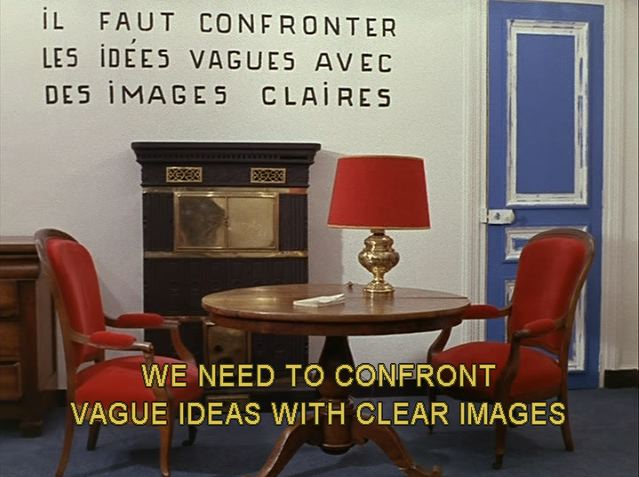
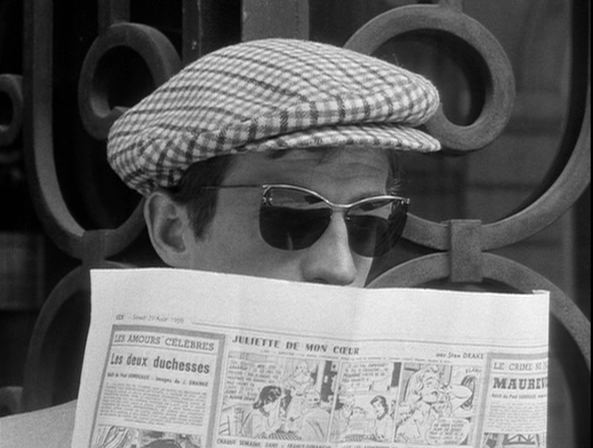
Jean-Luc Godard has died. That generation has been going - is he the last one left? It is getting close. He was one of the big ones - for me, he is close to the most important film maker of all time. For me, he is close to the best film maker of all time - though no one could pass Ozu. But importance? You can make a case for some of the filmmakers in the silent era - Griffith, Murnau, Lang, Eisenstein, Chaplin - they made the form. But after that? He was a public figure as well as a filmmaker, and he set the agenda for art films for the last 60 years. Sometimes, he did this as much as a figure to define cinema against as what cinema was - but he was still there, at the center of it, making films, talking about films, demanding viewers and readers respond to films.


I responded to his films. He was one of my introductions to art films - back in the 80s, I saw Aphaville, and was caught. It was mind-blowing - beautiful, strange, funny - and for all its difficulty, and his reputation for difficulty, readily accessible. I saw Breathless not too much later and enjoyed it just as much. His 60s films, at least, are usually like this - there is plenty to hang on to as you work through their intricacies. They are still among the most enjoyable films of all time. Alphaville, Breathless, Pierrot le Fou, Vivre Sa Vie, Week End, Contempt - all rich, gorgeous works, entertaining, challenging, inventive, everything. His later films, admittedly, are harder sledding - but they are still gorgeous, and the more recent ones, leaning into the collagist aesthetic he has always embraced, are quite enjoyable as well, in their somewhat more specialized way. 


So - he was instrumental in forming my taste in films, in defining what I thought film could do. I may have been predisposed to artsy films, but he gave me art films that I could sink my teeth into. He made films that remain completely satisfying, at every level, that deepen every time I watch one of them. He was one of the greatest of them all - for me, it's Godard and Ozu at the top, no mistakes. I will miss him. That generation - the New Waves, French, English, Japanese and so on - are almost all gone. And Godard was the center of that generation, and now he is gone. 

Farewell.


Sunday, June 24, 2018

Stanley Cavell

It has been a couple days, but I want to say something about the death of Stanley Cavell. He was, as I have said before, near and dear to my film loving heart. He was formative for me, along with Sarris and Ray Carney and Audie Bock, one of the critics who formed how I looked at and thought about films. But he was also probably definitive - one of the critics who became a constant touchstone for how I thought about film - Cavell and Bordwell, Burch, Kracauer, Pasolini.... Everything I saw, I filtered through Cavell - every comedy and melodrama at least, and those are, in the end, my favorite types of films. He was an inspiring critic, and he was a superb writer. A philosopher and a film writer, an academic - that can lead into some dark corners in the world of prose - but Cavell was very readable, without sacrificing any of his ideas. He makes sense of films he talked about in a way almost no other critics did.

Also part of one of those fun days you get in places like Cambridge. There was a night, a dozen years or so ago, when the Harvard Film Archive showed three Laura Mulvey shorts, with Mulvey speaking - and the Brattle was showing a Barbara Stanwyck double bill, Baby Face and Night Nurse, and Cavell was in the audience. Ah, the missed opportunities, I thought then.... I am lucky, too, that I did hear Cavell speaks couple times - an essay on O Brother Where Art Thou, for instance, a film he properly believed was a masterpiece. Well.

Cavell was one of the best. I will miss him, and continue to treasure his work.

Wednesday, May 23, 2018

Gunsmoke

Here's another piece I posted last week on Wonders in the Dark, as part of their TV countdown.


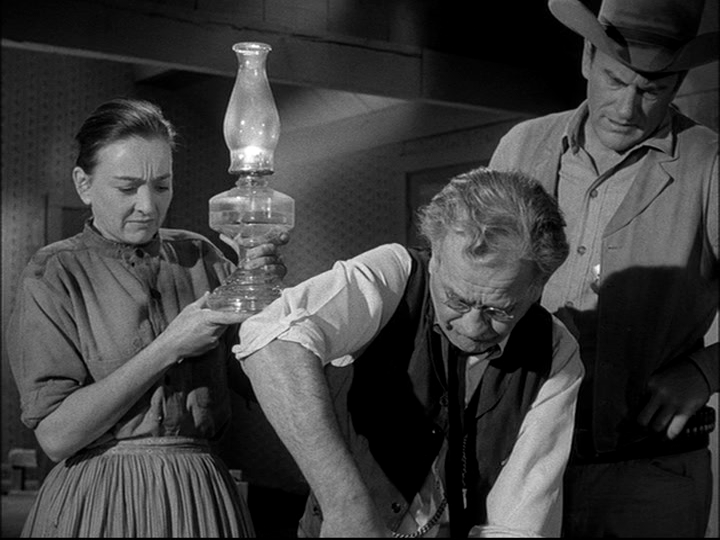
Gunsmoke was the first and last - the first (or almost the first) western for grownups on TV; and very nearly the last western of any kind of TV. Lasting 20 years will do that - you're first, you outlast your peers, and sometimes your entire genre. When it came on TV, it led to a flood of similar shows - The Rifleman, Have Gun Will Travel, many others - that shared its grown up approach the western, and its artistic values, and serving, as it did, as a launching ground for many significant actors and directors. It stayed on TV all those years because it was a very fine show - begun as a serious show, and taken seriously, with quality writing, a fantastic cast, solid production values, and consistently fine craft. They brought in first rate guest stars, they brought in first rate directors, they gave them first rate scripts - 635 episodes worth (though I suppose not all 635 were first rate; I can point you to some stinkers) - it changed through the years, but it was always watchable.

I watched it, of course, when I was a kid, both the reruns and the new ones. I didn't care if it had been on forever; I didn't really know it had been on that long until people started talking about it. I never saw any of the black and white shows until a long time after - they weren't the ones in reruns. It didn't matter. It was probably my favorite show when I was a kid, maybe right up to the time it went off the air, maybe beyond. (And not just the show: I read the books too - over and over, in fact; I liked Gunsmoke.) I liked all westerns - Gunsmoke and Bonanza and Big Valley, especially - but even then, I could tell Gunsmoke had an edge on them. I could tell it was more serious - it had action and excitement, good guys and bad guys, but it had characters too, who had depth, and breadth. More than that, maybe (since Bonanza and Big Valley were also strong on character), it had stories that were deeper and smarter than those other shows. I couldn't have described the difference then, and barely can now, but it's there - maybe it had something to do with the stakes - on Gunsmoke things seemed to matter a bit more.

It was designed that way. It was created for radio, and conceived as a hard-boiled western, explicitly reminiscent of Raymond Chandler (inspired by the Philip Marlowe radio show, in fact) - you can hear it in the early shows. Robbery, murder, lynch mobs, venal newspapermen gloating about circulation and Doc Adams angling for more autopsies, Matt accused of having an affair, and an innocent little boy who turns out to be the killer, and William Conrad as Dillon narrating and ruminating (in the best Raymond Chandler style) about how awful human beings really are. And that's just the first episode! (Here it is, on YouTube: "Billy the Kid"). The darkness didn't entirely carry over to the TV version, a couple years later - but there's plenty of it there. The first show has Matt soliloquizing on Boot Hill about the "Gomorrah of the Plains", keeps a good dose of his bitterness and sarcasm, and his strong sense of isolation (walking away alone as he does), in a story with a cold blooded killer, who just wants to be left alone. (You can see it here: "Matt Gets It", complete with John Wayne telling the audience that this show was going to last a while.) Chandler's influence is still there - Matt loses a gun fight in that first show, and when he recovers, has to go back to try again - that's pretty much standard procedure for a Hammett or Chandler character. And Matt has to outsmart the gunslinger - another bit you see in those classic detective stories. Marlowe would be proud.

As the show evolved, some of that fell away. Even on the radio, the characters had softened - Doc Adams, say, is a pretty nasty piece of work in those early shows. The ensemble, the relationships among the characters became more important, and anchored the show through those 20 years - but it still maintained the grown up approach. The material is dark, full of violence and cruelty, but its maturity is also in the complexity of the characters, both good guys and bad guys. Heroes fail - they can be selfish and unpleasant like the doctor sometimes, physically damaged like Chester, morally compromised like Miss Kitty might be. And the villains are seldom simplistic - they have reasons for what they do; they can be charming, some can be plaintive. If someone starts threatening bar girls, you can bet he lost a daughter or granddaughter somewhere along the line. Many episodes work in multiple foils for Matt Dillon, putting him between a couple hard bitten killers, or a couple aggrieved families - everyone with their reasons. And in those early shows, he fails as often as not - at least, fails to stop other people from massacring each other, or ends up killing people he tried very hard not to have to kill. He's there to keep the peace, but there isn't a lot of peace to keep.

This aspect is more pronounced in the early years - by the end, Matt and his friends were pretty well ascended to godhood, the villains tended to be a bit more simplistic, and the guest stars were usually a bit more obviously on the good or evil side. But it never went away completely. It evolved out of the noirish style of the early shows, into something else, though something still rooted in adult problems and complex behavior. The evolotution is reflected in Matt himself - the angry, brooding, tarnished hero of the radio show and early TV gave way to a stoic, strong hero, one who passes through the mire without being soiled. That's not criticism - it's just different, more Gary Cooper, less Bogie, if that makes sense. That element took over pretty quickly, I suppose - looking at James Arness, you couldn't quite picture him as anything other than a strong silent type - if he had stayed bitter and cracked, he would have been terrifying - John Wayne in The Searchers, maybe, something more disturbing than any villain could be. This change didn't hurt the show - it made Matt into a central hub for the rest of the show to revolve around. It made the dynamics of the cast, the strengths of the guest stars, and the stories themselves shine, with Dillon as anchor, and often as a kind of light that illuminates the nature of others.


Gunsmoke lasted a long time, surviving many changes to the technology and form of television. It moved from radio to TV, first as a half hour show, later as an hour. In the mid-60s, it switched to color. It changed through the years, but generally maintained its quality - though it's hard to miss how much better it was earlier. That's something I learned late - the color shows were the ones in syndication, in the early 70s, and onward - that's what I saw when I was 10, what I watched now and then through the 80s and 90s - it's what I knew. They were fine shows - they made me think I had good taste when I was 10... But then I saw the black and white episodes. They were a revelation. The half hour shows are superb - tight, efficient little morality plays that never really preach, great looking, with sharp, memorable characters, and even then, a cool mix of action, drama, comedy. They were great shows - but I think the show really blossomed with the hour long format.

They had room. Even now, watching the half hour shows, they can go by a bit too quickly - they don't get the chance to linger and develop - and it's the lingering and development that made Gunsmoke so good. The hour long episodes have everything: well developed stories, with characters who have time to evolve in the course of the show, to work out multiple relationships. It feels as though every black and white hour long show I remember was some kind of trip - maybe those shows were aired more often; maybe they're the ones I remember best. But there are good reasons why journeys are a staple of story telling (and most definitely of westerns) - a chance to put a number of characters in a situation and let it stew. Those shows end up being some of the best hour long shows ever made for TV.


The black and white episodes have another advantage - they look fantastic. The sets, costumes, props are all very well chosen - and in the black and white episodes,they look right. They look beat up, shabbier, dirtier; cabins and houses and street and fields look like hard places to live - they look real. The color shows lost some of this. Color, I suspect, shows up how clean the sets and clothes are; even artfully mistreated props, like Festus' costumes, look a bit too artfully messed up. Did they get more conventional later? does black and white indicate grime and wear better? Maybe. But part of it, I think, is that the later shows fell out of step with western movies. The early Gunsmokes were contemporary with films like Anthony Mann's westerns, Budd Boetticher's, mature films by Hawks and Ford, classics like Shane and High Noon. TV couldn't match the production values of top of the line films - but they could match their look. (And low budget westerns thrived in those days as well - filmmakers knew how to make westerns look good no matter what the budget.) But western films evolved between 1955 and 1970, evolved as much as any genre did. Content restrictions disappeared - you could show far more, and what seemed dark on TV in 1955 looked old fashioned next to The Wild Bunch or The Good, the Bad and the Ugly. Films brought in outside influences - Japanese films; European films. The style became more extreme; the look became grittier, grimier. Gunsmoke in the 70s didn't look at all like contemporary westerns (at least not the best of them.) It's a jarring effect: it makes everything, in the later shows, look clean, antiseptic, in ways the older ones never dd. By 1975, it was the last western on TV, maybe not that bad a show, but somehow it felt old, rote, even compared to what you expected to see in a western. And so it went, and that was that.

But it had a magnificent run. It set off a run of serious western shows; it has had an influence beyond. Matt Dillon is an icon - but so are others, particularly Doc. (I offer Star Trek's Bones as evidence; heck - I could offer Brad Dourif, on Deadwood, riffing on Doc, maybe more the early radio Doc, but still.) The cast and characters of the show were, in fact, fantastic. Arness, Stone, Blake and both Dennis Weaver and Ken Curtis - great actors playing fascinating characters, that the writers seemed to understand. Coming off writing about Get Smart, a show that gave in to ratings desperation at the end, do you know how refreshing it is to see a male and female lead not ever get together? At least not marry (though Matt seemed to know where her room was located in the early shows...) - how many long running shows were able to keep that discipline? The main cast is matched by the guests, often as not - what a pleasure it is to watch someone like Warren Oates or Bruce Dern come in and chew up the scenery. Now - this was common enough practice in those days - a good many of those serious westerns did the same thing - brought on special guests; gave up and coming directors the chance to work. But they did it well on Gunsmoke.


Tuesday, May 22, 2018

Columbo

(Despite the lack of posts here, I have been busy lately - this is the third of three posts in about a week for the epic TV countdown at Wonders in the Dark - this one for Columbo.


Somewhere in Los Angeles are two people who hate each other - or at least one of them hates the other one. Maybe we will see them together; maybe we will see them separately; maybe we will just see one of them, going about some strange ritual. Maybe they'll talk - maybe they will be, or act, friendly, but more likely they will quarrel. Either way, one of this is going to kill the other. Maybe we see the killer covering up the crime; maybe we now recognize that their rituals were aimed at hiding the crime. By the time the first commercial comes, it looks like they will get away with it. When we come back, the police are on hand. Among them is a dumpy looking guy in a raincoat, who putters around, and notices things; he sticks his nose into conversations; he looks at the bodies; he talks to the relatives. He probably talks to the killer, and he'll probably notice something when he does. By the end of the first scene we know there's more to this guy than meets the eye. Over the next hour, he'll keep running into the killer, and it's going to take the killer longer to catch on that there's more to him than meets the eye, but he will - but by then it will be too late.

That is Columbo, and for my money, it's the best show ever made on network television in the USA. Columbo ran 7 years in the 1970s, came back for a couple more seasons and string of TV movies in the 80s and 90s, and every episode (except one or two here and there) fit that description above. The shows were a series of little movies, 90-100 minutes long, airing in rotation with a number of other shows (McCloud and McMillan & Wife, later Hec Ramsey too) in its first run - the longer production schedules (a show a month, instead of a show a week) meant episodes were made with a lot more care than the average TV show of the time. They looked it. It starred Peter Falk, and brought in high profile guest stars, writers and directors, as prestige television has always done. Columbo's early years boast Steven Bochco and Steven Spielberg at the start of their careers; later years featured people like Jonathan Demme, and along the way, any number of Hollywood veterans and actors got a shot behind the camera - Richard Quine and Leo Penn; Ben Gazzara and Patrick McGoohan. And of course a parade of guest stars, to kill and be killed, or sometimes to offer dubious advice in the role of lawyers or uncles or ex-hubands and wives.


It originated as a television episode, became a play, then a TV movie, written by Richard Levinson and William Link. They built a detective out of Crime and Punishment and Father Brown, and used the Crime and Punishment plot as their template: we see the crime, know who did it, why, how - the police come in later, most of them all wrong about the killing, but one of them figures it out, and spends the rest of the story trying to make an arrest that will stick by talking to the suspect. Columbo was openly and unapologetically formulaic, but that is where it got its strength. It has the rigid form of a sonnet or blues song, and the almost infinite variability of those forms. The fact that the stories all follow the same structure - killing, investigation/confrontation, solution/arrest - means that all the show's attention goes to the details. The restrictions force the writers to be brilliant - every killing has to be imaginative, every killer has to be interesting, their motives have to be believable, their victims and the survivors - have to be interesting. The process of solving the crime has to be clever, and - most of all - the interactions of the characters have to be completely compelling. It worked - it held up through 9 or 10 sets of shows over 25 plus years, staying watchable right to the end. The mysteries are compelling (far more often than on other long running crime shows); Columbo's work to solve them fascinating, clever, full of quiet demonstrations of his abilities. The killers and those around them make good television - they all seem to think they can talk their way out of anything, because they are Super Geniuses, and it keeps them engaged with Columbo, as he circles them, tracking down the crime, figuring them out.


The shows are not really mysteries (except a few designed for a twist) - the suspense is all in how Columbo figures out the crime, and pins it on the killer. And the substance of the show is in the interactions between Columbo and those killers, and the people around them. (A flock of husbands and wives and children and parents and uncles and aunts and lawyers and secretaries and hangers on who are usually as loathsome and pathetic and sometimes wonderful as the killers and victims.) Columbo lurks, and talks - he tells stories about his wife and nephews and brothers in law and cousins and childhood and he gets to know the killers, he goads or soothes them, and he gets them in the end. For all the show's debt to Dostoevsky, Columbo usually doesn't break the killers down psychologically. He figures them out, alongside the plot of the crime, and usually gets them through some detail, some clue everyone's overlooked that he can get them to plant somewhere. He shows them what looks like a sure fire way out of trouble, but he's always waiting by the door. No, where the show really lives is in the characterizations themselves - Columbo revealing the people he interacts with; and revealing himself, in a way. The plots and such make for a fascinating puzzle show - but those conversations, and the situations around them, are what raise the show to something more.

It's a show with a quiet, but firm social conscience. It was always very class conscious - Columbo is often described as a blue-collar detective, and the contrast between him and the rich, arrogant, privileged set of murderers he runs to ground gives it it's tone. But it uses class and money as more than just a contrast between rich killers and middle class cop. Money is always present in the show, almost always the reason for the crime - but the exact reason for this varies. The killers may all be rich, but don't miss how often the plot depends less on straight greed than on the threat of losing ones position. Over and over: someone who has gotten rich somehow, who was not, in fact, born rich, finds themselves facing a divorce, losing their job or business, being disinherited, being exposed as having stolen it or riding someone else's talents. Columbo was as much about anxiety about money as about the corruption of money - anxiety about money, and status - of being exposed. Though don't miss either how that money corrupts - the killers and their initial victims tend to all be rich; but there are many shows where the killers get someone else, as well. Maybe a witness - sometimes, just a lower class accomplice, who has to die to protect the killer's alibi. These tend to be the killings that bring out Columbo's claws - when he gets really tough with killer (like Leonard Nimoy's doctor, who kills a nurse and a drifter, or Robert Conrad's fitness guru who poisons a woman who might have heard something), it's because they've started killing people below their station.

There's another important piece of working class consciousness: the value of work itself. Columbo himself does this - Levinson and Link say it plain in the pilot: Columbo tells the killer, you do this once, you have one chance to get it right; I do this 100 times a year - I practice what I do, I learn it. Columbo does what he does by putting in the work - you can't deny his genius, but you can't miss his thoroughness, or the way he's willing to teach himself something new to solve a case. Even his patter is usually just cover for doing the grunt work of collecting clues and evidence. But this goes beyond Columbo himself - the show always values talent. The killers who are most sympathetic tend to be the ones who are good at something valuable - Johnny Cash's singer; Donald Pleasance as a vinter; Janet Leigh's actress; Ruth Gordon's mystery writer - are all craftsmen. They are rich, some of them are pretty much evil (Cash plays someone being blackmailed for statutory rape, who murders the both blackmailer and the girl), but they got rich by working for it. Even some of the more unpleasant figures - Patrick McGoohan's parade of psychotic spies and soldiers; John Cassavetes' conductor - are partly redeemed by the fact that they are good at what they do.


That respect for craftmanship - for artistry, through effort - suffuses the show. It features artists often enough - writers, musicians, painters, chess masters, photographers, chefs, scientists - it tends to respect them, even when they are villains. And it is built on the same respect - the quality of the scripts, the filmmaking effort, the parade of character actors, in leads, and tucked into the corners. Among its many delights are the chance to spot Bruce Kirby and Timothy Carey and Val Avery in the cast a couple times a season. It's guests tend to be TV stars (Dick Van Dyke, Robert Culp and McGoohan, Wlliam Shatner), old time movie stars (Ray Milland, Ida Lupino, Myrna Loy, Ruth Gordon), and those more independent film types - people from Cassavetes' films (including Falk and Cassavetes and Gena Rowlands and Ben Gazzara, behind the camera.) It's not flashy casting, it's casting built on craftsmanship. It's also not above playing it for laughs - William Shatner comes on, and is pilloried, playing a comic version of both himself and Columbo - he's bald, wears lifts, and turns out to be a complete con man, as well as a helpless ham. For every real artist, there is a smug asshole who thinks he matters because he has a TV show; and there are innumerable "business consultant" types who think they are rich because they are brilliant when they are, in fact, glorified con men, preying on real businessmen, who usually act like glorified gangsters. Columbo's creators do not hold a high opinion of American business, I think.

There are other elements of social conscience in the show - it's very sympathetic to women. Lots of women get murdered; more than a few of them are murderers; they are not necessarily any more sympathetic than the men around them. But the show manages to convey their sense of having to fight harder to get anything - men in the show don't take them seriously; they fight off bullies; they are manipulated and ignored. The writers - and Columbo, often enough - notice, and let the women have their say. They aren't condemned when they cheat on their husbands; they are not treated like usurpers for holding jobs men have (though Columbo, in some episodes, seems surprised at their positions). And shows where women kill men who cheat them - well, feel a bit different than shows where men kill. Though the show can still create a female monster - Johnny Cash's wife, in his episode - blackmailing him for statutory rape, though it is strongly hinted that she was providing him with underage girls in the first place - well... villainy knows no gender.

And so: I'll end with a quick little list - 5 of my favorite episodes, since this should let me look a bit at how the theme and variation structure worked...
  1. Negative Reaction: this is the one with Dick Van Dyke as a photographer. It's interesting because while he is an artist, and artists usually get a break on the show, he is one of the most irredeemably evil characters they ever created. He kills his wife, strictly for money; he kills a harmless ex-con who almost worships him for giving him a job, purely to make his own alibi work (framing him for good measure); he takes the usual contempt for Columbo farther most, becoming abusive - only to have it all swept away at the last minute, when he sees how Columbo has set him up. A great show - using Van Dyke's affability to mask his viciousness; and the fact that it is, maybe, a show about failure and self-loathing. He used to be an artist, but he has become a hack: his fall leads him to this. Great show.
  2. Murder by the Book: This is the first regular episode, and features the Stevens, Bochco and Spielberg, and from the first shot is obviously up to something fantastic.  Long shot of the street and a slow zoom back into the room where a man is typing - Spielberg was already capable of virtuosity. The show as a whole is well made, and often rather flashy - usually not this effectively though. The rest of the episode - Jack Cassidy as the untalented half of a writing team that's about to break up, who kills his partner, and then a lonely widow who sees something she couldn't - is first rate as well. It sets up those class tensions, the anxiety about losing status: Cassidy knows he can't continue as he is without his partner to write the books; he kills the witness almost without thinking about it - arrogance of the rich. It's a fine episode, already varying the motivations from the pilots.
  3. Swan Song: This is the Johnny Cash episode. He plays an ex-con country singer, forced to give all his money to his wife (Ida Lupino), who's blackmailing him for sleeping with an underage choir girl - though it's hinted that the wife set them up in the first place. So he kills both of them. The plot doesn't hold up so well in this one - but the interplay between Cash and Falk is superb. Cash's character is a nasty piece of work, other than the singing; he starts out angry and abusive of Columbo - but he changes. This comes as close as any episode to having Columbo literally talk someone into confessing - it's also fascinating to watch Cash's guilt catch up with him. He softens, he fades on screen, and is grateful when he's caught. Worth noting too that in the mid-70s, Johnny Cash was not the hero he was in the 50s and 60s, or would be in the 90s and on - this is a down period for him, but this show could still see him for what he was.
  4. A stitch in Crime: this is the Leonard Nimoy episode - Nimoy can vie with anyone (Van Dyke and Robert Conrad's Milo Janus might be the other finalists) for the most loathsome character in the series. He plans a clever way of killing his mentor, with dissolving sutures in the heart, then kills a nurse who starts to suspect, then kills a drifter to make the cops think the nurse was selling him drugs. This, and Nimoy's mocking contempt, gets Columbo's goat, provoking near violence. All this, by the way, is provoked by resentment over someone else getting his name on a scientific project. He's a piece of work.
  5. The Conspirators: this is a bit of a wild card - this is the last episode from the 7th season, the last one in the 70s, the last one for 10 years or so. It stars Clive Revill as an Irish poet who uses his book tours as cover to raise money to buy guns for the IRA. It's different - the structure of the show is like all the others, but the plot, and Revill, are not. He is almost unique in the series for being a professional criminal, a practiced gun-runner. (As is his victim.) The story is different - professional criminals; political motives; this character. It brings up the show's respect for professionalism - he is something of a mirror of Columbo. A poor kid, ex-con, who became a writer, a poet - though also a terrorist. He's an artist, and a professional. He's Columbo's peer - he's done this before. He poses a different kind of challenge. Their interactions are increasingly cordial in the show - some of it is due to Revill's charm, but there's more than a hint of mutual respect here as well - two men doing their jobs. It's a fascinating episode, a good way for the show to go off the air...

Thursday, September 14, 2017

Dekalog (For Wonders in the Dark)

(Cross posted on Wonders in the Dark, part of the television countdown.)


Dekalog is a 10 part television series, made in Poland in 1988, directed by Krzystof Kieslowski, written by Kieslowski and Krzystof Piesiewicz, his frequent writing collaborator. Each episode in the series is dedicated to one of the Ten Commandments, though the links are often quite free. The series is, in practice, more like a film cycle than television series - each episode is self-contained, linked only in their relationships to the commandments, and the setting, a large apartment complex in Warsaw. (And the filmmakers and crew.) Kieslowski conceived of the films as 10 separate films. He did not conform to TV conventions: recurring characters in an ongoing story; the need to pace the stories to match the way TV is watched, in the home, with the phone ringing and tea boiling and so on. Indeed, since 1989, Dekalog has been treated more like a film, or group of films, than as television. This is understandable: the films were distributed theatrically outside Poland, and Kieslowski himself was an established filmmaker when they were made, and his subsequent works made him a major art house figure internationally in the 1990s. He is a filmmaker first, and so Dekalog is treated as part of his film career. This is probably even more the case for Dekalog than for other TV shows made by people established in the film industry. David Lynch and Twin Peaks comes to mind - a series made by an established film figure a year or so after Dekalog, that, however congruent with Lynch's career, is still seen primarily as a television show. Of course, Twin Peaks did play by the rules of television - a continuing series with characters and a through-plot and so on - which certainly helps explain the difference. But the fact remains, Dekalog's origins in television is seen as somewhat incidental to what it is.

I don't really mean to dispute that - Kieslowski’s own remarks and ideas about the show push criticism in that direction; I have certainly always thought of these films that way myself. But it is interesting to consider how they do relate to television, as an art form, as a social force, as technology. The strongest link to television, I think, is the way Dekalog is structured around the home, the family, the domestic space. Television is a domestic form of entertainment and art - it exists in the home, to be watched in the home; Dekalog is centered around the idea of home. Far more than other Kieslowski films, which are often about individuals making their way in the world, or at least about how people live in public, outside the home, Dekalog is almost entirely rooted in domestic spaces. When it leaves the domestic sphere, it either brings it in through other means (as the ways the domestic ethical problems of Episodes 2 and 8 are discussed in a class in Episode 8), or makes the loss of the home a felt absence in the story (Episode 5 can be seen this way.) The apartment complex where the series is set may seem to be just the device linking these stories - but in fact, those homes become central to the stories being told. The importance of children in the series, and the importance of relationships between parents and children, is an obvious theme - but these themes are themselves part of the series' emphasis on the home. Home as family, as social space; home as physical space, actual buildings and rooms; home as symbolic space - a place of safety, rest, protection. Almost everything in the series hits one of those themes.


Kieslowski and Piesiewicz present a complex vision of the domestic world, as well. Homes (as physical spaces as well as domestic spaces) are complicated - sheltering and protective, but also dangerous, often broken. They promise protection but don’t deliver, neither the physical space or the social one of families. Homes do not protect you from bombs - they do not protect you from being spied on - they do not protect you from being pulled out in the middle of the night on a wild goose chase - they do not protect you from being stolen by your relatives - they do not protect you from thieves. When they do offer protection, that protection is not guaranteed - you can be refused shelter. You can be banished from your home. And even when you seem to have a stable, safe home, there is no guarantee that what you have is what you think you have. Your wife's child may not be yours; the man you thought was your father may not be; you sister can be your mother. Someone could be listening in on the phone; and if you think going back to your mother's house will offer you protection, be careful - you never know who's hiding in the closet. Home promises stability but it is never there.

In many of the episodes, this instability is shown through a significant absence. So in Episode 1, the mother is out of the country; in Episode 2, the husband is in a coma; in 3, Ewa's husband is missing, so she pulls Janusz away from his family on Christmas eve; Episode 4 is structured around the dead mother; Episode 10, a dead father. Episode 9 has a more symbolic version of this - first, in the husband's very Freudian lack, that his wife tries to fill with a young lover; later, by shifting to the more abstract idea that they are missing a child, which they hope to fill by adopting. These absences create many of the stories - certainly 2, 3, 4, 9 and 10 work that way - the thing that is missing drives the plot. The story itself, of course, can go a couple different ways - it can end up destroying a home and family (as in 1), it can end up restoring a home and family (2, maybe 9, even 10, in a sense) - but  for all of them, the status of the family, the home, is what is at stake in the story.


Other episodes approach it from different angles. The protagonists may have lost their homes, or at least their connections to others, as in Episodes 5 and 6; they may be expelled from the home (or expel themselves) as in Episode 7; they may be denied the shelter of a home as in Episode 8. Or home itself may disappear, as literally happens in the Doctor's backstory in Episode 2. It is interesting that Episodes 5 and 6, the most famous episodes, both expanded into feature films, feature protagonists who are the most isolated. The characters of 6 are all alone, separated from any family, and most companionship. Magda has lovers, but they are not very reliable or satisfying; the landlady's son is on the other side of the world, and though she sometimes treats Tomek as a surrogate son, she and he are both intensely solitary figures; Tomek has no family, and has even lost the closest thing he had to a friend. We usually see these three in their apartments, in their homes - but these are places that offer very little solace. Their living spaces give them no privacy, no protection - they all spy on each other, interfere with one another, often with very dire consequences. They all look for a connection - and you can almost imagine the three of them forming a kind of family of their own - but it doesn't come, and the connections they form are imaginary ones, existing only in the own heads.

Episode 5, and A Short Film About Killing, is even more extreme. (One of the harshest films ever made, frankly.) Of all the films in the cycle, it spends the least time in anyone's home - none, that I can think of. It all takes place in public. Despite the story occurring out in the streets, Jacek and his victim are almost perfectly alone in the film, living completely in their heads, hostile to everyone around them. Even in this episode, though, home operates as a structuring absence. The end of the film, with Jacek telling the attorney about his sister's death, reveals, probably, the reason why he is here, alone in the city. Having helped kill her in a drunken accident, he has lost his family and home. We have less information about the cab driver's isolation, but we see it played out. He treats his neighbors with contempt (leaving Andrej and pregnant Dorota in the cold, rather than giving them a ride); we get a hint at how his neighbors treat him, when someone drops a dirty rag on him. He lives in the apartment complex, but he rejects it - and it rejects him. Unlike the other characters who live there, we never see him at home - all we hear of his family are his pleas with Jacek that his death will leave his wife alone, and the possibility that the woman in a wheelchair in the courtroom scenes is his wife. The attorney, meanwhile, is only seen in either public places - school, the court, prison - or alone. We do, though, get a glimpse of his family life when a colleague congratulates him on his child. That is all.


The double edged significance of home, though, probably comes out the most starkly in Episodes 7 and 8. In 7, a girl in her early twenties kidnaps her 6 year old daughter, who has been raised as her sister. It's notable that this is almost the only episode in the series to show a complete, intact family (we get a glimpse at one in 3, though the poor father is pulled out in the middle of the night) - and because this is by far the most poisonous family in the series. Majka's parent's home may contain the entire family, but it is a family based on deception, on the exploitation of children - the younger Majka as much as her daughter Ania. Even here, though, Majka is driven as much by the desire to find a home as the desire to leave the one she is in - she takes Ania and seeks out the child's father, a teacher who seduced (to put it as kindly as possible) her when she was 16. She doesn't say so, quite, but she seems driven by the hope that she can find a new home, a real home, uniting her child with its true parents. It is a vain hope, even though Woytek seems to regret losing the same thing - and has turned to making teddy bears, as if in compensation for losing his child. They come together, sharing a space sharing a shot briefly - but they can't even look at one another, and their child is asleep, buried by teddy bears....


And it ends. He calls Majka's mother, she leaves - that is all. In the end, her mother finds her, takes Ania back, and Majka rides away alone on a train. She loses everything - her mother keeps the semblance of home, but it is one based on a lie, and it's hard not to see Majka's absence becoming the fissure that destroys that home in the end.

Episode 8, finally, is structured around the notion of home as shelter, and shelter denied - as well as raising the stakes, by setting that drama in the midst of the holocaust. It is also the most metafictional part of the series - discussing its own backstory in a class, along with the plot of Episode 2; containing direct comments on the apartment block, the idea of all the stories going on in that space. It brings the themes to the foreground: children in peril, what adults owe children, the notion of a home as a refuge, a chance to live - though also the possibility of betrayal. (The real backstory of the backstory - the false information that the family intended to shelter Elżbieta were collaborators - raises that image: home as false security.) Though this is not about a family in the present, or even really about homes in the present, these images permeate the film. The home Elżbieta is denied; the house where she met Zofia and her husband during the war, which they return to, and Zofia finds herself turned away; the tailor's home - which was denied its possibility of saving a child.

Episode 8 might also be seen as a model for the series as a whole. Zofia's class is a seminar about ethics - from what we see of it, it seems to operate by posing ethical dilemmas, that are then filled in by the class. That's not far from the structure of the whole Dekalog: take 10 situations suggested by the commandments and tell them as stories, rooted in lived human experience. That is what Kieslowski and Piesiewicz do - and indeed, the sense of lived experience elevate them. It is also important, I imagine, that episode 8 is also both explicitly based on an actual story from World War II, and brings politics and history explicitly into the series. Grounding these things in the lived experience of 2 specific women, yes - but also implicating them in the overall history of Poland in direct, inescapable ways.

All together, then, Dekalog is a magnificent piece of work, as film, as television, however you want to slice it. It is a very rich text, for its stories, for its ideas, and certainly as filmmaking. There are many ways to look at it - taking it as a meditation on the idea of home, family, on how they work as both shelter and menace is just one to look at it, though it's an important element. And one that links it more strongly to television - an art form made for the home, about home. It has to rank very high.


(Let me offer a quick recap of the episodes: it may help.)

1. Father and son live happily, though his wife is gone; they work work with computers, waiting for the pond to freeze; father and sister differ, one religious, one rational. The father calculates that the pond is frozen, then tests it – but the boy goes skating and disappears, leaving his father and aunt desolate.

2. A man is in a coma, his wife has had an affair and gotten pregnant - if the man lives, she needs to abort the child, but if he is going to die, she will keep the baby. She nags the man’s doctor to know if he is going to live or die. He refuses to answer, she insists - he finally tells her the man will die. The man of course lives,and is pleased to have a child, even if it is not his.

3. Christmas eve, a man’s former lover comes to his house, saying her husband is missing and asking for help finding him. He goes with her, and they search the city and replay the end of their affair. In the morning she admits her husband left her long ago - she just bet herself she could keep this man out all night, or she would kill herself.

4. A man and his daughter are happy together - but there is a letter from her mother that she finally can't resist reading. She looks at it, and may or may not open it - she makes up a fake version and reads it, saying she is not the man's child. She then makes a pass at him, but he resists. In the morning, she repents - they end up burning the original of the letter, except for a bit of it, which says the same thing she wrote in the forgery. (Assuming it was a forgery.)

5. Follows a young lawyer, a bitter taxi driver, and a young man, the lawyer through his exams, the young man looking for a cabbie to kill. He kills this one, a brutal, horrific murder. Then cut to the end of the trial, then the execution, with the lawyer trying to comfort the killer, and railing against the system.

6. A postal worker spies on a woman; when his stalking starts causing her problems, he confesses. Later they go out together, but she ends up humiliating him - she immediately repents, but not before he tries to kill himself.

7. A woman kidnaps a child who has been raised as her sister but is really her daughter. They are found, though and she leaves alone in the end.

8. A professor has a visitor in her class – a woman who tells a story about a jewish child who was refused by a Polish family who said they could not bear false witness, to claim she was Christian. It was the professor of course, and the woman who tells the story was the child – the professor had good reasons for her actions, but has hated herself since anyway. She takes comfort in the child’s survival.

9. A doctor is impotent - he half tells his wife to have an affair, but when he finds out that she did have an affair, he becomes wildly jealous. He also treats a girl who needs major surgery to be able to sing, professionally - she would rather not, but her family, and the doctor get her to do it. In the end, the man and wife are nearly reconciled, but the lover hangs around, leading to a near crisis.

10. Two brothers discover that their father was one of the country’s most important stamp collectors. They get tied up in a scam to trade a kidney for a crucial stamp, but this is a ruse to allow someone to rob their father's apartment and take all the stamps. In the end, after many trials, they forgive each other and bond over having picked up their father's bug for stamps.

Saturday, September 09, 2017

The Civil War (TV Series)

[Cross posted from Wonders in the Dark, part of their Television countdown.]

(I'm sorry this is going to look like a homework assignment - but this is a show that feels a bit like a homework assignment, a textbook at least. That isn't a bad thing, of course - it's meant to be informative as well as moving and entertaining, and it is, all of those things.)

What is it?

A historical documentary about the American Civil War, broadcast on PBS in 1990, and a huge success. (Largest ever audience for PBS, apparently.) It made Ken Burns a household name, and elevated Shelby Foote, in particular, to new levels of fame. There are 9 episodes, about 10 hours altogether, with around two hours devoted to each year of the war, with an hour for the build up and an hour of aftermath. It is straightforward history, using primary sources (period photographs and texts by contemporaries) to provide the base for narration and commentary. It digs into the primary sources - Burns' method of showing photographs, panning and zooming around the photo, to pick out details, became iconic, and has entered the language (thanks to photo and video editing software). Texts are read, with similar attention and care, by actors, many well known (Jason Robards Jr., Sam Waterston, Morgan Freeman, etc). The show was very effective as well as popular, and for a while, seemed to be the definitive historical documentary. That, I am sorry to say, isn't quite the case anymore - I will return to that a little later.

How is it as History?

It is quite good. It is essentially an introductory overview of the Civil War; it would make a good textbook in a basic history class. It is, to start, actual history - primary sources and commentary; everything is rooted in those sources, and in analysis by people who root their work in primary sources. It's clear about what is sourced and what is not, and what the sources are, as clear as a television show is going to be. It is a good introduction to the war - it tells what happened, it explains it well, it covers a wide range of experiences of the war. That is important. It is not strictly military or political history: it works in the home front, the day to day lives of solders, technology (of war, medicine, communication, and so on), it covers the role and place of women in the war, it attends to the experiences, attitudes and actions of blacks - slaves, ex-slaves, and free blacks. It is quite good at conveying the lived experience of all these people, on both sides of the war. It is an introduction - if you want details on the technology of killing, or the state of medicine, or the political machinations north and south and overseas, or details about campaigns and battles and strategy and tactics, you will have to go elsewhere - though often, you can go directly to the writers and books being discussed. You can do worse than go to the sources the show presents - read Frederick Douglass or Abraham Lincoln or Mary Chestnut or Grant's Memoirs. And there is certainly an abundant literature dealing with the Civil War.

Still - it is a good introduction. The historical analysis tend to be conventional, reflecting the historical consensus - which is fine, for a survey. But that is where things start to become complicated. It isn't that the show gets the history wrong so much as that arguments about the history of the Civil War are indissociable from the history of the Civil War. More on that later, for sure; for now - let me say that the show came out at a time when the historiography of the Civil War was, itself, changing. You can see this in the emphasis on the social aspects of the war, the emphasis on the lived experiences of the participants - that wasn't new in 1990, but it had not been the consensus on how to do history for very long. And the interpretation of the war had also changed. Burns doesn't wriggle around the question of slavery - that was the cause of the war, and he says so. That is the consensus historical view of the war today, and was in 1990 - but it has not always been. The show's narration gives us the consensus - but leaves out the historiography, leaves out the dissent, and the history of dissent. This is a point I will definitely come back to.

How is it as a film?

What is it as a film? Archival materials, photos and texts, mainly, with added narration and commentary; the photos used both as background and as explicit illustrations of the elements of the story, and "animated," particularly by the famed Ken Burns Effect. The primary texts are themselves animated by being read by expressive voice actors. Over the photos and between the texts are narration and commentary, sometimes as voiceover, often by experts, usually shot in fairly neutral situations - sitting in their office, or front porch, or such - there is not much movement anywhere in the show. There is very little filmed material besides the talking experts - the 1860s were too early, of course, for contemporary film; there is some fascinating footage of veterans gatherings and parades, from much later. Burns also uses a few a few inserts of empty fields, cannons, battlefields and the like, but strictly as background - there aren't even modern shots of the battlefield and locations, that I remember. Few if any. Finally, there are a few recordings of survivors and the children of survivors speaking - these are often quite marvelous.

It is, then, a relatively sober and conservative style of documentary - though one well suited to the material. The Civil War was one of the first large events to be heavily photographed - it is right to use those photographs as the basis for the work. The war left a rich visual record - photographs, drawings, engravings, paintings - Burns uses them to all good effect. It was also fought by a very literate nation - so the collection of texts is also very rich. All kinds or texts, from all levels of society, are here: letters, diaries, memoirs, speeches, political and legal documents, newspaper accounts and editorials, everything, from all levels of society, all types of writers. Private soldiers and their families, officers, politicians, slaves, ex-slaves, free blacks, ministers and essayists, newspapermen, foreign observers, and writers from the barely literate to Walt Whitman and Abraham Lincoln. The scope and variety of texts is wonderful indeed. Finally, all of it is set against music - mostly contemporary with the war, but with some pieces written in the 19th century style  ("Ashokan Farewell", notably). The music, too, is sometimes illustrative (all those ballads about the longing for home), but usually used to set the mood. Maybe sometimes too much for mood and not illustrative enough: you'd think they'd have managed to find some kind of recording of people singing "John Brown's Body" - hard to get more primary a source than that. All of this adds up, sometimes, to a style where the mood overpowers the content - sober, a bit folksy (sometimes more than a “bit” folksy), mournful, though with a celebratory undertone - look what we survived, look what we did, but look what it cost us. Sad but uplifting.

For a while, this style felt like the very model for the Serious Historical Documentary - though even in those days, it was sometimes more of a whipping boy than a model for other filmmakers. (Back in the 90s, I seem to recall a fair amount of this, from both sides.) It's seriousness, folksiness, nostalgia, could all be attacked by political or personal documentarians; and its sobriety, documentary purity, its lack of spectacle, could be attacked by filmmakers looking to liven up the genre. It has not had many imitators. Today, even serious educational documentaries - the kinds of things aired on American Experience, say - lean heavily on reenactments. This isn't an improvement, I fear. Reenactments are incredibly stupid for 20th century documentaries - how can a reenactment match the power of actual footage from WWI or WWII or Vietnam or Chicago 1968? But even 19th century history gains little from the newer styles. How is a show like PBS' The Abolitionists better for having actors pantomiming Garrison and Douglass than it would be if it just read their words and Ken Burnsed over their photographs? I admit that Burns' nostalgia can run a bit thick sometimes, but that is a fault of the tone and sometimes the content, not the devices - change the music (why not use Charles Ives, or the Band? vary it up, but also pull the story forward - show how current the Civil War has remained through the century and a half since it ended), change the narration, and you would have a very different work - but you would still have history. Drop the photos for guys in funny hats play-shooting guns, and you have - what? why not just make a feature film? 

It's hard to think what reenactments add in any case. What stays with you from The Civil War are the photos and the letters, the power of the words written in middle of the war. The primary materials are extremely powerful - resenting them respectfully, with the full emotional power a fine actor can bring, is enough.


And what about its politics?

Politics: well - there's no avoiding politics. There is a line at the very end of the show, when the experts are considering the legacy of the war, who won, what it meant and all. Barbara Fields (who might be the real star of the show, in the end), cites William Faulkner, to the effect that "history is not 'was', it's 'is'" - and adds that the results of the Civil War are still up for grabs. The war has never been resolved. She was right then - she is right today. The Civil War is still in the news, and not just incidentally, but very close to the center of contemporary American politics. We are, as a country, still arguing about what the war meant, what it did - what it was, even - and how to talk about it. It has always been so - the shooting stopped, and the debates began (though the shooting didn't stop for long, and in some ways still hasn't), and they are still going on. (Sometimes, alas, so is the shooting.) The issues coming out of the Civil War are still up for grabs - are we a democracy? are we going to treat everyone in America as Americans? Who will run this country, and for whom?

The history of the war has always been tangled up with politics; political debates have always been tied to historical interpretations of the war. I said earlier that the show appeared at a time when the historiography of the Civil War was changing - at least, at a time when the historiographical changes were filtering into the mainstream. There was a time, as late as the 70s, maybe the 80s, when you could get through high school, maybe even college, and still think the war was fought over state's rights and tariffs, that slavery was a side issue, exaggerated after the fact by northerners looking to make themselves look better, that the whole affair was a terrible, inexplicable tragedy - an act of god, imposed on the country by some impersonal external force, like a terrible storm. That was an interpretation of the war that came from the south, after the war, especially after Reconstruction. It is partly a way to shift blame away from the former confederates - but also part of the political struggles after the war, to undo the results of the war. There is no way to separate Lost Cause history from the reinstatement of legal white supremacy in the south - it is all tied to the that.

One of Shelby Foote's most famous remarks is that the war changed the grammar of how the United States was referred to. Before the war, people said, the United States ARE; after the war, they said, the United States IS. It is an excellent point - but it leaves out a lot. It obscures the fact that one side of the war was fighting explicitly against that IS. But it also hides a more sinister meaning (which I don't think Foote intended) - the meaning Dixon and Griffith made explicit in The Clansman/Birth of a Nation. It is that the story of the post-war years was the story of forging a nation of whites against blacks. Civil war history after the war, especially southern history, was directed toward reconciling north and south, but at the expense of reestablishing and strengthening the difference between Black and White. The Lost Cause version of history downplays the role of slavery, erasing the confederates' own acknowledgment that slavery was the cause they were fighting for; downplays the role of freeing the slaves in the north. (How could it be? the north fought to preserve the union, emancipation wasn't part of the plan until 1863, and it was always controversial.) Making slavery secondary to the war also makes the post-war amendments (#13, 14, 15) secondary - they become technical changes to the constitution, not the radical reimagining of democracy they might be taken for. It stresses the heroism of the south, and the soldiers on all sides; stresses the shared suffering of the war; stresses the processes of reconciliation after the war. But it is always a reconciliation of north and south, blue and gray - Joseph Wheeler serving in the Spanish American war. And it's all too often, reconciliation of north and south at the expense of black and white.

This interpretation of the Civil War was something like orthodoxy for most of the 20th century. That began to change in the 1950s and 60s, though mainly among academics - it took a while for the new historical consensus to reach the mainstream. The Civil War reflects the new consensus - Burns and company leave no doubt that slavery was the cause of the war, and that the accomplishment of the war was abolishing slavery, making possible, at least, a new birth of freedom. If the show has a problem, it's in leaving out the historiography of the Civil War. Maybe that is beyond the scope of a TV series about the war - but it is important. It is easier to understand why it is important to acknowledge that slavery started the war when you know the history of why slavery isn't considered the cause. The confederates knew it was the cause - they said so - and Burns is sure to cite their articles of secession, the speeches by men like Alexander Stephens, that stated as clearly as you like that they were fighting to defend slavery. Leaving out an account of how that changed leaves room for misinterpretation of the show. The show has a melancholy, but celebratory tone, that contains many of the elements of the old Lost Cause history. The sense of war as an act of god - the celebration of the country's ability to come back together - many of the personalizing anecdotes Shelby Foote tells in the show. These things are good - the show does include southern voices and perspectives, apolitical voices, north and south - it should. And it's a reminder that there is plenty in the Lost Cause version of history that is not wrong - but it's also why I think it is crucial to explain the history of the debates. Without the historiography, you can't separate the lies of the Lost Cause (denying the role of slavery in the war, denying the role African Americans played in the war - denying, ultimately, the radical and - let's not mince words - completely admirable importance of the 13th, 14th and 15th amendments) from what is true. (The human experience of the war in the south; the importance of reconciliation after the war and so on.)

In the end?

How does it end? I don't know how I should end. The war hasn't really ended - how can a show about it end, or an essay about the show about the war? "The past isn't dead. It isn't even past." Ken Burns ended - twice, right? With Barbara Fields invoking Faulkner's "history is is" - then with Foote talking about making the war the most important war ever, and reading an old soldier waxing nostalgic for the war, over footage of a 1938 reunion at Gettysburg. The juxtaposition is odd when you think about it - Fields expresses the view that the war was about what the country would be and that the fight is still going on; Foote, himself, and quoting Barry Bentson, confederate soldier, puts is squarely in the past, romanticizes it, dreams of reconciliation under the two flags. Foote's ending feels satisfying - sad, but celebratory, a story of a country breaking itself apart and bringing itself back together again, through terrible cataclysm - but it also feels false. Or - a reconciliation explicitly at the expense of the people the war was in fact, fought over (slaves, blacks), and at the expense of the result of the war, those post-war amendments. The show as a whole sometimes is still seen as being too devoted to Foote's version - tragedy and reconciliation, not revolution and (thwarted, but still powerful) liberation - though as history, it hews closer to Fields' views. Maybe this would have worked better if they had been willing to let her have the last word: reverse those last two clips - because old soldiers dreaming of reconciliation is something to value; but understanding that the war was the central event in American history, and still is, is more important. The past is not dead; it's not even past.

Here is Foote's ending:


And here is Fields':

Friday, July 21, 2017

Stars, No Stars

Happy Friday, if happy is what it is. It has turned hot, even here in the vacation state - making it a challenge to find ways of getting around the heat. I stick to my chair - it is warm. There is respite here, though, it ids always cool by the river...


I should, coming in here once a week, manage to find something to say about the world. Donald Trump is still president, though still a fool; Republican health care savagery is on hold, though it's hard to get rid of it; John McCain is gravely ill, leading to a certain amount of hand wringing, at least on left - he voted against us, he got a free pass sometimes for talking like he might vote differently, but he never did - but you still had to respect the man. I certainly suspect that if he'd managed to win the residency in 2000, we'd be a lot better off... I hope he recovers, as a person, and really - if all Republicans were John McCain, we'd be a lot better off. It is a luxury to have opponents you can respect - who can respect Donald Trump? What kind of monster would respect Donald Trump?

On the other hand, McCain did elevate Sarah Palin to prominence, and that is part of why we have the scum we have now in Washington, so... I've never quite been able to shake the conviction McCain did that to make sure he'd lose in 08 - that's a mighty price to pay for getting Obama elected though.

Enough politics. I could note the passing of another rock star, Chester Bennington or Linkin Park - however, the less said the better, lest I bring up my opinion of Linkin Park. Its too bad about him, though. All musicians are, in fact, heroes, as musicians - I don't have to be a fan to respect them, and mourn their passing. Though I'm not posting any Linkin Park at this blog...

What else? TV countdown at WITD, but I hope you know that my now. My parts of that are still a ways off, though I hope to do some writing on the subject here, too... On that score - TV? I am, for the first time in a long while, watching a TV series in (nearly) real time - Twin Peaks Return, of course. I could be watching Game of Thrones in real time - I have HBO these days, first time in ages (I had it in 2010 just long enough to watch the first season of Treme in real time - that was a promotional offer, so that was all of that.) I did watch 4 seasons of Game of Thrones in a bunch a couple years ago, then read the books - so it might be tempting. But it is on opposite Twin Peaks: it is incomprehensible to me why someone would watch GOT over Twin Peaks. (Obviously, in this day and age, you DVR both - it comes down to which you watch first.) Maybe it isn't incomprehensible - GOT is a fine show (well - the first 4 seasons were - the 5th sounded like it jumped the shark pretty badly; even though I hadn't read the books when it came out, it sounded as though the show went completely off the rails that season. It sounded like a violation of the books - and of the show that I had seen to that point, since the show still felt like it matched the books, more or less. Maybe - through 3 seasons anyway. That is a topic for another day.) But even at its best, compared to Twin Peaks - it feels like, I don't know - comparing Lord of the Rings to Ulysses. For all of Tolkien's powers, it shrivels to nothing beside Joyce.

I know that's a minority opinion, all of it - that Twin Peaks is that much better than Game of Thrones - that Joyce is that much better (and worthy of your time) than Tolkien - and, probably most of all, that Joyce is that much more enjoyable than Tolkien (though that is true: Ulysses is a joy to read; LOTR is a chore. The Hobbit or the Silmarillion, I can make a case for - but reading the Lord of the Rings would be work, and I'm not going to do it. This is as a source of pleasure alone - never mind quality...) A minority opinion, though getting back to the TV shows - one that might mark certain boundaries. Twin Peaks is probably the cinephiles' choice - it certainly seems that way on Twitter. It's a show for movie lovers - though probably a minority form of movie lover - cinephiles - taken in all its connotations... The difference tends to bring out the way TV and films are different - GOT is TV, all the way - and TV is far more literary than film. That is one of its strengths - it can tel different kinds of stories, differently - long, complex stories, with complicated relationships among characters, with the stories, relationships and everything else made explicit, explored - words are powerful, and TV allows for words to be used differently than film, as such... This version of Twin Peaks puts it all in the images and sounds, the editing, the flow of information - a film; if you were making literary comparisons, more like a poem than prose....

That's part of it, though not all. It is also simply true that Twin Peaks is better than Game of Thrones - the way Ulysses is better than Lord of the Rings. (Or A Song of Ice and Fire, for that matter.) It's art - or better art; it beats it at its own game. And to be honest, some of that is due to the fact that TwinPeaks - at least this version of Twin Peaks - is completely in the care of David Lynch. I am very fond of David Lynch - in ways I can sometimes articulate and sometimes not. I'm not quite sure I can articulate why Twin Peaks The Return is so good, yet - but it is, and it is something I can't miss.