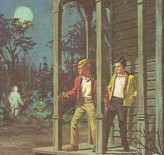
Good morning, again. These years when Memorial Day comes early always throw me for a loop - here it is, the last Friday of May, but not a long weekend! Something seems off.
Anyway - May is almost done; it has been very warm this week - normal weather for this time of year, I guess. That is something to be grateful for - normal weather is not very normal anymore. Someone always seems to be getting what Texas is getting - the worst X in Y years... For those inclined to think about the coming apocalypse - 2015 is shaping up to be the warmest year on record - after 2014 was the warmest year on record last year. Ah, plenty to worry about!
All right - I'm not going to solve global warming here. So - music it is!
1. Bill Frisell - Reflections from the Moon
2. Sun Ra - Rocket Number Nine
3. Kinks - (Wish I could Fly Like) Superman
4. The Melvins - Goin' Blind
5. Neil Young - Pocahontas
6. Serge Gainsbourg - Je T'aime... Moi Non Plus
7. Bruce Springsteen - Incident on 57th Street
8. Gomez - These 3 Sins
9. Chic - Everybody Dance
10. The Beatles - Something
Video: if the weather gets too bad - we could go to Venus, maybe - here's the current version of the Sun Ra Arkestra, last year at Glastonbury:
I want to fly but I can't even swim:
I suppose there is another option:
Friday, May 29, 2015

Monday, May 25, 2015
Decoration Day
Happy Memorial Day!
As I am wont to do, I am inclined to think about the origins of holidays on holidays. This one began in the wake of the Civil War - officialy in the north in 1868; less officially, and at various times and places in the south in 1866 or so. And one of the first instances came in Charleston, South Carolina, where a large number of freed slaves (mainly) gathered to pay tribute to the Union soldiers who had died at the Hampton Park Race Course, which had been used as a prison camp during the war. The dead had been buried there - the freedmen cleaned and landscaped the grounds and gathered for a ceremony on May 1, 1865, to honor the Martyrs of the Race Course. There may or may not have been any direct connection between that and the commemorations to come, but it set the patterns - parades, memorialization of the war dead - and I suppose an attempt to claim the holiday for a political purpose. In this case a good purpose - the end of slavery and preservation of the union. But in coming years, the south would try to claim it as a celebration of the "lost cause".
Over the years, the original significance of the day has been replaced by a more general day of remembrance for the war dead - we do have more wars to remember now. That is a good thing to remember - but it is good, too, to go back to the origins. I admit too that I feel this more strongly on Decoration Day (and Armistice Day) than most holidays - the Civil War is, really, the foundational moment of the United States. We existed for 87 odd years before that, but the Civil War is what defined us (or at least, defined us as something worth being.) We live with its effects more than we live with the effects of any other event in our history, even now. Which links it to Armistice Day - since WWI had this impact on the rest of the world. everything since - bigger or smaller - flows from the Great War, as it flows from the Civil War in this country. And so - keep in mind where this came from, and maybe, the cause behind it.

Here, then, is Orson Welles, explaining and reciting The Battle Hymn of the Republic:
As I am wont to do, I am inclined to think about the origins of holidays on holidays. This one began in the wake of the Civil War - officialy in the north in 1868; less officially, and at various times and places in the south in 1866 or so. And one of the first instances came in Charleston, South Carolina, where a large number of freed slaves (mainly) gathered to pay tribute to the Union soldiers who had died at the Hampton Park Race Course, which had been used as a prison camp during the war. The dead had been buried there - the freedmen cleaned and landscaped the grounds and gathered for a ceremony on May 1, 1865, to honor the Martyrs of the Race Course. There may or may not have been any direct connection between that and the commemorations to come, but it set the patterns - parades, memorialization of the war dead - and I suppose an attempt to claim the holiday for a political purpose. In this case a good purpose - the end of slavery and preservation of the union. But in coming years, the south would try to claim it as a celebration of the "lost cause".
Over the years, the original significance of the day has been replaced by a more general day of remembrance for the war dead - we do have more wars to remember now. That is a good thing to remember - but it is good, too, to go back to the origins. I admit too that I feel this more strongly on Decoration Day (and Armistice Day) than most holidays - the Civil War is, really, the foundational moment of the United States. We existed for 87 odd years before that, but the Civil War is what defined us (or at least, defined us as something worth being.) We live with its effects more than we live with the effects of any other event in our history, even now. Which links it to Armistice Day - since WWI had this impact on the rest of the world. everything since - bigger or smaller - flows from the Great War, as it flows from the Civil War in this country. And so - keep in mind where this came from, and maybe, the cause behind it.

Here, then, is Orson Welles, explaining and reciting The Battle Hymn of the Republic:
Friday, May 22, 2015
The Music of a Long Weekend
Friday! a long weekend! a long weekend that's already starting for most of the people I work with, but not for me! bit of poor planning there. All right - I want to get some real material up here - make some use here of all the Ivan the Terrible stuff I did for class; answer Dennis Cozzalio's latest quiz (which is a - holy Crap! - a month overdue already!) - write about history (started reading about Andrew Johnson, America's worst ever president - who was, at the same time, a very fascinating character) - etc. Some of that will come! it isn't just talk! But today it is talk...
So music:
1. Karen Dalton - How did the Feeling Feel to You
2. Smokey Robinson & the Miracles - I You Can Wait
3. Fleetwood Mac - The Sun is Shining
4. Nick Cave & Bad Seeds - Deanna
5. Arcade Fire - Flashbulb Eyes
6. Devandra Banhart - The Spirit is Near
7. The Kills - Damned if She Do
8. AC/DC - Shake a Leg
9. Beatles - Her Majesty
10. The Low Anthem - To Ohio
And some Video - let's start with Karen Dalton - different song (It Hurts me Too), but something. The Karen Dalton track is from one of those Mojo compilations - something I didn't know existed until now. But now that I do - this is some good stuff.
I wonder if Devandra Banhart is a fan? (This is also a different song than iTunes tossed up, but you take what you can get.)
And finally - I think Peter Green tends to get the attention (with good reason, as Peter Green is one of the Great guitar players of rock), but Jeremy Spencer is no slouch, and nice to see him still playing (2009 or so):
So music:
1. Karen Dalton - How did the Feeling Feel to You
2. Smokey Robinson & the Miracles - I You Can Wait
3. Fleetwood Mac - The Sun is Shining
4. Nick Cave & Bad Seeds - Deanna
5. Arcade Fire - Flashbulb Eyes
6. Devandra Banhart - The Spirit is Near
7. The Kills - Damned if She Do
8. AC/DC - Shake a Leg
9. Beatles - Her Majesty
10. The Low Anthem - To Ohio
And some Video - let's start with Karen Dalton - different song (It Hurts me Too), but something. The Karen Dalton track is from one of those Mojo compilations - something I didn't know existed until now. But now that I do - this is some good stuff.
I wonder if Devandra Banhart is a fan? (This is also a different song than iTunes tossed up, but you take what you can get.)
And finally - I think Peter Green tends to get the attention (with good reason, as Peter Green is one of the Great guitar players of rock), but Jeremy Spencer is no slouch, and nice to see him still playing (2009 or so):
Friday, May 15, 2015
I'm A Reasonable Man Get Off My Case
A week late, but here's May's Band of the Month - sticking with the late 90s early 00s theme for the moment. Sooner or later in this series, we're going to get to bands that don't have much biographical significance to me - and that's probably the case this month. I like Radiohead, obviously - that's why they're here - but I just like them. It took a while - I remember Creep coming out, remember thinking they sounded like 85 other generic 90s bands, though they could turn a phrase... Then forgot they existed for a few years, then discovered, to my shock, that they were extremely popular and widely loved by people who loved music. It was an amazing fact, I thought - though I was almost completely innocent of ever having heard them (other than Creep.) People I knew would have long earnest and intense discussions (ie, arguments) about them, whether Kid A was brilliant or some kind of terrible betrayal - and it felt like they were talking a foreign language. And then, for reasons I can't begin to remember, I got one of their records - Amnesiac it was - and discovered that they were quite good. So I got others, liked them, and accepted the fact that I was a Radiohead fan.
It still feels a bit alien to me somehow - listening to them makes me feel like a college kid in the 90s. I wasn't a college kid in the 90s, but I feel very confident that I would have loved them if I had been. This is particularly true of OK Computer and the Bends - I like their sources (I hear U2 and the Smiths in there, very strongly, and the lingering ghost of David Bowie and Pink Floyd), but it still feels very far from me. But - if I were 10 or 15 years younger - I know this would have filled me with exaltation and wonder. But I'm not - and maybe more odd than anything, the records of theirs I really love are the electronic ones - Kid A and Amnesiac - maybe because they have moved far enough from their sources to just sound like themselves - maybe because Thom Yorke has stopped trying to emote, and sounds less whiny - maybe just because I love the rhythm tracks on those records. I don't know, and I guess it doesn't matter. They are great, hypnotic records, full of great compelling songs.
Not that there aren't great songs on their other records - before and after really - and everything they do sounds fantastic. The early records have more guitar, and sometimes quite magnificent guitar (what Jonny Greenwood can make come out of a guitar is sometimes a thing of wonder) - all of them are exquisitely constructed tracks. And though Yorke's lyrics don't always convince me, when he's on - "when I am king you will first against the wall, with your opinion which is of no consequence at all" - "laugh until my head comes off, swallow til I burst" - "I wish I was special, you're so fucking special" - he nails it, can't deny it. So it goes, and I keep getting the new records and listening to the old ones, and though I can't help wondering what I would have thought if I had been 17 when OK Computer came out.
And here are 10 songs:
1. Idioteque
2. Subterranean Homesick Alien
3. Packt Like Sardines in a Crushed Tin Box
4. Paranoid Android
5. National Anthem
6. Creep
7. A Punch up at a wedding
8. Bones
9. I Might be Wrong
10. Optimistic
And here are some videos - we'll start with Creep, live in 94 - a song that holds up pretty well, over the years.
Idioteque, 2012:
Subterrainean Homesick Alien:
And Electioneering, to let Jonny show off a bit:
Paranoid Android (which I imagine is obligatory) - from Austin City Limits:
Finally - here's a cover of Packt like sardines (etc.) by a band I might be getting to eventually (Punch Brothers) - which does illustrate jjst how good these songs are:
It still feels a bit alien to me somehow - listening to them makes me feel like a college kid in the 90s. I wasn't a college kid in the 90s, but I feel very confident that I would have loved them if I had been. This is particularly true of OK Computer and the Bends - I like their sources (I hear U2 and the Smiths in there, very strongly, and the lingering ghost of David Bowie and Pink Floyd), but it still feels very far from me. But - if I were 10 or 15 years younger - I know this would have filled me with exaltation and wonder. But I'm not - and maybe more odd than anything, the records of theirs I really love are the electronic ones - Kid A and Amnesiac - maybe because they have moved far enough from their sources to just sound like themselves - maybe because Thom Yorke has stopped trying to emote, and sounds less whiny - maybe just because I love the rhythm tracks on those records. I don't know, and I guess it doesn't matter. They are great, hypnotic records, full of great compelling songs.
Not that there aren't great songs on their other records - before and after really - and everything they do sounds fantastic. The early records have more guitar, and sometimes quite magnificent guitar (what Jonny Greenwood can make come out of a guitar is sometimes a thing of wonder) - all of them are exquisitely constructed tracks. And though Yorke's lyrics don't always convince me, when he's on - "when I am king you will first against the wall, with your opinion which is of no consequence at all" - "laugh until my head comes off, swallow til I burst" - "I wish I was special, you're so fucking special" - he nails it, can't deny it. So it goes, and I keep getting the new records and listening to the old ones, and though I can't help wondering what I would have thought if I had been 17 when OK Computer came out.
And here are 10 songs:
1. Idioteque
2. Subterranean Homesick Alien
3. Packt Like Sardines in a Crushed Tin Box
4. Paranoid Android
5. National Anthem
6. Creep
7. A Punch up at a wedding
8. Bones
9. I Might be Wrong
10. Optimistic
And here are some videos - we'll start with Creep, live in 94 - a song that holds up pretty well, over the years.
Idioteque, 2012:
Subterrainean Homesick Alien:
And Electioneering, to let Jonny show off a bit:
Paranoid Android (which I imagine is obligatory) - from Austin City Limits:
Finally - here's a cover of Packt like sardines (etc.) by a band I might be getting to eventually (Punch Brothers) - which does illustrate jjst how good these songs are:
Thursday, May 14, 2015
Film Preservation Blogathon
Just want to drop a quick link in here for the Film Preservation Blogathon running this year at Ferdy on Films, This Island Rod and Wonders in the Dark. I am coming out of my Ivan the Terrible induced isolation, so don't have a lot to say just now - but you can find plenty to read, and can donate to a good cause - the National Film Preservation Foundation. Enjoy!
The theme of this year's blogathon is Science Fiction film - Ivan the Terrible is NOT a science fiction film, though shots like this might give you that impression...

The theme of this year's blogathon is Science Fiction film - Ivan the Terrible is NOT a science fiction film, though shots like this might give you that impression...

Friday, May 08, 2015
Friday Random Ten
Tjis week should be Band of the Month week, but I am behind on things, and so will have to wait a week. It's coming, but not until Ivan is done.

Anyway - songs, before heading out into another excellent spring Day, VE day, 70 years along... Random 10:
1. Jack White - Entitlement
2. Neutral Milk Hotel - Oh Comely
3. Frank Zappa - Let's Make the Water Turn Black
4. Chicago - Beginnings (live)
5. Stooges - Slide (Slidin' the Blues)
6. Flying Burrito Brothers - Wheels
7. Six Organs of Admittance - Anesthesia
8. Wilco - Art of Almost
9. John McLaughlin - don't Let the Dragon Et Your Mother
10. Deerhoof - I did Crimes for You
Video? little Jack White maybe to start:
And Neutral Milk Hotel:
And end with Wilco, with Nels off the leash:

Anyway - songs, before heading out into another excellent spring Day, VE day, 70 years along... Random 10:
1. Jack White - Entitlement
2. Neutral Milk Hotel - Oh Comely
3. Frank Zappa - Let's Make the Water Turn Black
4. Chicago - Beginnings (live)
5. Stooges - Slide (Slidin' the Blues)
6. Flying Burrito Brothers - Wheels
7. Six Organs of Admittance - Anesthesia
8. Wilco - Art of Almost
9. John McLaughlin - don't Let the Dragon Et Your Mother
10. Deerhoof - I did Crimes for You
Video? little Jack White maybe to start:
And Neutral Milk Hotel:
And end with Wilco, with Nels off the leash:
Thursday, May 07, 2015
Lusitania
Today is another aniversary from 100 years ago - the Sinking of the Lusitania. The Lusitania was a British passenger liner running between New York and Liverpool, still making runs in 1915, despite the increased danger from German submarines. The Germans wee. at this point in the war, beginning to carry out unlimited submarine warfare - that is, they were beginning to attack British ships on sight, from under water, with torpedoes - rather than surfacing and attempting to evacuate the ships first. They made no secret of this - before the Lusitania left New York, they circulated a warning, pointing out that England was a war zone, and they had the right to attack ships near England, and would - that passengers traveled at their own risks. But passengers traveled, including a lot of Americans - and when the Germans sank it, 218 Americans died, of the 1198 total casualties. It caused a sensation - the British condemned the attack roundly; the Americans too, and edged toward war - and certainly turned against the Germans. The Germans, for their part, while defending their actions, abandoned unlimited submarine warfare for two years - they only resumed in in 1917, when the war was starting to go against them. It didn't help - in 1917, the Americans were having none of it, and came into the war not long after. The sinking of the Lusitania, then, did finally lose the war for Germany (the US's involvement went far toward breaking the stalemate) - though it took a few years to come to pass.
That is probably all for the best, but you have to feel some sympathy for them. They claimed at the time that the Lusitania was a legitimate target, carrying armaments - and it was. Which makes it not entirely untrue to say that the passengers were being used as human shields - the morality gets muddy there. The morality of naval warfare - blockades and submarine warfare - is pretty murky anyway. The British blockades the Germans for the whole war - and went a long way toward starving them out. Causing serious ongoing suffering in the civilian population. But the British did this with surface ships - they had a huge navy that could cut off trade with Germany without using submarines. The Germans lacked the surface fleet, but they had submarines, which were very effective against shipping - though the nature of submarine warfare makes it impossible to wage without killing people. Surface ships can turn back freighters - a large surface navy can stop shipping without always sinking it, can drive off any military escorts and so on - submarines can't do that. They can only sink ships. They can't surface to engage with ships - a few destroyers can rout a submarine. So waging a blockade with subs is a murderous affair - immediately murderous: killing people instantly and terrifyingly, rather than starving them slowly, the British way.
But it points to something else - that 20th century warfare was becoming total war - wars are always won and lost through logistics, but this is all the more obvious in the 20th century, with heavy industrialization, with larger populations, concentrated in cities that have to bring their food from somewhere else. And with the industrialization of warfare itself, creating an insatiable appetite for machines of killing. Commerce becomes all the more important - commerce and industry - and they become legitimate targets for attack, with all the civilian casualties that come with it. This would only grow more important as time passed, as air power became more important - it would justify the use of strategic bombing in WWII. That's a topic for another day - but in the end, it would end up killing millions (maybe) of civilians, without really making any dent in anyone's war making capabilities. Not in absolute terms, and not in comparison with what submarines (and conventional blockades) would accomplish.
Finally - here is Winsor McKay's animated film on the sinking of the Lusitania, a fine piece of wartime propaganda by a great filmmaker:
That is probably all for the best, but you have to feel some sympathy for them. They claimed at the time that the Lusitania was a legitimate target, carrying armaments - and it was. Which makes it not entirely untrue to say that the passengers were being used as human shields - the morality gets muddy there. The morality of naval warfare - blockades and submarine warfare - is pretty murky anyway. The British blockades the Germans for the whole war - and went a long way toward starving them out. Causing serious ongoing suffering in the civilian population. But the British did this with surface ships - they had a huge navy that could cut off trade with Germany without using submarines. The Germans lacked the surface fleet, but they had submarines, which were very effective against shipping - though the nature of submarine warfare makes it impossible to wage without killing people. Surface ships can turn back freighters - a large surface navy can stop shipping without always sinking it, can drive off any military escorts and so on - submarines can't do that. They can only sink ships. They can't surface to engage with ships - a few destroyers can rout a submarine. So waging a blockade with subs is a murderous affair - immediately murderous: killing people instantly and terrifyingly, rather than starving them slowly, the British way.
But it points to something else - that 20th century warfare was becoming total war - wars are always won and lost through logistics, but this is all the more obvious in the 20th century, with heavy industrialization, with larger populations, concentrated in cities that have to bring their food from somewhere else. And with the industrialization of warfare itself, creating an insatiable appetite for machines of killing. Commerce becomes all the more important - commerce and industry - and they become legitimate targets for attack, with all the civilian casualties that come with it. This would only grow more important as time passed, as air power became more important - it would justify the use of strategic bombing in WWII. That's a topic for another day - but in the end, it would end up killing millions (maybe) of civilians, without really making any dent in anyone's war making capabilities. Not in absolute terms, and not in comparison with what submarines (and conventional blockades) would accomplish.
Finally - here is Winsor McKay's animated film on the sinking of the Lusitania, a fine piece of wartime propaganda by a great filmmaker:
Friday, May 01, 2015
Walpurgisnacht & May Day
Happy May Day, ladies and gentlemen! It is a happy May day, this year - we have an actualy sort-of socialist to vote for! Bernie Sanders, senator from Vermont, is running for president, as a Democrat. Now - I don't have any illusions that he is going to win - though I don't know how much that matters. If he's there to keep bringing up economic matters, it can't hurt. And it's nice to have someone to vote for in the primaries that I can vote for without reservation. I am no fan of Hillary Clinton - she and Bill have always come off as trimmers, willing to give up anything for an inch of advantage for themselves - it's hard to imagine her holding the line on as much as Obama has been able to keep from the GOP. But in the end, that doesn't matter in the least - in the general election I will vote for a Democrat, the nominated Democrat, even if it's Martin O'Malley. Parties matter infinitely more than the candidate, especially in these days - with an extremely partisan political climate, and one party openly pursuing class and often race warfare. Not that I'm ever tempted to vote for Republicans, but now, it is imperative that people vote for Democrats, until the Republicans are broken, and change their positions.
That's a topic for another day, I suppose. Today - I'm just happy there's a candidate for president whose politics make sense to me. And is a Vermonter! Go Bernie!
Now - for music - my Russian culture class is into the 20th century, and this week talked about Mikhail Bulgakov and Master and Margarita, and thus I am thinking more of Walpurgisnacht than May Day proper. And so, in honor of professor Woland and co. (and the fact that the book managed to make it into the mainstream of international pop culture within a year of its eventual publication) - here is a top 10 songs about the devil:
1. Rolling Stones - Sympathy for the Devil
2. Beck - Devil's Haircut
3. Robert Johnson - Me and the Devil Blues
4. Van Halen - Running with the Devil
5. James Blood Ullmer - Devil's Got to Burn
6. Throwing Muses - Devil's Roof
7. Brian Jonestown Massacre - The Devil May Care (Mom & Dad Don't)
8. Nick Cave - Up Jumped the Devil
9. Grateful Dead - Friend of the Devil
10. Modest Mouse - This Devil's Workday
And video? well - here's footage of the Stones working it out. With a camera rolling around the studio maned by mad Frenchmen, I imagine.
And I suppose any Walpurgisnacht tribute needs the Sabs:
And finally - we need some witches for Witch Night, so here's some live Eagles for you. I'm sure there's a great clamor for live Eagles from my readers...
That's a topic for another day, I suppose. Today - I'm just happy there's a candidate for president whose politics make sense to me. And is a Vermonter! Go Bernie!
Now - for music - my Russian culture class is into the 20th century, and this week talked about Mikhail Bulgakov and Master and Margarita, and thus I am thinking more of Walpurgisnacht than May Day proper. And so, in honor of professor Woland and co. (and the fact that the book managed to make it into the mainstream of international pop culture within a year of its eventual publication) - here is a top 10 songs about the devil:
1. Rolling Stones - Sympathy for the Devil
2. Beck - Devil's Haircut
3. Robert Johnson - Me and the Devil Blues
4. Van Halen - Running with the Devil
5. James Blood Ullmer - Devil's Got to Burn
6. Throwing Muses - Devil's Roof
7. Brian Jonestown Massacre - The Devil May Care (Mom & Dad Don't)
8. Nick Cave - Up Jumped the Devil
9. Grateful Dead - Friend of the Devil
10. Modest Mouse - This Devil's Workday
And video? well - here's footage of the Stones working it out. With a camera rolling around the studio maned by mad Frenchmen, I imagine.
And I suppose any Walpurgisnacht tribute needs the Sabs:
And finally - we need some witches for Witch Night, so here's some live Eagles for you. I'm sure there's a great clamor for live Eagles from my readers...
Saturday, April 25, 2015
Gallipoli
100 years ago today, the landings on Gallipoli Peninsular took place. The campaign was the brainchild of Winston Churchill basically - the idea was for the allies to force their way up the Dardenelles and take Constantinople, giving them access to the Black Sea, and thus Russia. There's a lot of backstory to this battle. Start with the Ottoman Empire deciding to join the Germans and Austrians in the war. The Young Turks hwo rules the Ottoman empire were close to the Germans - the British tended to be more bullying, while the Germans offered help and support - the Turks chose Germany. That shut off the Dardenelles, and most significantly, cut off sea routes to Russia. The Russians in 1914 were desperately short of supplies - England and France had no way to get them material. So Churchill and company thought to force their way up the Dardenelles, take Constantinople, and open the shipping lanes to the Black Sea.
Churchill tried first to do it with naval power alone. Battleships were sent, they bombarded the Turkish defenses, then tried to steam up the straights - only to be devastated by mines, primarily. Several ships sank - the fleet retreated. After this, the army was sent in. The idea was to find and destroy the Ottoman artillery - the guns hadn't done much against the battleships, but they had driven off the minesweepers, leaving the battleships helpless against mines. And so - on April 25, 1915, troops were put ashore at several beaches on the Gallipoli peninsular.
The landings were a disaster. Amphibious landings under fire were still something of a novelty - getting men ashore was not easy. What's worse - the Allies did not really know what they were getting into. The ANZAC forces landed a mile off from where they were supposed to land - across the whole area, the Allies did not understand the lay of the land, the conditions on the beaches and so on. They didn't have any idea of the strength of the men waiting for them. They landed in the face of determined resistance, from men dug in on high ground, from positions that allowed crossing fire - they never had a chance. Casualties ran 60-70% in most of the battlegrounds - by the end of the first day, the British and ANZAC forces had managed to take a strip of land by the beaches, but no more. And they never went anywhere in the next 7 months. Because as bad as the landings went, once the Turks were able to bring in enough men to hold the ground, they had the allies completely at their mercy. They had the high ground - they had positions that let them rake the allied positions - the battle quickly turned into protracted trench warfare. It was probably worse than anything on the western front, too - the peninsular was dry and hot, and what fresh water there was was controlled by the Ottomans - water had to be brought in to the allied forces - every thing had to be brought ashore to the allies forces. And there was never enough - the trenches became hellish and stayed that way.
In the end, the allies left, losing 250,000 odd men. The Turks lost about the same, but they won, expelling the invaders. As far as the war went, it was just another of the many pointless and hopeless battles that accomplished nothing but very long casualty lists. Beyond the war, though, it has a great deal of importance. It was a great moment in Turkish nationalism - the victory had great importance to their morale, and provided a source of national pride. It also elevated Mustafa Kemal (later Attaturk) to prominence. It had a similar effect in Australia and New Zealand. The heroism and suffering of the ANZAC troops made Gallipoli the definitive campaign for those countries. And their use - the sense of being thrown into battle half prepared, and of beings used as distractions and covers for the British (an idea that is not really fair) - led to resentment in Australia and New Zealand against the British, and helped to form the idea of those countries as nations unto themselves. It strengthened their sense of independence - the emergence of their sense of national character. It has made today, April 25, a national holiday in both countries, and made it the most important military commemoration as well.
Churchill tried first to do it with naval power alone. Battleships were sent, they bombarded the Turkish defenses, then tried to steam up the straights - only to be devastated by mines, primarily. Several ships sank - the fleet retreated. After this, the army was sent in. The idea was to find and destroy the Ottoman artillery - the guns hadn't done much against the battleships, but they had driven off the minesweepers, leaving the battleships helpless against mines. And so - on April 25, 1915, troops were put ashore at several beaches on the Gallipoli peninsular.
The landings were a disaster. Amphibious landings under fire were still something of a novelty - getting men ashore was not easy. What's worse - the Allies did not really know what they were getting into. The ANZAC forces landed a mile off from where they were supposed to land - across the whole area, the Allies did not understand the lay of the land, the conditions on the beaches and so on. They didn't have any idea of the strength of the men waiting for them. They landed in the face of determined resistance, from men dug in on high ground, from positions that allowed crossing fire - they never had a chance. Casualties ran 60-70% in most of the battlegrounds - by the end of the first day, the British and ANZAC forces had managed to take a strip of land by the beaches, but no more. And they never went anywhere in the next 7 months. Because as bad as the landings went, once the Turks were able to bring in enough men to hold the ground, they had the allies completely at their mercy. They had the high ground - they had positions that let them rake the allied positions - the battle quickly turned into protracted trench warfare. It was probably worse than anything on the western front, too - the peninsular was dry and hot, and what fresh water there was was controlled by the Ottomans - water had to be brought in to the allied forces - every thing had to be brought ashore to the allies forces. And there was never enough - the trenches became hellish and stayed that way.
In the end, the allies left, losing 250,000 odd men. The Turks lost about the same, but they won, expelling the invaders. As far as the war went, it was just another of the many pointless and hopeless battles that accomplished nothing but very long casualty lists. Beyond the war, though, it has a great deal of importance. It was a great moment in Turkish nationalism - the victory had great importance to their morale, and provided a source of national pride. It also elevated Mustafa Kemal (later Attaturk) to prominence. It had a similar effect in Australia and New Zealand. The heroism and suffering of the ANZAC troops made Gallipoli the definitive campaign for those countries. And their use - the sense of being thrown into battle half prepared, and of beings used as distractions and covers for the British (an idea that is not really fair) - led to resentment in Australia and New Zealand against the British, and helped to form the idea of those countries as nations unto themselves. It strengthened their sense of independence - the emergence of their sense of national character. It has made today, April 25, a national holiday in both countries, and made it the most important military commemoration as well.
Friday, April 24, 2015
Friday Freeze (winter clings...)
I wake up this morning and find it cold again - cold! why is it so cold? Because I'm writing papers about Russia? Probably. That must be it. In any case, as we proceed - another simple weekly music post is in order. Expect something more substantial tomorrow for ANZAC day, but for now, let's just have some iTunes fun to mark the successful ends of another working week...
Songs:
1. of Montreal - Heimdalsgate Like a Pormethean Curse
2. Prince & The Revolution - When Doves Cry
3. Pavement - So Stark
4. Danielson - This Day is a Loaf
5. John Lee Hooker - Burning Hell
6. Grateful Dead - New Speedway Boogie
7. Fairport Convention - Doctor of Physick
8. Decembrists - of Angels and Angles
9. Minutemen - Bermuda
10. Built to Spill - ut of Sight
Video? dig if you will a picture...
Here's an acoustic version of the Of Montreal song:
And - we got John Lee Hooker on the list, so we gotta have John Lee Hooker - ain't no heaven, ain't no burning hell.
Songs:
1. of Montreal - Heimdalsgate Like a Pormethean Curse
2. Prince & The Revolution - When Doves Cry
3. Pavement - So Stark
4. Danielson - This Day is a Loaf
5. John Lee Hooker - Burning Hell
6. Grateful Dead - New Speedway Boogie
7. Fairport Convention - Doctor of Physick
8. Decembrists - of Angels and Angles
9. Minutemen - Bermuda
10. Built to Spill - ut of Sight
Video? dig if you will a picture...
Here's an acoustic version of the Of Montreal song:
And - we got John Lee Hooker on the list, so we gotta have John Lee Hooker - ain't no heaven, ain't no burning hell.
Wednesday, April 22, 2015
Gas! Gas!
The other big historical anniversary right now is the Great War. And what happened 100 years ago today needs to be mentioned. On April 22, 1915, the Second Battle of Ypres began - it was a very important battle, because it marked the first successful use of poison gas in WWI. The Germans opened the attack by releasing a great mass of chlorine gas - they had it in canisters that they opened by hand, and hoped the wind would carry it over the French lines. It did (though it also poisoned a good number of Germans) - it devastated the soldiers in the front lines, and caused a huge gap to open in the lines. But the Germans weren't prepared to exploit the opening - they didn't have reserves ready to attack, whether because they didn't think the gas would work that well, or because they were as afraid of it as the French, I don't know. In any case, the hole opened, but by the time the Germans attacked, the Allies were able to close the gap. And just like that, they were back to regular trench warfare, and the battle continued another month and another 100,000 or so casualties for both sides.
On a tactical level, it was WWI in miniature - a new method of attack that did, in fact, break the stalemate, but that couldn't be exploited, followed by endless repetitions of the same tactic, that couldn't work again. Almost from the start, certain Canadians realized they could protect themselves from the gas by pissing on cloth and breathing through it - it didn't take long for word to get around, and then for gas masks to be distributed. These defenses were never enough to prevent the horrors of gas warfare, but they were enough to negate it as an offensive tactic. It just became another horrible way to die. And everyone kept doing it - the Germans tried again on the 24th of April, with some success, but never enough to break through. After that, everyone started using gas, but it was never decisive again. Just another method of killing, that usually caused as much trouble for the attackers as the defenders (since the gas hangs around in trenches, and you have to advance through it). It is one of the many things that made this war one of the most horrifying things human beings have done to one another, made trench warfare a sustained hell on earth. And, after April 22, 1915, never really accomplishing anything of military importance.
On a tactical level, it was WWI in miniature - a new method of attack that did, in fact, break the stalemate, but that couldn't be exploited, followed by endless repetitions of the same tactic, that couldn't work again. Almost from the start, certain Canadians realized they could protect themselves from the gas by pissing on cloth and breathing through it - it didn't take long for word to get around, and then for gas masks to be distributed. These defenses were never enough to prevent the horrors of gas warfare, but they were enough to negate it as an offensive tactic. It just became another horrible way to die. And everyone kept doing it - the Germans tried again on the 24th of April, with some success, but never enough to break through. After that, everyone started using gas, but it was never decisive again. Just another method of killing, that usually caused as much trouble for the attackers as the defenders (since the gas hangs around in trenches, and you have to advance through it). It is one of the many things that made this war one of the most horrifying things human beings have done to one another, made trench warfare a sustained hell on earth. And, after April 22, 1915, never really accomplishing anything of military importance.
Friday, April 17, 2015
Music to Rain By
Happy Friday! Coming up on a long weekend, in Boston anyway. Is spring here? it is warmer, though it's back to raining all the time. But that is spring. I am not very energetic this morning, so let us turn directly to iTunes for inspiration:
1. Mudhoney - In and Out of Grace
2. Deerhoof - News From a Bird
3. Arcade Fire - Joan of Arc
4. fIREHOSE - More Famous Quotes (play it George!)
5. Richard Thompson - Mr Rebound
6. Saint Etienne - Action
7. Interpol - Always Malaise (The Man I am)
8. Nirvana - In Bloom (live)
9. Loren Connors - Air No 13
10. Scott Walker - Epizootics
Video? Here's Mudhoney, of course:
here's another band from the Pacific Northwest, singing about pretty songs:
1. Mudhoney - In and Out of Grace
2. Deerhoof - News From a Bird
3. Arcade Fire - Joan of Arc
4. fIREHOSE - More Famous Quotes (play it George!)
5. Richard Thompson - Mr Rebound
6. Saint Etienne - Action
7. Interpol - Always Malaise (The Man I am)
8. Nirvana - In Bloom (live)
9. Loren Connors - Air No 13
10. Scott Walker - Epizootics
Video? Here's Mudhoney, of course:
here's another band from the Pacific Northwest, singing about pretty songs:
Tuesday, April 14, 2015
The Assassination of Lincoln
150 years ago today, John Wilkes Booth shot Abraham Lincoln in the third act of The American Cousin at the Ford Theater... (I pick on the lede - but it's actually a pretty sharp piece of reporting - with the writer also turning over the assassin's gun to the authorities.) Coming 5 days after Lee's surrender, this was a horrible shock to the country - his funeral would be the occasion of intense mourning.
It was a terrible event - and in retrospect, it becomes even more appalling. The Vice President was Andrew Johnson, a Tennessee Democrat, who had been placed on the ticket as a symbol of unity with the south, and who was already something of a problem. He was given to intemperate remarks - he was considered more vindictive than Lincoln. He'd also made a fool of himself at his inauguration, getting good and plastered and giving a drunken blur of a speech - since then, he'd stayed out of sight and hoped everyone would forget about him. And now he was president. And as president, he set about trying to reconstruct the Union, in a way that brought the old southern slaveholders back to power, let them pass laws that virtually reinstated slavery under new names... The Republicans in congress were having none of this, and passed their own laws, and when he vetoed them, they overrode his vetoes, and when things went far enough, they impeached him.
It was a disaster, the United States government breaking down at a time when it needed to be very sharp, to deal with reintegrating an unrepentant south into the country without surrendering the freedom won by the war. The radicals in congress eventually were able to implement their policies - but only for a few years, and with much of the gains of the war undone at the end of Reconstructions. Could Lincoln have done better? His stated policy toward the south was probably closer to Johnson's than to the radical Republicans - but he was also a better politician, and had a better sense of doing what needed to be done. It seems likely he would have done far more to protect the rights of Blacks after the war - his policies had evolved steadily toward more radical positions toward slavery and race, and it's reasonable to expect that would have continued. But saying that - it is also possible that he would have been hung up on the same issues that destroyed Johnson. It wasn't just Johnson's policies that undid him - it was the villainy of the south, who did everything they could to undo the end of slavery. Johnson's problem, and Lincoln's if he lived, was not so much the radical Republicans as it was the former confederates - Johnson was willing to work with the confederates; would Lincoln have been? would he have been able to get them to accept free Blacks, Black voting, and so on? He might have - but it's no guarantee. And if they didn't cooperate, they were going to come into conflict with the congressional Republicans, the Thaddeus Stevens, Ben Wade, Charles Sumner types - they had won the war, and were not about to give in now. It is possible, in the end, that had Lincoln lived, the next couple years would have undone a lot of his legacy - maybe not likely, but possible.
But none of that happened. Lincoln died, and history went where it did (and where it went ended up being mostly bad - 100 years wasted, basically). And Lincoln's life itself remains as one of the greatest in this countries history. He did win the Civil War - more than any other president won any of our other wars. He was, fairly early in the war, the sharpest strategist - understanding the need to use the Union's advantages in number and material to crush the Confederacy, understanding the need for action and aggression. And as a politician, he kept a very fragile and contentious country together - kept it committed to a bloody and destructive war, until it won. And finally, he freed the slaves - he recognized the reasons for the war, and accepted them, and imagined, during the war, the opportunities it afforded, of making the United States worthy of its imagined view of itself. We were not, before 1863, or 1865, a very admirable country - we were not free, however much we wanted to say we were. Slavery poisoned us, almost incurably - and Lincoln saw that, and moved to change it, and to reinvent the country as what it should have been. That matters. Even if Reconstruction failed, the war, and Lincoln, remained as a reminder of what we were trying to become. We have a model of what the country should be, what it can be, something we can live up to. Abraham Lincoln works pretty well for that.
It was a terrible event - and in retrospect, it becomes even more appalling. The Vice President was Andrew Johnson, a Tennessee Democrat, who had been placed on the ticket as a symbol of unity with the south, and who was already something of a problem. He was given to intemperate remarks - he was considered more vindictive than Lincoln. He'd also made a fool of himself at his inauguration, getting good and plastered and giving a drunken blur of a speech - since then, he'd stayed out of sight and hoped everyone would forget about him. And now he was president. And as president, he set about trying to reconstruct the Union, in a way that brought the old southern slaveholders back to power, let them pass laws that virtually reinstated slavery under new names... The Republicans in congress were having none of this, and passed their own laws, and when he vetoed them, they overrode his vetoes, and when things went far enough, they impeached him.
It was a disaster, the United States government breaking down at a time when it needed to be very sharp, to deal with reintegrating an unrepentant south into the country without surrendering the freedom won by the war. The radicals in congress eventually were able to implement their policies - but only for a few years, and with much of the gains of the war undone at the end of Reconstructions. Could Lincoln have done better? His stated policy toward the south was probably closer to Johnson's than to the radical Republicans - but he was also a better politician, and had a better sense of doing what needed to be done. It seems likely he would have done far more to protect the rights of Blacks after the war - his policies had evolved steadily toward more radical positions toward slavery and race, and it's reasonable to expect that would have continued. But saying that - it is also possible that he would have been hung up on the same issues that destroyed Johnson. It wasn't just Johnson's policies that undid him - it was the villainy of the south, who did everything they could to undo the end of slavery. Johnson's problem, and Lincoln's if he lived, was not so much the radical Republicans as it was the former confederates - Johnson was willing to work with the confederates; would Lincoln have been? would he have been able to get them to accept free Blacks, Black voting, and so on? He might have - but it's no guarantee. And if they didn't cooperate, they were going to come into conflict with the congressional Republicans, the Thaddeus Stevens, Ben Wade, Charles Sumner types - they had won the war, and were not about to give in now. It is possible, in the end, that had Lincoln lived, the next couple years would have undone a lot of his legacy - maybe not likely, but possible.
But none of that happened. Lincoln died, and history went where it did (and where it went ended up being mostly bad - 100 years wasted, basically). And Lincoln's life itself remains as one of the greatest in this countries history. He did win the Civil War - more than any other president won any of our other wars. He was, fairly early in the war, the sharpest strategist - understanding the need to use the Union's advantages in number and material to crush the Confederacy, understanding the need for action and aggression. And as a politician, he kept a very fragile and contentious country together - kept it committed to a bloody and destructive war, until it won. And finally, he freed the slaves - he recognized the reasons for the war, and accepted them, and imagined, during the war, the opportunities it afforded, of making the United States worthy of its imagined view of itself. We were not, before 1863, or 1865, a very admirable country - we were not free, however much we wanted to say we were. Slavery poisoned us, almost incurably - and Lincoln saw that, and moved to change it, and to reinvent the country as what it should have been. That matters. Even if Reconstruction failed, the war, and Lincoln, remained as a reminder of what we were trying to become. We have a model of what the country should be, what it can be, something we can live up to. Abraham Lincoln works pretty well for that.
Friday, April 10, 2015
If I'm Not in the Band Doesn't Mean I'm Square
Band of the Month time - this month, I think, it's time for Mercury Rev. I name dropped them quite a bit last month - I'm not sure how much direct link there is between Mercury Rev and TV on the Radio, but I can see the continuity in my affection for the two bands. I discovered Mercury Rev about the turn of the millennium - maybe with All is Dream, maybe before, I don't know. I remember reading about them, probably in Mojo, back around the end of 2001 - about the time I was discovering Krautrock, Japanese Noise (Boredoms, Acid Mothers Temple), real prog (Van Der Graf Generator, Soft Machine) - they sounded intriguing, I got a couple records, and immediately became a fan. I imagine I got All is Dream and Yerself is Steam together - close to it anyway - those are very different records, but I adored both. I certainly listened to both records rather obsessively for a while... a fact to be reflected in our song list, I imagine... They were, in that period (first couple years of the millennium), just about my favorite band. They make a good token of what I was listening to - which is, admittedly, almost everything - the 00s I was listening to music regularly, and I had money, so I bought everything that struck my fancy - and listened to most of it! on CD! whole records! what a strange time! But they spanned a lot of styles - the noisy oddness of their early records to the lush song craft of their later ones - all of which I liked. Acid Mothers to classic Scott Walker to the Decembrists - Mercury Rev manages to touch most of it. That breadth, that mix of tunage and noise (with sense of humor), is what reminds me of them in TVOTR - that is the connection...
I loved both sides of them from the beginning, and still do. I was addicted to All is Dream - a gorgeous record, pretty, sophisticated songs, clever words ("caught like a fleeting thought stuck inside of Leonard Cohen's mind"), and bracketed by two of the most glorious orchestral rock songs on record. But I was in awe of Yerself is Steam. Those early records, I have to admit, probably come closer to hitting my sweet spot that anything else around at the time - they play like a mashup of Pere Ubu and Pink Floyd, performed by Faust or Amon Duul - wanking guitars, horns and strings and noise, shifting tempos and styles, squawking roar chasing melodic passages chasing mumbled weirdness - what's not to love? The Pere Ubu influence is hard to miss - Dave Baker has a lot of David Thomas in him, and more than one of their songs proceeds like Sentimental Journey bumping into Syd Barrett's poppier numbers. Which isn't far from the way Baker's vocals clash with Jonathan Donahue's - their voices contrast the way the parts of the songs contrast - the way their appearances clash, in things like the Chasing a Bee film... They are all over the place in a way that is just thrilling.
Once Baker left, the pop/melodic/orchestral side took over - even the music hall/dixieland influences (Meth of a Rockette's Kick or Delta Sun Bottleneck Stomp) disappeared over time. (Was that a function of Suzanne Thorpe's departure? A lot of the off kilter complexity of their music came from her - the flute cutting against the squall, and so on...) Leaving them still fantastic, but maybe a bit more one dimensional. But they still make such good songs - what can I say against them? They have become craftsmen, and very fine ones - the production is superb, and songs are constructed with such richness, the instruments and sounds blended, interacting. Hercules stands as the perfection of this, I imagine, the way it builds, instruments slipping into the mix, accumulating, to the release of the guitar solo - and then quietly dissipating into the night - yes. That's the Pink Floyd influence, brought to perfection - probably no accident that I renewed my old love for the Floyd about the same time I started listening to Mercury Rev.
So that is that. And a top 10 Songs:
1. Hercules
2. Chasing a Bee
3. Delta Sun Bottleneck Stomp - utterly joyful piece of music, this is, horns and guitars and keyboards and flute chasing each other - great stuff...
4. The Dark is Rising
5. Empire State (Son House in Excelsis)
6. Meth of a Rockette's Kick
7. Syring Mouth
8. Secret for a Song
9. Car Wash Hair
10. Something for Joey
And Video? We have to start with Film - they started as a band to make music for films (like Can! speaking of Krautrock...) - and those films are as cool, strange, beautiful as the songs. Here is Chasing a Bee, as epic on film as on record:
Here they are live in their early, abrasive days - Syringe Mouth, Baker's anti-charisma on full display, and Donahue and Grasshopper making a dreadful noise:
And here's a reminder that even in the early days the pretty songs were there - here, doing Snowstorm and Carwash Hair with Dean and Britta.
And later - another video, this for Delta Sun Bottleneck Stomp, an altogether different kind of semi surrealism:
The Dark is Rising, live on Jools Holland:
And a Secret for a Song, also on Jools:
I loved both sides of them from the beginning, and still do. I was addicted to All is Dream - a gorgeous record, pretty, sophisticated songs, clever words ("caught like a fleeting thought stuck inside of Leonard Cohen's mind"), and bracketed by two of the most glorious orchestral rock songs on record. But I was in awe of Yerself is Steam. Those early records, I have to admit, probably come closer to hitting my sweet spot that anything else around at the time - they play like a mashup of Pere Ubu and Pink Floyd, performed by Faust or Amon Duul - wanking guitars, horns and strings and noise, shifting tempos and styles, squawking roar chasing melodic passages chasing mumbled weirdness - what's not to love? The Pere Ubu influence is hard to miss - Dave Baker has a lot of David Thomas in him, and more than one of their songs proceeds like Sentimental Journey bumping into Syd Barrett's poppier numbers. Which isn't far from the way Baker's vocals clash with Jonathan Donahue's - their voices contrast the way the parts of the songs contrast - the way their appearances clash, in things like the Chasing a Bee film... They are all over the place in a way that is just thrilling.
Once Baker left, the pop/melodic/orchestral side took over - even the music hall/dixieland influences (Meth of a Rockette's Kick or Delta Sun Bottleneck Stomp) disappeared over time. (Was that a function of Suzanne Thorpe's departure? A lot of the off kilter complexity of their music came from her - the flute cutting against the squall, and so on...) Leaving them still fantastic, but maybe a bit more one dimensional. But they still make such good songs - what can I say against them? They have become craftsmen, and very fine ones - the production is superb, and songs are constructed with such richness, the instruments and sounds blended, interacting. Hercules stands as the perfection of this, I imagine, the way it builds, instruments slipping into the mix, accumulating, to the release of the guitar solo - and then quietly dissipating into the night - yes. That's the Pink Floyd influence, brought to perfection - probably no accident that I renewed my old love for the Floyd about the same time I started listening to Mercury Rev.
So that is that. And a top 10 Songs:
1. Hercules
2. Chasing a Bee
3. Delta Sun Bottleneck Stomp - utterly joyful piece of music, this is, horns and guitars and keyboards and flute chasing each other - great stuff...
4. The Dark is Rising
5. Empire State (Son House in Excelsis)
6. Meth of a Rockette's Kick
7. Syring Mouth
8. Secret for a Song
9. Car Wash Hair
10. Something for Joey
And Video? We have to start with Film - they started as a band to make music for films (like Can! speaking of Krautrock...) - and those films are as cool, strange, beautiful as the songs. Here is Chasing a Bee, as epic on film as on record:
Here they are live in their early, abrasive days - Syringe Mouth, Baker's anti-charisma on full display, and Donahue and Grasshopper making a dreadful noise:
And here's a reminder that even in the early days the pretty songs were there - here, doing Snowstorm and Carwash Hair with Dean and Britta.
And later - another video, this for Delta Sun Bottleneck Stomp, an altogether different kind of semi surrealism:
The Dark is Rising, live on Jools Holland:
And a Secret for a Song, also on Jools:
Thursday, April 09, 2015
Appomattox Court House
150 years ago today, Robert E. Lee surrendered formally to the US Government at Appomattox Courthouse, and though the Civil War dragged on quite a while longer, this was where it ended. Lee's army was the Confederacy, really, especially after Nashville (maybe even Atlanta - once Hood left the city, his army was irrelevant, in terms of changing the ending) - and facing the facts and laying down arms put the rebellion to rest.
I have mostly written about the military aspects of the war in this series - I will have to turn to the politics as we go forward. (I hope to go forward: I need to read about Reconstruction, it's something I don't know enough about. I hope that is reflected on this blog - probably not tied to anniversaries so much, but I hope to continue to write about the period.) But for now, one more military post... There wasn't much left to the Confederacy in the spring of 1865. Sherman was marching where he would in the Carolinas; forces in the west were equally unfettered; only Lee offered much in the way of resistance. Dug in in Petersburg, he could still fight - though Grant was able to stretch his lines more and more until they were almost ready to break anyway. At the same time, they were almost cut off from supplies, not that there were many places left producing food in the South. They were beaten - but Lee kept trying. With spring, Grant renewed his pressure on Lee - mostly using Phil Sheridan to do the dirty work - they got around the Confederate lines, they got them out of the trenches and thrashed them when they did. That left the trenches too weak to be held - and on April 2, the Union broke through. Lee made one more try to extend the way, thinking he could make a dash to the Carolinas, to join Joe Johnston's army there and maybe be able to beat one of the Union armies. It was probably not very likely - either Grant or Sherman had more men than the combined rebel armies could muster - well equipped and well armed veteran forces unintimidated by the Rebels, led by generals who could count, knew they had all the cards, and were prepared to fight it out to the end. But it never came to that - never mind their fighting abilities, the days were long past when the Rebels were able to outrun Union troops, and Grant and Sheridan had no intention of letting them. They harried Lee with everything they had, and with Grant and Sheridan driving them, the Union army moved effectively - and ran Lee down with ease. There was some fighting - it didn't matter, Lee was out of options. So he stopped.
Grant, probably understanding Lincoln's desires to get the war finished and start the process of undoing its damage, gave generous terms. News spread, and other armies followed in surrender, usually also receiving good terms - and the war wound down. There was, maybe, for a moment, a chance that the aftermath of the war would be successful - the means of surrender went a long way toward making reconciliation possible between the two sides. But that was ruined quickly by John Wilkes Booth - and it's probably too much to hope to think the South, having just fought a suicidal war to preserve slavery, would accept any kind of decent settlement for Blacks after the war. Instead, they began fighting to suppress the freed slaves, while redefining the war to be about something other than treason in defense of slavery - a campaign that was a good deal more successful than the war itself had been. (And is still being fought today.) But that's all in the future, on April 9, 1865 - for that moment, for that week, maybe, there was peace and hope.
I have mostly written about the military aspects of the war in this series - I will have to turn to the politics as we go forward. (I hope to go forward: I need to read about Reconstruction, it's something I don't know enough about. I hope that is reflected on this blog - probably not tied to anniversaries so much, but I hope to continue to write about the period.) But for now, one more military post... There wasn't much left to the Confederacy in the spring of 1865. Sherman was marching where he would in the Carolinas; forces in the west were equally unfettered; only Lee offered much in the way of resistance. Dug in in Petersburg, he could still fight - though Grant was able to stretch his lines more and more until they were almost ready to break anyway. At the same time, they were almost cut off from supplies, not that there were many places left producing food in the South. They were beaten - but Lee kept trying. With spring, Grant renewed his pressure on Lee - mostly using Phil Sheridan to do the dirty work - they got around the Confederate lines, they got them out of the trenches and thrashed them when they did. That left the trenches too weak to be held - and on April 2, the Union broke through. Lee made one more try to extend the way, thinking he could make a dash to the Carolinas, to join Joe Johnston's army there and maybe be able to beat one of the Union armies. It was probably not very likely - either Grant or Sherman had more men than the combined rebel armies could muster - well equipped and well armed veteran forces unintimidated by the Rebels, led by generals who could count, knew they had all the cards, and were prepared to fight it out to the end. But it never came to that - never mind their fighting abilities, the days were long past when the Rebels were able to outrun Union troops, and Grant and Sheridan had no intention of letting them. They harried Lee with everything they had, and with Grant and Sheridan driving them, the Union army moved effectively - and ran Lee down with ease. There was some fighting - it didn't matter, Lee was out of options. So he stopped.
Grant, probably understanding Lincoln's desires to get the war finished and start the process of undoing its damage, gave generous terms. News spread, and other armies followed in surrender, usually also receiving good terms - and the war wound down. There was, maybe, for a moment, a chance that the aftermath of the war would be successful - the means of surrender went a long way toward making reconciliation possible between the two sides. But that was ruined quickly by John Wilkes Booth - and it's probably too much to hope to think the South, having just fought a suicidal war to preserve slavery, would accept any kind of decent settlement for Blacks after the war. Instead, they began fighting to suppress the freed slaves, while redefining the war to be about something other than treason in defense of slavery - a campaign that was a good deal more successful than the war itself had been. (And is still being fought today.) But that's all in the future, on April 9, 1865 - for that moment, for that week, maybe, there was peace and hope.
Tuesday, April 07, 2015
Take Me Out to the Ballgame! 2015 Predictions
Spring time has come - so they say. Cold miserable rain falling, almost sleet - still more February than April. But it doesn't matter anymore - baseball is here. It is time to make some predictions.
AL East:
Boston - Only a couple years ago the AL East was the beast of the major leagues - now? I am picking the Red Sox to win because they are my favorites - but also because, no matter how many faults I can find with them, I can find more with the other teams in the division. What Boston has is a reloaded offense - with a good deal of depth, which makes you think they should be able to survive injuries and washouts - someone is bound to come through. They could be extremely good, if they stay healthy and the kids deliver. What don't they have? pitching? they could be okay - they have a staff of #3 starters, who could stay healthy and pitch reasonably well for 200 innings - 3 or 4 of those guys could get you in the post-season. No further though, unless something changes. Based on yesterday's outing, they look like world beaters, though that was just the Phillies - but if you want a list of "ifs" to check off to see how far they go - if Pedroia is back, if Hanley stays healthy and hits, if Betts is the real deal, and if Buckholtz can be effective and healthy - yesterday ticked them off nicely.
Baltimore - they lost Nelson Cruz; they could revert a bit from last year. They do have some guys coming back from bad years - they won't be bad. I don't think they will fall far, but I think they will fall.
Toronto - they have added some players, and are more than respectable - though probably don't have the pitching to get very far. They could slug their way to quite a few wins, though, if everything works out. And I suppose they could have the pitching - Hutchison looked very good yesterday.
NY Yankees - I hope they finish last, but Tampa is getting very low on players - the Yankees are a dismal looking crew - combined age of their starting lineup must be pushing 1000 - but they might not be entirely awful. They have some interesting pitching options. They have Ellsbury. Um - yeah. If there's an over 50 league, they might do all right, but...
Tampa - they still have good arms, and a few decent position players, but it looks pretty grim down there. No more Joe Madden to nurse them along either. Dark days could be coming, and may be there awhile.
Central:
Tigers - no one else seems to be able to muster any kind of sustained threat to them. They should have this well in hand.
Cleveland - maybe this is optimistic, but they have a knack of getting the most from their teams, and they have some interesting talent. They were really good 2 years ago, and decent last year - they should contend again this year, I think.
Chicago - they don't look bad - they have some decent pitching; they have some emerging offensive talent - they should be solid, and could be better than that. But I don't quite trust them to contend. I could be wrong.
KC - they had that great run last year, and if they had hit all year, they might have had a genuinely good team. Now - they are not likely to sustain it. The starting pitching looks very soft - without Shields up front, I don't know if they can do enough. They should have a strong pen, though, and they have what could be an exciting lineup - they've been waiting for Hosmer and Moustakas all these years - why not? though even if they hit, the pitching is a problem.
Minnesota - might not be entirely awful, I suppose. Maybe. Probably though.
West:
Seattle - this year's trendy pick, right? but they were decent last year - they have some of the best pitching in the game - they have Cano, Seager and Cruz, and other players who could be useful, prospects who might be ready finally - they are in a very good place.
Anaheim - A pretty good team that no one really thinks about, but one probably cruising for a fall. They are trying to screw Josh Hamilton (not that he's done them any favors) - still: be a shame if they were able to get a break on his contract. The rest - Mike Trout and maybe Kole Calhoun are promising players - the rest might perform, but... Albert Pujols - I mean, those contracts... they are going to suffer for it.
Oakland - they were dismantled again, but they still have some strong pitching, and decent players. But are probably on the outs for a while. They do a good job of reforming on the fly, so probably not for long.
Texas - they were destroyed by injuries last year - and off to a great start this year, with Yu Darvish gone. Still - they could get respectable if they could keep Fielder and Choo and such on the field. We'll see.
Houston - they have been bad, but they have young talent - things might move up. They certainly started the season right, winning a 1-0 squeaker against the defending Cy Young award winner. They are still probably a ways away - but might not be all that far.
Wildcards: Cleveland, Chicago. Champion: Seattle - teams have been reaching milestones they never saw before - time for the Mariners to make the series.
National League:
East:
Washington - this might be the easiest pick in the majors - right? along with Detroit. Loaded rotation, good pen, plenty of talent on the field - though a bunch of them are hurt early. Still - they have been most of the class of the game the past couple years; they need to get the next step along, which might be easier said than done - but still... it would be a good year for a couple teams that have come close but never gotten to the Big One - Mariners vs. Montreal/Washington? Not a bad pick.
Miami - they look pretty good actually - adding some pitching, some good talent, around Stanton - probably not enough to win much, but still decent. f Fernandez were healthy all year, they would be in a very good place.
New York - yeah? possible - their pitching is shaping up, and they have some ball players on the field. They are getting close to being back to respectability.
Atlanta - they still have some decent players, but how long will they be here? what is going on? They unloaded their good young outfielders over the winter, and their mediocre not-so-young anymore outfielders this week, along with their closer (the best int he game) - they seem to be shedding their team before they move to the suburbs. That's ridiculous enough - I used to be a Braves fan, but I don't think that's going to happen anymore.
Philadelphia - ugh. Though after yesterday's fun, maybe it means the price for Cole Hamels will start dropping.
Central:
St. Louis - the Cubs are the chic pick, but I'm not sure what's wrong with the Cards. They still have a solid rotation; they have respectable players at every position, and some very good ones at a few - they have depth - they are used to winning. The Cubs are the trendy pick, but the Cards are still a very good team.
Pittsburgh - another team that doesn't look any worse than last year, and could be better - so why are they being dismissed?
Chicago - all right, here they are. Lester is a great pickup; Bryant and Soler are bound to start pushing the team one of these years - but... they still look pretty thin, in a division with two really good teams. Everyone wants to love the Cubs, and the Cubs are going to be good pretty soon, yes, but there are more convincing teams out there.
Cincinnati - I don't know how to pick these two - I think I like Cincy more. Cueto and Hamilton and Chapman? This is a deep division. probably come to health in the end.
Milwaukee - they have all those old timers who never seem to stop getting peopel out - Lohse and company... I don't know. They aren't a bad team. A couple bad breaks and they could be - a couple good breaks and they could challenge for the otp of the division.
West:
Los Angeles - I don't like the Dodgers, but they are loaded.
San Diego - this is a bit brave - but they are one of the teams that seems to be Going For It this year. (The Cubs; the Marlins; the White Sox have all spent as well - but the Pads are really going for it.) It's a radically different team - both Uptons, Myers and Kemp, Shields, Kimbrel - they've added a bunch of talent, and most if it is good talent. Justin Upton and Kemp are both strong players - Kemp brings a horrible price tag, but had a lot of potential for a comeback. Shields is a fine anchor for a staff, and the park should shield him from any decline for a while. Myers is a good gamble a high end prospect who's scuffled a bit, so everyone is writing him off - don't ask me. Get him some batting gloves and he'l be fine.
San Francisco - they continue to play very close to the edge, never diving into the free agent market the way they could, given their resources. But whatever they are doing is working [one of the understatements of the decade], so - it does tend to create the oscillations they have been through. This looks likely to be a down year.
Arizona - I don't know if I have any reason to pick them ahead of Colorado - but I will.
Colorado - I don't know if I have any reason to pick them below the Diamondbacks, but I will. Neither team has much to care about.
Wild cards: Pittsburgh and San Diego; Champion - Washington! Expos and Mariners! Mariners win? King Felix is the guy I think I want on the hill when it all counts.
And - individuals? MVP is still Mike Trout's to lose, for the next 10 years. NL? Giancarlo Stanton is the default pick, I think, though he could have some competition: McCutcheon, Posey, Goldschmitt (if the team were any good, anyway), Rizzo if the Cubs do win, maybe some the Bryce Harper types, big prospects who have been merely solid for a couple years... Upton, Heyward even - lots of choices, probably more of them with a real chance than in the AL, though Stanton has to be the favorite.
Cy Young? Kind of the opposite - the AL is loaded with candidates - King Felix ought to be the favorite; Kluber is the real deal, Price a strong candidate, Sonny Gray, Chris Sale if he comes back quickly. The NL is probably Kershaw's to lose - though Scherzer and Strasbourg and Cueto and Bumgarner and maybe even Matt Harvey are right there too. But Kershaw is the favorite, by quite a margin.
Rookie of the Year: AL - in truth, I have no real idea. Id love to say Rusney Castillo - when Victorino gets hurt, he'll come up and - maybe not. Lot of other guys I don't know as much about - the NL has the monsters this year. NL - once Kris Bryant is protected from arbitration for the year, he'll be up - we'll see if he mashes. Odds are pretty good, I'd say.
And so? off we go - hope the game brings us some summer before long.
AL East:
Boston - Only a couple years ago the AL East was the beast of the major leagues - now? I am picking the Red Sox to win because they are my favorites - but also because, no matter how many faults I can find with them, I can find more with the other teams in the division. What Boston has is a reloaded offense - with a good deal of depth, which makes you think they should be able to survive injuries and washouts - someone is bound to come through. They could be extremely good, if they stay healthy and the kids deliver. What don't they have? pitching? they could be okay - they have a staff of #3 starters, who could stay healthy and pitch reasonably well for 200 innings - 3 or 4 of those guys could get you in the post-season. No further though, unless something changes. Based on yesterday's outing, they look like world beaters, though that was just the Phillies - but if you want a list of "ifs" to check off to see how far they go - if Pedroia is back, if Hanley stays healthy and hits, if Betts is the real deal, and if Buckholtz can be effective and healthy - yesterday ticked them off nicely.
Baltimore - they lost Nelson Cruz; they could revert a bit from last year. They do have some guys coming back from bad years - they won't be bad. I don't think they will fall far, but I think they will fall.
Toronto - they have added some players, and are more than respectable - though probably don't have the pitching to get very far. They could slug their way to quite a few wins, though, if everything works out. And I suppose they could have the pitching - Hutchison looked very good yesterday.
NY Yankees - I hope they finish last, but Tampa is getting very low on players - the Yankees are a dismal looking crew - combined age of their starting lineup must be pushing 1000 - but they might not be entirely awful. They have some interesting pitching options. They have Ellsbury. Um - yeah. If there's an over 50 league, they might do all right, but...
Tampa - they still have good arms, and a few decent position players, but it looks pretty grim down there. No more Joe Madden to nurse them along either. Dark days could be coming, and may be there awhile.
Central:
Tigers - no one else seems to be able to muster any kind of sustained threat to them. They should have this well in hand.
Cleveland - maybe this is optimistic, but they have a knack of getting the most from their teams, and they have some interesting talent. They were really good 2 years ago, and decent last year - they should contend again this year, I think.
Chicago - they don't look bad - they have some decent pitching; they have some emerging offensive talent - they should be solid, and could be better than that. But I don't quite trust them to contend. I could be wrong.
KC - they had that great run last year, and if they had hit all year, they might have had a genuinely good team. Now - they are not likely to sustain it. The starting pitching looks very soft - without Shields up front, I don't know if they can do enough. They should have a strong pen, though, and they have what could be an exciting lineup - they've been waiting for Hosmer and Moustakas all these years - why not? though even if they hit, the pitching is a problem.
Minnesota - might not be entirely awful, I suppose. Maybe. Probably though.
West:
Seattle - this year's trendy pick, right? but they were decent last year - they have some of the best pitching in the game - they have Cano, Seager and Cruz, and other players who could be useful, prospects who might be ready finally - they are in a very good place.
Anaheim - A pretty good team that no one really thinks about, but one probably cruising for a fall. They are trying to screw Josh Hamilton (not that he's done them any favors) - still: be a shame if they were able to get a break on his contract. The rest - Mike Trout and maybe Kole Calhoun are promising players - the rest might perform, but... Albert Pujols - I mean, those contracts... they are going to suffer for it.
Oakland - they were dismantled again, but they still have some strong pitching, and decent players. But are probably on the outs for a while. They do a good job of reforming on the fly, so probably not for long.
Texas - they were destroyed by injuries last year - and off to a great start this year, with Yu Darvish gone. Still - they could get respectable if they could keep Fielder and Choo and such on the field. We'll see.
Houston - they have been bad, but they have young talent - things might move up. They certainly started the season right, winning a 1-0 squeaker against the defending Cy Young award winner. They are still probably a ways away - but might not be all that far.
Wildcards: Cleveland, Chicago. Champion: Seattle - teams have been reaching milestones they never saw before - time for the Mariners to make the series.
National League:
East:
Washington - this might be the easiest pick in the majors - right? along with Detroit. Loaded rotation, good pen, plenty of talent on the field - though a bunch of them are hurt early. Still - they have been most of the class of the game the past couple years; they need to get the next step along, which might be easier said than done - but still... it would be a good year for a couple teams that have come close but never gotten to the Big One - Mariners vs. Montreal/Washington? Not a bad pick.
Miami - they look pretty good actually - adding some pitching, some good talent, around Stanton - probably not enough to win much, but still decent. f Fernandez were healthy all year, they would be in a very good place.
New York - yeah? possible - their pitching is shaping up, and they have some ball players on the field. They are getting close to being back to respectability.
Atlanta - they still have some decent players, but how long will they be here? what is going on? They unloaded their good young outfielders over the winter, and their mediocre not-so-young anymore outfielders this week, along with their closer (the best int he game) - they seem to be shedding their team before they move to the suburbs. That's ridiculous enough - I used to be a Braves fan, but I don't think that's going to happen anymore.
Philadelphia - ugh. Though after yesterday's fun, maybe it means the price for Cole Hamels will start dropping.
Central:
St. Louis - the Cubs are the chic pick, but I'm not sure what's wrong with the Cards. They still have a solid rotation; they have respectable players at every position, and some very good ones at a few - they have depth - they are used to winning. The Cubs are the trendy pick, but the Cards are still a very good team.
Pittsburgh - another team that doesn't look any worse than last year, and could be better - so why are they being dismissed?
Chicago - all right, here they are. Lester is a great pickup; Bryant and Soler are bound to start pushing the team one of these years - but... they still look pretty thin, in a division with two really good teams. Everyone wants to love the Cubs, and the Cubs are going to be good pretty soon, yes, but there are more convincing teams out there.
Cincinnati - I don't know how to pick these two - I think I like Cincy more. Cueto and Hamilton and Chapman? This is a deep division. probably come to health in the end.
Milwaukee - they have all those old timers who never seem to stop getting peopel out - Lohse and company... I don't know. They aren't a bad team. A couple bad breaks and they could be - a couple good breaks and they could challenge for the otp of the division.
West:
Los Angeles - I don't like the Dodgers, but they are loaded.
San Diego - this is a bit brave - but they are one of the teams that seems to be Going For It this year. (The Cubs; the Marlins; the White Sox have all spent as well - but the Pads are really going for it.) It's a radically different team - both Uptons, Myers and Kemp, Shields, Kimbrel - they've added a bunch of talent, and most if it is good talent. Justin Upton and Kemp are both strong players - Kemp brings a horrible price tag, but had a lot of potential for a comeback. Shields is a fine anchor for a staff, and the park should shield him from any decline for a while. Myers is a good gamble a high end prospect who's scuffled a bit, so everyone is writing him off - don't ask me. Get him some batting gloves and he'l be fine.
San Francisco - they continue to play very close to the edge, never diving into the free agent market the way they could, given their resources. But whatever they are doing is working [one of the understatements of the decade], so - it does tend to create the oscillations they have been through. This looks likely to be a down year.
Arizona - I don't know if I have any reason to pick them ahead of Colorado - but I will.
Colorado - I don't know if I have any reason to pick them below the Diamondbacks, but I will. Neither team has much to care about.
Wild cards: Pittsburgh and San Diego; Champion - Washington! Expos and Mariners! Mariners win? King Felix is the guy I think I want on the hill when it all counts.
And - individuals? MVP is still Mike Trout's to lose, for the next 10 years. NL? Giancarlo Stanton is the default pick, I think, though he could have some competition: McCutcheon, Posey, Goldschmitt (if the team were any good, anyway), Rizzo if the Cubs do win, maybe some the Bryce Harper types, big prospects who have been merely solid for a couple years... Upton, Heyward even - lots of choices, probably more of them with a real chance than in the AL, though Stanton has to be the favorite.
Cy Young? Kind of the opposite - the AL is loaded with candidates - King Felix ought to be the favorite; Kluber is the real deal, Price a strong candidate, Sonny Gray, Chris Sale if he comes back quickly. The NL is probably Kershaw's to lose - though Scherzer and Strasbourg and Cueto and Bumgarner and maybe even Matt Harvey are right there too. But Kershaw is the favorite, by quite a margin.
Rookie of the Year: AL - in truth, I have no real idea. Id love to say Rusney Castillo - when Victorino gets hurt, he'll come up and - maybe not. Lot of other guys I don't know as much about - the NL has the monsters this year. NL - once Kris Bryant is protected from arbitration for the year, he'll be up - we'll see if he mashes. Odds are pretty good, I'd say.
And so? off we go - hope the game brings us some summer before long.
Friday, April 03, 2015
Manoel de Oliveira
I must pre-empt today's music post to note the passing of Manoel de Oliveira. Oliveira has been one of the more reliably interesting directors on the international art scene for some time now - in the past 25 years or so, he has maintained a fairly steady output of work, almost a film a year, all generally playful art films, though in a number of different styles and tones. Big melodramas, precise character studies and chamber pieces, bits of surrealism - long films, short films - it has been a remarkable run of films. Before that, in te 70s and 80s, he made a smaller number of films, but some of them are stunning masterpieces - Doomed Love or Francisca - long, challenging adaptations of 19th century literature, done in a strange, almost unique style: beautiful, artificial, sometimes static and abstract as Straub and Huillet, but with the sweeping emotions of the grand novels they adapt, and surreal traces throughout - they are beautiful, strange and subtly very funny, and they tend to make other adaptations of 19th century literature seem drab in comparison. I've been taking a class in Russian culture, seeing lots of adaptations of great Russian lit or biographies of great Russians - The Idiot; Onegin; Tchaikovsky - they tend to be a bit disappointing. They try to find the artistic power of the novels, along with their emotional weight - so work in lots of arty flourishes, dream sequences and dutch angles and symbolisms - but none of it quite comes off. More or less handsome ad more or less well performed, but more or less routine... I have thought, more than once, how much these films needed to be made by someone like Manoel de Oliveira. No - more than that. I have thought, more than once while watching these films, how much I wish Oliveira had made a big Dostoevsky or Tolstoy adaptation. Not that he needed to - his work was plenty rich as it is, and makes me want to read Portuguese literature - but Tolstoy and Dostoevsky and Pushkin could have used an Oliveira adaptation.
I will miss him; miss the anticipation of new films, the effort of finding them sometimes, and the pleasure of seeing them on the screen when they do get shown. And I will miss knowing he is alive. As great as he is as a filmmaker, his own life and career might be even more astonishing. To think that the bulk of his career happened after the 1960s - after he turned 60 - and that he put together a strong 45 year career after turning 60 - it is astonishing. He began as a filmmaker in 1931, almost ruined his career in the 40s after making the fantastic Aniki Bobo - he ran afoul of the dictator Salazar, and could not make films at all until the end of the 50s and 60s, and only really got going in the 70s... And then was able to build and sustain a 45-50 year career, the career he might have had in the 30s and 40s with some luck and justice - it is as happy an ending as I can think of.
I've mentioned before that he is 5 years younger than Ozu - to think that the bulk of his careen started after Ozu's death, and has gone on to now - is astonishing. I will miss him.
I will miss him; miss the anticipation of new films, the effort of finding them sometimes, and the pleasure of seeing them on the screen when they do get shown. And I will miss knowing he is alive. As great as he is as a filmmaker, his own life and career might be even more astonishing. To think that the bulk of his career happened after the 1960s - after he turned 60 - and that he put together a strong 45 year career after turning 60 - it is astonishing. He began as a filmmaker in 1931, almost ruined his career in the 40s after making the fantastic Aniki Bobo - he ran afoul of the dictator Salazar, and could not make films at all until the end of the 50s and 60s, and only really got going in the 70s... And then was able to build and sustain a 45-50 year career, the career he might have had in the 30s and 40s with some luck and justice - it is as happy an ending as I can think of.
I've mentioned before that he is 5 years younger than Ozu - to think that the bulk of his careen started after Ozu's death, and has gone on to now - is astonishing. I will miss him.
Friday, March 27, 2015
Marching Out
Well, March is almost gone. (And leaving with more crappy weather - rain, snow tomorrow - wonderful!) I have not managed to get much done here this month - sad, isn't it? That is a habit I had better break in a hurry = April is a big month for Civil War and WWI anniversaries - I've been neglecting them, but I can't very well let the end of the Civil War or Lincoln's assassination, or Gallipoli go unmarked.
Also, too, baseball!
For now, though, it's just music - and another random 10:
1. Love - Always See Your Face
2. Gogol Bordello - Immigrant Punk
3. Bob Dylan - Gates of Eden
4. Yeah Yeah Yeahs - Date with the Night
5. Dead Boys - Sonic Reducer
6. Asian Dub Foundation - Black White
7. Yoko Ono - where Do We Go From Here
8. Jimi Hendrix - Fire
9. Superchunk - Slack Motherfucker
10. Motorhead & Girlschool - Emergency
And video? How about some Immigrant Punk?
Jimi stands next to your fire, live n Sweden, in a heck of a hurry:
And Superchunk, very annoyingly edited live footage from 1993...
Also, too, baseball!
For now, though, it's just music - and another random 10:
1. Love - Always See Your Face
2. Gogol Bordello - Immigrant Punk
3. Bob Dylan - Gates of Eden
4. Yeah Yeah Yeahs - Date with the Night
5. Dead Boys - Sonic Reducer
6. Asian Dub Foundation - Black White
7. Yoko Ono - where Do We Go From Here
8. Jimi Hendrix - Fire
9. Superchunk - Slack Motherfucker
10. Motorhead & Girlschool - Emergency
And video? How about some Immigrant Punk?
Jimi stands next to your fire, live n Sweden, in a heck of a hurry:
And Superchunk, very annoyingly edited live footage from 1993...
Friday, March 20, 2015
Friday the 20th
Friday is back - one of these weeks I'll get some content in here between Fridays, but not yet. For now, some music:
1. Creation - Bony Maronie
2. Led Zeppelin - Key to the Highway/Trouble in Mind
3. Jack White - Entitlement
4. Destroyer - European Oils
5. Linda Ronstadt - Desperado
6. Fleetwood Mac - Rattlesnake Shake
7. Johnny & June Carter Cash - Far Banks of the Jordan
8. Deerhoof - Mario's Flaming Whiskers III
9. Liars - They Took It For the Rest of Our Lives
10. Sex Pistols - Problems
Video? Linda Ronstadt, out riding fences... with the Eagles!
And here's Johnny and company - Mr Rotten does not appear to want to be there:
And one more, a somewhat happier looking Peter Green, singing about something, I wouldn't care to speculate on what:
1. Creation - Bony Maronie
2. Led Zeppelin - Key to the Highway/Trouble in Mind
3. Jack White - Entitlement
4. Destroyer - European Oils
5. Linda Ronstadt - Desperado
6. Fleetwood Mac - Rattlesnake Shake
7. Johnny & June Carter Cash - Far Banks of the Jordan
8. Deerhoof - Mario's Flaming Whiskers III
9. Liars - They Took It For the Rest of Our Lives
10. Sex Pistols - Problems
Video? Linda Ronstadt, out riding fences... with the Eagles!
And here's Johnny and company - Mr Rotten does not appear to want to be there:
And one more, a somewhat happier looking Peter Green, singing about something, I wouldn't care to speculate on what:
Friday, March 13, 2015
Broken Dreams and Alibis
The second Friday of the month is here, and two Friday 13ths in a row - what was I thinking? I should have used the chance to do something like Black Sabbath or Blue Oyster Cult for the Bands of the Month - a missed opportunity! But what's done is done, and I suppose desperate youth and bloodthirsty dames are pretty Friday 13th... I've been itching to get TV on the Radio up here - it is time.
I've kind of abandoned the organization I started with - roughly biographical, sort of chronological. Maybe you could fit it to the scheme, say that Sleater Kinney was pretty close to the defining band of the 90s for me; TV on the Radio is pretty much the definitive band of the last 10 years or so. But that's pushing the concept, even if the concept is more about developing taste and critical ideas that life events - I listened to a lot of music from 1995 to 2008 or so, and TV on the Radio was just one of the many bands that won me. They don't have a ton of biographical significance for me - they didn't really change my tastes, they were the culmination of what I was liking at the time, maybe. I will get to a few of bands that shaped me in this period in this series - Sleater Kinney and PJ Harvey were vital; discovering prog and krautrock and Japanese noise was a big part of it; so was rediscovering post-punk, old and new (Gang of Four; The Liars); Mercury Rev and the White Stripes were revelations when I started listening to them... Back in the early-mid 00s I was listening to a bunch of stuff - post-punk, prog/krautrock/avant garde (Scott Walker, David Sylvain, post-rock things like Earth and Mono and Godspeed You Black Emperor), psychedelic folk (Ghost, 6 Organs of Admittance, etc.) - all the places these things met (Melt Banana to Ruins to Mars Volta to Boris to Of Montreal) and so on. That's when TV on the Radio appeared - and I embraced them immediately. They are, after all, drawn out of a lot of those categories - plus pop and funk and jazz and plenty more. They quickly became one of my favorites, and stayed there. And even now - when I can go a month without listening to a record, even records by absolute favorites - they stay in rotation, I buy their records, and listen to them...
I suppose that's why I'm writing about them now - of all the records that came out last year, Seeds is the one that grabbed me the minute I put it on - it's the one I have been listening to for the last couple months, listening to now... It's got all their virtues - and some new ones: songs like Could You take them in very Beatlesque directions they haven't explored all that much before. (With its 12 string guitar, and central riff built around Harrison's "What Is Life".) It comes of as their prettiest record, I think - a hugely enjoyable record, that I had to write about...
That's not new: they were exciting the first time I heard them and still are - their spectacularly blended voices; the hard driving drones; the textures and sounds, guitars and horns and synths and rhythms; the words, perfectly turned phrases, social commentary, criticism in songs, and surprising cool lines and rhymes - their keep revealing things years later. They have an extremely durable sound, partly because it is so rich - they have so many elements working together, letting them push one thing than another, here the rhythms, here the guitars, there the horns, somewhere else the blend of voices. If I'm going to carp, it's that neither of the main singers seems to be a particularly good singer - it sometimes gets them in the ballads, where they can't quite do what they seem to be thinking they should do... But that hardly matters - Kyp and Tunde both have great voices, expressive and flexible, and they have a fine sense of what to do with their voices, how to fit them into the rest of the sounds. Singing in unison, in harmony, or counterpoint (as in Could You, creating a dialogue in the vocals) - they find so many ways to deliver a song. The same is true of the music - the band isn't exactly virtuosic, but their sound is very dense, nuanced, and the full effect is put together in very complex and satisfying, and infinitely varied ways... They have the quality too of constantly reminding me of other bands I love - which might range from Pere Ubu to Michael Jackson, to Radiohead or Mercury Rev, to Marvin Gaye or the Beatles or MF Doom... reminding me of all those bands, but always sounding like themselves. Mostly because of the qualities listed - they work in so many elements to their songs, they have an inexhaustible supply of possibilities. They can be abrasive - they can be pretty; they can make dance music, ballads, they can make guitar driven songs, horns, synths - take your choice. And they can write great riffs, great choruses - and either pound them home (like Could You or Second Song or Dancing Choose) or tease them (the flickering promise and hint of a riff you get in Halfway Home or Quartz) - everywhere in between.
They are fantastic.
And so songs:
1. Halfway Home
2. The Wrong Way
3. Could You
4. Province
5. Bomb Yourself
6. wear You Out
7. I Was a Lover
8. Second Song
9. Quatrz
10. Dancing Choose
And Video: first - here's a full set on Morning Becomes Electric, supporting Seeds:
And a very early performance of The Wrong Way - listen to those almost country rhythms anmd guitars - and the church preaching vocals - misses the horns from the record, but damn, this is good:
Could You - which really could be a long lost Beatles or Big Star song... poor Kyp get gets no respect - he's singing, he's playing the guitar solo, and the camera keeps going back to Tunde, or even Dave Sitek - what can you do? He is definitely staking a claim to the best beard in rock and roll.
Dancing Choose, live on Letterman:
Second Song, from Nine Types of Light, the one record I sort of undervalued when it came out, though it keeps growing on me:
I was a lover - pushing the avant garde vibe a long way. Looking back now, the shapes of their records are clearer - Return to Cookie Mountain is the most avant garde - reminds me sometimes of Mercury Rev - or Pere Ubu, even Art of Walking/Bailing Man Pere Ubu - something there...
Halfway Home at all tomorrow's parties, with great sounding guitars, growling along under Tunde's crooning - I'm sorry to day but the bad sound of the recording makes this even cooler - hard to say how miuch fo the glitchiness is the sound manipulation and how much is the camera - and I don't really care... the opening line is one of the great lyrics, too - the lazy way they turn your head into a rest stop for the dead...:
I've kind of abandoned the organization I started with - roughly biographical, sort of chronological. Maybe you could fit it to the scheme, say that Sleater Kinney was pretty close to the defining band of the 90s for me; TV on the Radio is pretty much the definitive band of the last 10 years or so. But that's pushing the concept, even if the concept is more about developing taste and critical ideas that life events - I listened to a lot of music from 1995 to 2008 or so, and TV on the Radio was just one of the many bands that won me. They don't have a ton of biographical significance for me - they didn't really change my tastes, they were the culmination of what I was liking at the time, maybe. I will get to a few of bands that shaped me in this period in this series - Sleater Kinney and PJ Harvey were vital; discovering prog and krautrock and Japanese noise was a big part of it; so was rediscovering post-punk, old and new (Gang of Four; The Liars); Mercury Rev and the White Stripes were revelations when I started listening to them... Back in the early-mid 00s I was listening to a bunch of stuff - post-punk, prog/krautrock/avant garde (Scott Walker, David Sylvain, post-rock things like Earth and Mono and Godspeed You Black Emperor), psychedelic folk (Ghost, 6 Organs of Admittance, etc.) - all the places these things met (Melt Banana to Ruins to Mars Volta to Boris to Of Montreal) and so on. That's when TV on the Radio appeared - and I embraced them immediately. They are, after all, drawn out of a lot of those categories - plus pop and funk and jazz and plenty more. They quickly became one of my favorites, and stayed there. And even now - when I can go a month without listening to a record, even records by absolute favorites - they stay in rotation, I buy their records, and listen to them...
I suppose that's why I'm writing about them now - of all the records that came out last year, Seeds is the one that grabbed me the minute I put it on - it's the one I have been listening to for the last couple months, listening to now... It's got all their virtues - and some new ones: songs like Could You take them in very Beatlesque directions they haven't explored all that much before. (With its 12 string guitar, and central riff built around Harrison's "What Is Life".) It comes of as their prettiest record, I think - a hugely enjoyable record, that I had to write about...
That's not new: they were exciting the first time I heard them and still are - their spectacularly blended voices; the hard driving drones; the textures and sounds, guitars and horns and synths and rhythms; the words, perfectly turned phrases, social commentary, criticism in songs, and surprising cool lines and rhymes - their keep revealing things years later. They have an extremely durable sound, partly because it is so rich - they have so many elements working together, letting them push one thing than another, here the rhythms, here the guitars, there the horns, somewhere else the blend of voices. If I'm going to carp, it's that neither of the main singers seems to be a particularly good singer - it sometimes gets them in the ballads, where they can't quite do what they seem to be thinking they should do... But that hardly matters - Kyp and Tunde both have great voices, expressive and flexible, and they have a fine sense of what to do with their voices, how to fit them into the rest of the sounds. Singing in unison, in harmony, or counterpoint (as in Could You, creating a dialogue in the vocals) - they find so many ways to deliver a song. The same is true of the music - the band isn't exactly virtuosic, but their sound is very dense, nuanced, and the full effect is put together in very complex and satisfying, and infinitely varied ways... They have the quality too of constantly reminding me of other bands I love - which might range from Pere Ubu to Michael Jackson, to Radiohead or Mercury Rev, to Marvin Gaye or the Beatles or MF Doom... reminding me of all those bands, but always sounding like themselves. Mostly because of the qualities listed - they work in so many elements to their songs, they have an inexhaustible supply of possibilities. They can be abrasive - they can be pretty; they can make dance music, ballads, they can make guitar driven songs, horns, synths - take your choice. And they can write great riffs, great choruses - and either pound them home (like Could You or Second Song or Dancing Choose) or tease them (the flickering promise and hint of a riff you get in Halfway Home or Quartz) - everywhere in between.
They are fantastic.
And so songs:
1. Halfway Home
2. The Wrong Way
3. Could You
4. Province
5. Bomb Yourself
6. wear You Out
7. I Was a Lover
8. Second Song
9. Quatrz
10. Dancing Choose
And Video: first - here's a full set on Morning Becomes Electric, supporting Seeds:
And a very early performance of The Wrong Way - listen to those almost country rhythms anmd guitars - and the church preaching vocals - misses the horns from the record, but damn, this is good:
Could You - which really could be a long lost Beatles or Big Star song... poor Kyp get gets no respect - he's singing, he's playing the guitar solo, and the camera keeps going back to Tunde, or even Dave Sitek - what can you do? He is definitely staking a claim to the best beard in rock and roll.
Dancing Choose, live on Letterman:
Second Song, from Nine Types of Light, the one record I sort of undervalued when it came out, though it keeps growing on me:
I was a lover - pushing the avant garde vibe a long way. Looking back now, the shapes of their records are clearer - Return to Cookie Mountain is the most avant garde - reminds me sometimes of Mercury Rev - or Pere Ubu, even Art of Walking/Bailing Man Pere Ubu - something there...
Halfway Home at all tomorrow's parties, with great sounding guitars, growling along under Tunde's crooning - I'm sorry to day but the bad sound of the recording makes this even cooler - hard to say how miuch fo the glitchiness is the sound manipulation and how much is the camera - and I don't really care... the opening line is one of the great lyrics, too - the lazy way they turn your head into a rest stop for the dead...:
Subscribe to:
Posts (Atom)