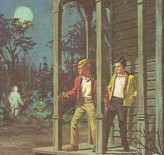
Though my mind is on vampires, and making fun of crazy republicans (craziER republicans, since it's hard to find any sane ones), I and though the day is almost over, I wanted to write a word or two about the date, September 17, the 148th anniversary of the battle of Antietam. Ta-Nehisi Coates has been writing about Drew Gilpin Faust's Mothers of Invention - a book about the experiences of Southern White women during the Civil War. He notes, more than once, the ways Southern ideas handicapped them - their racism, of course, their commitment to slavery, which quickly became a major source of weakness; their ideas of femininity kept them from employing women in home front positions (like nursing) the North did; their inability, as a country, to operate en effective infrastructure - to get the mail delivered, to keep their trains running. It's a point that came up more than once in the Civil War books I read this summer as well, Grant's Memoirs and McPherson's Battle Cry of Freedom - all the inefficiencies of Confederate politics, all the ways their ideology undermined the war effort. You might wonder how they survived four years - the Southern view, I suppose, is that they were just much better fighters, something like that. But that doesn't hold up very well as an argument. Northern armies fought as well as Southern armies, consistently. What difference there was came down to generalship - though even there, not to the quality of the generals each side had - but to the coincidence of where those generals were, and when they took their places. The truth is, in the west, the North outgeneraled and outfought their enemies pretty consistently - the big delay there was logistic - finding ways to move armies into an enemies territory. Once the Union got itself going, it made fairly short work of the Confederacy, in the west.
But the East... And here we're back to Antietam. Because when you read about Antietam, you soon realize just how astonishingly lucky the South was in the Union's generals. It is hard to imagine a more incompetent leader of a large army than George McClellan. When I was young, I was a Civil War buff, steeped, particularly, in Bruce Catton's books - back then, I picked up the traditional idea of McClellan as a charismatic, popular, skillful general, with a fatal streak of coution and self-doubt. But now, rereading Catton, along with McPherson and Grant, I can't help marvel at what a complete idiot McClellan seems to have been. There might have been worse generals in charge of the Army of the Potomac, but it is hard to imagine any of its other commanders botching Antietam as badly as he did. And what's worse than that - it might not even be his most incompetent campaign! The Battle of the Seven Days might have been worse, as Lee beat up pieces of the Union army (at great cost to the Confederates), while McClellan did nothing to counter him, and promptly retreated, without ever being beaten.
But Antietam was different - because Lee put all he had into the fight, and the Army of the Potomac basically beat him completely. But exhausted itself in the process - partly because McClellan committed his troops one corps at a time, never getting anywhere near the bulk of his army into action at once. And then - left almost 2 complete army corps completely out of the fight. One of his officers remarked somewhere that at the end of the fight, 10,000 fresh soldiers could have ended the war - 20 or 25,000 fresh troops were in reserve - but McClellan didn't use them. He was convinced all along that Lee outnumbered him - an amazing fact itself - but here, it is astonishing, and it is directly damning of him. It is crucial that in none of his battles did he ever actually take the field himself - he was able to maintain his delusions about Lee's strength by staying in his headquarters, never venturing out to check the lines himself, never even sending trusted staff officers out to see how things really were. I believe this was consistent - he was an absentee general on the peninsular as well. Compared to the later commanders of the Army of the Potomac, some of whom (Burnside and Hooker especially) were quite overmatched by the job - he didn't suffer so much from loss of nerve or imagination, as from an inability of really imagine war as something that is actually happening.
It's never fair to compare other generals to Grant - he was in another class from most of them - but still... you can't help it - everything McClellan got wrong, Grant consistently got right during the war. Committing all his strength; refusing to stop when he still had a chance to win; making sure he had at least a working knowledge of the real situation. Thinking, in short, that he would win this battle, no matter what was happening - at least, never thinking he was going to lose. It's a quality you see with Lee, too, of course - sometimes to a fault - if the union generals before Meade and Grant had been half as good as Grant, it's not likely he'd have gotten away with many of his battles. If he'd faced Grant at the Seven Days or Antietam or Chancellorsville, he'd have been defending the Carolina's in 1864, not Richmond...
Still. What did happen at Antietam forced the Confederacy back, put it on its heels. Gave the north breathing room, and emboldened them to start the revolutionary parts of the civil war. And - ought to remind you just what an insane, horrifying thing warfare was in the 1860s. The sheer standup brutality of the battle - pretty much a straight, toe to toe, battle lines drawn shootout between some 80-90,000 people armed with rifles - is mind boggling. There was almost nothing in the way of tactics in the fight - just sending union soldiers forward to fight whatever confederates they found, with the confederates basically there for the finding... It was something. A bloodbath, mainly... but something.
Friday, September 17, 2010

Saturday, September 11, 2010
The Land of Make Believe, on DVD
One reason this blog has been as inactive as is has is that I have not been watching all that many films lately. That's finally started to change, back to the normal pile of films I watch. Partly because of the Vampire class I mentioned in my quiz post - anticipation of that sent me through a bunch of DVDs, old horror films mostly - The Golem, Frankenstein, Nosferatu, Dracula, Vampyre, some Lewton films, Isle of the Dead, The Body Snatcher - an edifying bunch of films, to be sure, though I don't have much to say about them, not at the moment anyway.
Instead - maybe inspired by Dinner for Schmucks (of all things), I have been looking at another type of film lately - these have also been very edifying, and bit more inspiring. What should I call these films? Making-it-up-as-you-go-along films? There's a theme - I'll try to get there through the films thesmelves...
Gentlemen Broncos - Jared Hess' second film since Napoleon Dynamite. Here, a kid goes to a homeschool camp where a famous writer ("Dr. Ronald Chevalier") is speaking; the kid submits a (science fiction) story to a contest - the story doesn't win, but the writer steals it. Meanwhile, Benji (the kid) meets Tabitha and Lonnie, two fellow home schooled nerds - Lonnie makes films, and when they get back home, Lonnie adapts Benji's Gentlemen Broncos story. When this comes out - not only is the film horrible, but everyone thinks they stole the story from Chevalier - but Benji's mom had been submitting his stories to the copyright office all along, so everything comes out all right in the end.
All of this is rather crude, and a bit inept, but proves to be deceptively appealing. It's redeemed (like Dinner for Schmucks, and Nacho Libre, to some extent), by its unabashed embrace of trash culture. Anything worth doing is worth doing badly, as Chesterton (it turns out - I always wondered where that came from) put it. I like this kind of work - films that celebrate cheap art making. And I like this film for not trying to pretend to be about anything else - Benji's story is silly indeed; the Famous Writer is a hack (and much fun is made of him), his adaptation of Benji's story is crap; Lonnie the filmmaker is a joke, and his adaptation of Yeast Lords (the name of the story) is junk as well, and none of them get a pass. Hess doesn't pretend any of them are particularly talented - he makes more fun of the insincere ones, but even that is rather tame - it's their willingness to mistreat other people that gets hammered, not their incompetence. (Chevalier's plagiarism; Lonnie's tricks - ripping off Benji; redubbing his star's voice...) Now - all of this is conveyed by a film that is borderline incompetent itself, though a mitigated form of incompetence. Much of the visual incompetence is explicitly, and comically, intentional (both in the inset parodies of bad sci-fi films and in quite a few of the incidents in the frame story) - and the the writing and acting are another matter. Again, it's deliberately underplayed, and only seems underwritten - in fact, most of it is pretty carefully put together. The film adopts a plain spoken posture that hides some of its strengths - clever turns of phrase underplayed; a certain deliberate awkwardness in the timing of the lines and jokes - which are pretty clearly aimed at creating the sense of confusion and teenaged angst the film is about. Hess is quite a good writer, I think - his films creep up on you, even when the jokes aren't as plain and sharp as in Napoleon Dynamite. But he isn't much of a director. Even giving him the benefit of his clear intention to create an understated, almost schlocky look, the results are dull to look at, and less effective than they should be. He is not the first director to try to make films that look (and possibly are) made from poverty - but he does not have the eye of a Michel Gondry or Luc Moullet, or even a Mark Borchardt. Napoleon Dynamite did look surprisingly good, but I think that;s mostly because he was consistently aping Wes Anderson. Everything centered, frontal shots, wide angles - since then, he seems to have stopped trying to imitate Anderson, but that leaves him without much to look at. And I suppose I need to note that this film is not, really, from poverty - he has a cast of minor stars (Sam Rockwell and Mike White and Jennifer Coolidge and - stealing the show like he does Dinner for Schmucks - Jemaine Clement...), he seems to have a decent budget. Somehow, these conventional productions of do-it-yourself film (Be Kind, Rewind is guilty of this too) never seem as interesting as either real cheapie films of the past (Ed Wood, say), or no-budget art films like Moullet's... Oddly, films about cheap artmaking seem less interesting than actual cheap art.
On the other hand, there is The Fall - Tarsem's folly, and an almost shockingly wonderful film. There have been hints that there was something going on here - Ebert adored it, for instance - but it still took me completely by surprise. For story you have - a little girl in a hospital with a broken arm meets a stunt man who has apparently broken his back. They become friends, and he starts telling her stories - and then starts steering them toward an end. She steals a eucharest, and he tries to get her to steal morphine for him, so he can kill himself. She does, though continued misunderstandings cause him to continue to need her help, which he gets by continuing the story he's telling. It's an elaborate tale of vengeance and adventure - a bandit, an Indian (he says with a squaw and wigwam, she thinks, from India, like an orange picker she knows), an Italian bombmaker, Charles Darwin, a freed slave and a mystic who emerges from a tree, all unite to wage war on the evil governor Odious who has taken what they all love. This passes through a series of inventive adventures, but as Roy the stuntman's story is not ending well, neither does the story he tells - but... We end, finally, with, first, a screening in the hospital of the movie the stuntman seems to have been working on when he got hurt - and then a perfectly glorious montage of 20s stunts, narrated by the kid....
All right. First up - all this is very much like a high ticket version of Gentleman Broncos. It's quite close - the way we see an embedded story coming to life inside the frame story - the way the inner story evolves to reflect the outer story, the way it slips back and forth between the control of the people telling it. One of the joys of Gentlemen Broncos is watching the way the embedded story changes depending on who is telling it - Benji's version looks one way; the writer's version looks different - the hero turns into Kerry Livgren, with a wolf in place of a lynx (Benji's hero looks like Robby Steinhardt - I'm guessing these are not coincidences, since Kansas is on the soundtrack); Lonnie's film another version (Mike White as the hero, not looking like any member of Kansas, really.) It's similar in The Fall - Roy tells the story - Alexandria imagines it - bits of plot and characters and such shift around as they move through the story.... It's a shared world, and one that celebrates imagination, stories, story telling, the act of telling stories - not to mention the mechanics of telling stories, especially on film - the stunts, costumes, gloriously over the top locations.... It's fascinating too in the ways it goes beyond the imaginations of the characters - the commentary tracks make much of the ways the story is Roy's plot filtered through Alexandria's imagination - but the sheer hyperbole of the film goes well beyond what can be ascribed to her imagination. That grandiose and impossible look can only come from Tarsem - but I think that's a big part of why it works. The plot would probably be too maudlin to sustain the low rent style of something like Gentlemen Broncos - it needs operatice excess, and makes good use of it.
All that is enough to give the film appeal, but there is more. There is more to what is there on screen, for instance - there is the strange and rather wonderful interplay of that mad vision of the world, the eye popping locations and costumes and photography, with the extreme intimacy of the frame story, the stunt man talking to the little girl. You have this mad spectacle combined with a wonderful little two hander between the actors. And while the spectacle is convincing enough on its own, the film is just as inventive, just as surprising and glorious looking up close. The kid - Catrina Untaru by name - is marvelous. She is perfect for this - surprising, strange, unique, effortlessly funny, plain wonderful. Lee Pace also gives an excellent performance, playing off the kid, while getting the story across... And the story itself holds up pretty well - the plot is fairly simply (Roy telling the stories to get the kid to steal morphine so he can kill himself), but it has depths. Particularly in the way both the embedded story and the frame rather subtly work through Alexandria's loss of her father - Roy the stuntman comes to replace her father - in the Spectacle, in the frame as well. That - for what it's worth - is another similarity to Gentlemen Broncos - Benji's stories also tend to be about his lost father, and a good amount of the frame story there could be said to be about his lack of a father figure...
All right. That's a lot about this film. But - it's a wonderful film - and I suppose as much as that, there's the joy of being surprised by a film. I've had Th Fall out from Netflix for ages - I got it last year when I was hepped up on Fritz Lang films, thinking it would refer to the kinds of silent adventures he started out making. But I didn't expect much more, so it's been sitting there a long time. To find that it is, in fact, something like a great film - the surprise is almost as gratifying as the fact that it is so good. And - I can't deny that it fits in with my fascination with films that have this quality of make believe, this fascination with the act of telling stories. I love that - I tend to love even bad films that play around with the idea - so when I find a film that does it, and works as a good film as well - ah... that is bliss. And - looking like it looks - it is almost as arbitrarily beautifully strange as Princess Raccoon, which is damned high praise indeed.
Oh - one more: Richard Lester's Three Musketeers... I hate to make this seem like an afterthought - but, I admit, it's neither as good as The Fall nor as interesting as Gentlemen Broncos, though I think it fall somewhere not far from their land of make believe concerns. It should be a better film than it is, I think - it's an odd mix of slapstick, derring-do and realism (though a feigned realism), with a great cast, all seemingly well committed to the material, a nice script, but... I'm afraid Lester might be the problem, he can't quite pull it off somehow. The gags are telegraphed, the actors are, in the end, more or less on their own - Spike Milligan seems to be acting in a different film from the rest of them, to name one. I suspect this is the problem, really - what I've seen of Lester, he's always close, and certainly can make great films - but only when he doesn't really have to do much. The Beatles films work because they are inherently anarchic - they are like the Marx Brothers, their films like the Marx Brothers, where the plot and action isn't very important, just there to keep moving them from gag to gag.... This is too intricate for that kind of work - it's too complicated a story, the action and plot is too intricate for the actors to carry it without the right kind of guidance. This isn't the Marx Brothers, this is Douglas Fairbanks or Errol Flynn, and Lester can't seem to carry it.
And so... I have The Four Musketeers sitting here, ready to go though - don't think from the pan above that I would not watch this film again, any chance I had. It's a lot of fun, if not that satisfying. And - I also have, sitting next tp the DVD player, another film, that might be able to combine anarchic comedy and Vampires - The Fearless Vampire Slayers. I tried it once before, and didn't get very far - I don't remember why - a bad tape? faulty expectations? who knows - I think I will be more primed for it now....
Instead - maybe inspired by Dinner for Schmucks (of all things), I have been looking at another type of film lately - these have also been very edifying, and bit more inspiring. What should I call these films? Making-it-up-as-you-go-along films? There's a theme - I'll try to get there through the films thesmelves...
Gentlemen Broncos - Jared Hess' second film since Napoleon Dynamite. Here, a kid goes to a homeschool camp where a famous writer ("Dr. Ronald Chevalier") is speaking; the kid submits a (science fiction) story to a contest - the story doesn't win, but the writer steals it. Meanwhile, Benji (the kid) meets Tabitha and Lonnie, two fellow home schooled nerds - Lonnie makes films, and when they get back home, Lonnie adapts Benji's Gentlemen Broncos story. When this comes out - not only is the film horrible, but everyone thinks they stole the story from Chevalier - but Benji's mom had been submitting his stories to the copyright office all along, so everything comes out all right in the end.
All of this is rather crude, and a bit inept, but proves to be deceptively appealing. It's redeemed (like Dinner for Schmucks, and Nacho Libre, to some extent), by its unabashed embrace of trash culture. Anything worth doing is worth doing badly, as Chesterton (it turns out - I always wondered where that came from) put it. I like this kind of work - films that celebrate cheap art making. And I like this film for not trying to pretend to be about anything else - Benji's story is silly indeed; the Famous Writer is a hack (and much fun is made of him), his adaptation of Benji's story is crap; Lonnie the filmmaker is a joke, and his adaptation of Yeast Lords (the name of the story) is junk as well, and none of them get a pass. Hess doesn't pretend any of them are particularly talented - he makes more fun of the insincere ones, but even that is rather tame - it's their willingness to mistreat other people that gets hammered, not their incompetence. (Chevalier's plagiarism; Lonnie's tricks - ripping off Benji; redubbing his star's voice...) Now - all of this is conveyed by a film that is borderline incompetent itself, though a mitigated form of incompetence. Much of the visual incompetence is explicitly, and comically, intentional (both in the inset parodies of bad sci-fi films and in quite a few of the incidents in the frame story) - and the the writing and acting are another matter. Again, it's deliberately underplayed, and only seems underwritten - in fact, most of it is pretty carefully put together. The film adopts a plain spoken posture that hides some of its strengths - clever turns of phrase underplayed; a certain deliberate awkwardness in the timing of the lines and jokes - which are pretty clearly aimed at creating the sense of confusion and teenaged angst the film is about. Hess is quite a good writer, I think - his films creep up on you, even when the jokes aren't as plain and sharp as in Napoleon Dynamite. But he isn't much of a director. Even giving him the benefit of his clear intention to create an understated, almost schlocky look, the results are dull to look at, and less effective than they should be. He is not the first director to try to make films that look (and possibly are) made from poverty - but he does not have the eye of a Michel Gondry or Luc Moullet, or even a Mark Borchardt. Napoleon Dynamite did look surprisingly good, but I think that;s mostly because he was consistently aping Wes Anderson. Everything centered, frontal shots, wide angles - since then, he seems to have stopped trying to imitate Anderson, but that leaves him without much to look at. And I suppose I need to note that this film is not, really, from poverty - he has a cast of minor stars (Sam Rockwell and Mike White and Jennifer Coolidge and - stealing the show like he does Dinner for Schmucks - Jemaine Clement...), he seems to have a decent budget. Somehow, these conventional productions of do-it-yourself film (Be Kind, Rewind is guilty of this too) never seem as interesting as either real cheapie films of the past (Ed Wood, say), or no-budget art films like Moullet's... Oddly, films about cheap artmaking seem less interesting than actual cheap art.
On the other hand, there is The Fall - Tarsem's folly, and an almost shockingly wonderful film. There have been hints that there was something going on here - Ebert adored it, for instance - but it still took me completely by surprise. For story you have - a little girl in a hospital with a broken arm meets a stunt man who has apparently broken his back. They become friends, and he starts telling her stories - and then starts steering them toward an end. She steals a eucharest, and he tries to get her to steal morphine for him, so he can kill himself. She does, though continued misunderstandings cause him to continue to need her help, which he gets by continuing the story he's telling. It's an elaborate tale of vengeance and adventure - a bandit, an Indian (he says with a squaw and wigwam, she thinks, from India, like an orange picker she knows), an Italian bombmaker, Charles Darwin, a freed slave and a mystic who emerges from a tree, all unite to wage war on the evil governor Odious who has taken what they all love. This passes through a series of inventive adventures, but as Roy the stuntman's story is not ending well, neither does the story he tells - but... We end, finally, with, first, a screening in the hospital of the movie the stuntman seems to have been working on when he got hurt - and then a perfectly glorious montage of 20s stunts, narrated by the kid....
All right. First up - all this is very much like a high ticket version of Gentleman Broncos. It's quite close - the way we see an embedded story coming to life inside the frame story - the way the inner story evolves to reflect the outer story, the way it slips back and forth between the control of the people telling it. One of the joys of Gentlemen Broncos is watching the way the embedded story changes depending on who is telling it - Benji's version looks one way; the writer's version looks different - the hero turns into Kerry Livgren, with a wolf in place of a lynx (Benji's hero looks like Robby Steinhardt - I'm guessing these are not coincidences, since Kansas is on the soundtrack); Lonnie's film another version (Mike White as the hero, not looking like any member of Kansas, really.) It's similar in The Fall - Roy tells the story - Alexandria imagines it - bits of plot and characters and such shift around as they move through the story.... It's a shared world, and one that celebrates imagination, stories, story telling, the act of telling stories - not to mention the mechanics of telling stories, especially on film - the stunts, costumes, gloriously over the top locations.... It's fascinating too in the ways it goes beyond the imaginations of the characters - the commentary tracks make much of the ways the story is Roy's plot filtered through Alexandria's imagination - but the sheer hyperbole of the film goes well beyond what can be ascribed to her imagination. That grandiose and impossible look can only come from Tarsem - but I think that's a big part of why it works. The plot would probably be too maudlin to sustain the low rent style of something like Gentlemen Broncos - it needs operatice excess, and makes good use of it.
All that is enough to give the film appeal, but there is more. There is more to what is there on screen, for instance - there is the strange and rather wonderful interplay of that mad vision of the world, the eye popping locations and costumes and photography, with the extreme intimacy of the frame story, the stunt man talking to the little girl. You have this mad spectacle combined with a wonderful little two hander between the actors. And while the spectacle is convincing enough on its own, the film is just as inventive, just as surprising and glorious looking up close. The kid - Catrina Untaru by name - is marvelous. She is perfect for this - surprising, strange, unique, effortlessly funny, plain wonderful. Lee Pace also gives an excellent performance, playing off the kid, while getting the story across... And the story itself holds up pretty well - the plot is fairly simply (Roy telling the stories to get the kid to steal morphine so he can kill himself), but it has depths. Particularly in the way both the embedded story and the frame rather subtly work through Alexandria's loss of her father - Roy the stuntman comes to replace her father - in the Spectacle, in the frame as well. That - for what it's worth - is another similarity to Gentlemen Broncos - Benji's stories also tend to be about his lost father, and a good amount of the frame story there could be said to be about his lack of a father figure...
All right. That's a lot about this film. But - it's a wonderful film - and I suppose as much as that, there's the joy of being surprised by a film. I've had Th Fall out from Netflix for ages - I got it last year when I was hepped up on Fritz Lang films, thinking it would refer to the kinds of silent adventures he started out making. But I didn't expect much more, so it's been sitting there a long time. To find that it is, in fact, something like a great film - the surprise is almost as gratifying as the fact that it is so good. And - I can't deny that it fits in with my fascination with films that have this quality of make believe, this fascination with the act of telling stories. I love that - I tend to love even bad films that play around with the idea - so when I find a film that does it, and works as a good film as well - ah... that is bliss. And - looking like it looks - it is almost as arbitrarily beautifully strange as Princess Raccoon, which is damned high praise indeed.
Oh - one more: Richard Lester's Three Musketeers... I hate to make this seem like an afterthought - but, I admit, it's neither as good as The Fall nor as interesting as Gentlemen Broncos, though I think it fall somewhere not far from their land of make believe concerns. It should be a better film than it is, I think - it's an odd mix of slapstick, derring-do and realism (though a feigned realism), with a great cast, all seemingly well committed to the material, a nice script, but... I'm afraid Lester might be the problem, he can't quite pull it off somehow. The gags are telegraphed, the actors are, in the end, more or less on their own - Spike Milligan seems to be acting in a different film from the rest of them, to name one. I suspect this is the problem, really - what I've seen of Lester, he's always close, and certainly can make great films - but only when he doesn't really have to do much. The Beatles films work because they are inherently anarchic - they are like the Marx Brothers, their films like the Marx Brothers, where the plot and action isn't very important, just there to keep moving them from gag to gag.... This is too intricate for that kind of work - it's too complicated a story, the action and plot is too intricate for the actors to carry it without the right kind of guidance. This isn't the Marx Brothers, this is Douglas Fairbanks or Errol Flynn, and Lester can't seem to carry it.
And so... I have The Four Musketeers sitting here, ready to go though - don't think from the pan above that I would not watch this film again, any chance I had. It's a lot of fun, if not that satisfying. And - I also have, sitting next tp the DVD player, another film, that might be able to combine anarchic comedy and Vampires - The Fearless Vampire Slayers. I tried it once before, and didn't get very far - I don't remember why - a bad tape? faulty expectations? who knows - I think I will be more primed for it now....
September 11
It is good to remember disasters such as this. It would be better to remember them with dignity, mourning the dead, reaffirming our community - that would be nice. But that gets harder all the time. I am increasingly depressed by the commemoration of the September 11th attacks - the current "controversy" about the "ground zero" "mosque" and the jerk in Florida promising to burn Korans brings cynical exploitation of the attacks to a new level of awfulness. (Though I suppose even that can't really compete with the government's use of the attacks to justify the invasion of Iraq...) A significant portion of the country seems determined almost to celebrate the attacks - what is that cretin Sarah Palin and her snake oil salesman pal Glen Beck up to today? Though it's not the noise and flag-waving that bothers me so much - it is the attempts to turn the memory of the attacks into an excuse for bigotry. Racism, xenophobia, bigotry have become more and more open and explicit through this decade - especially since the GOP got ousted from government - they don't have anything to run on except racism and bigotry...
Though even that pales beside stories like this, of a court upholding the government - well: I have to quote:
Ah, Civil Liberties.... what a quaint idea. It is strange - even now, I sometimes see cops on the subway, searching people - for now reason except that they can. It's depressing - the impression I get sometimes is that since 9/11, we as a country have been completely discombobulated because we couldn't find anyone to surrender to. Bin Laden is off in a cave somewhere (still is, as far as anyone knows - post 9/11 wars both turning into complete failures), we can't surrender to him. AT home, it looks like the Republicans finally surrendered tot heir usual masters, Citibank and the CIA. The Democrats seem to have surrendered to the Republicans, though now, being back in power, that doesn't work so well. Though I guess they can surrender to citibank and the CIA just as well... And - for all the wickedness of the Koran burners and Park51 protesters, there is something that sits wrong in the idea that we in the USA are supposed to decide which of our constitutional rights we exercise depending on what might offend some son of a bitch off in Afghanistan. Now - this stuff, the koran burning and all - is evil - racist, bigoted, and - Godwin's law be damned - almost definitively fascist - and should be condemned for those reasons. But there are undoubtedly a lot of things that might piss off some SOB in Afghanistan or Tehran- you know, Salman Rushdie back in the day, and plenty more like him - and there is no reason we should set our behavior according to what terrorists might think or do. I don't like those arguments at all (except as pure tactics: Petraeus weighing in on the Koran burning definitely seems to have tipped even the racists against the Florida guy - that's worth something...)
Oh well. This is my political rant for the year. I don't have much more to say - frankly, I have little hope for the country. We've proven our weakness and irresponsibility over and over, and nothing seems to be changing. All this is a bit ironic, as socially, we seem to continue to grow up (Don't Ask, Don't Tell, struck down by a court...) - but we seem to be economically paralyzed, unable and unwilling to address our problems... and politically, we seem determined to slide into either tyranny or anarchy, or maybe a mix of the worst of both.
Though even that pales beside stories like this, of a court upholding the government - well: I have to quote:
A federal appeals court on Wednesday ruled that former prisoners of the C.I.A. could not sue over their alleged torture in overseas prisons because such a lawsuit might expose secret government information.This is not good. Basically the government claims that people who claim to have been arrested and extradited to other countries where they were tortured cannot sue (anyone?), because the lawsuit would expose state secrets. This is a very bad thing - it is another step in the normalization of the use of torture by the United States - in all the illegal and immoral behavior we have engaged in during the "war on terror." I am losing hope - it may be too much to expect American politiciams to actually hold someone in government responsible for their wrong doing, but it would be nice to see President Obama and the Democrats take some tangible steps to repudiate the worst policies of the Bush years. The use of torture - but also, the limitless executive. The latter maybe more than the former - as the claims of the government being beyond the law justifies the former as well.
Ah, Civil Liberties.... what a quaint idea. It is strange - even now, I sometimes see cops on the subway, searching people - for now reason except that they can. It's depressing - the impression I get sometimes is that since 9/11, we as a country have been completely discombobulated because we couldn't find anyone to surrender to. Bin Laden is off in a cave somewhere (still is, as far as anyone knows - post 9/11 wars both turning into complete failures), we can't surrender to him. AT home, it looks like the Republicans finally surrendered tot heir usual masters, Citibank and the CIA. The Democrats seem to have surrendered to the Republicans, though now, being back in power, that doesn't work so well. Though I guess they can surrender to citibank and the CIA just as well... And - for all the wickedness of the Koran burners and Park51 protesters, there is something that sits wrong in the idea that we in the USA are supposed to decide which of our constitutional rights we exercise depending on what might offend some son of a bitch off in Afghanistan. Now - this stuff, the koran burning and all - is evil - racist, bigoted, and - Godwin's law be damned - almost definitively fascist - and should be condemned for those reasons. But there are undoubtedly a lot of things that might piss off some SOB in Afghanistan or Tehran- you know, Salman Rushdie back in the day, and plenty more like him - and there is no reason we should set our behavior according to what terrorists might think or do. I don't like those arguments at all (except as pure tactics: Petraeus weighing in on the Koran burning definitely seems to have tipped even the racists against the Florida guy - that's worth something...)
Oh well. This is my political rant for the year. I don't have much more to say - frankly, I have little hope for the country. We've proven our weakness and irresponsibility over and over, and nothing seems to be changing. All this is a bit ironic, as socially, we seem to continue to grow up (Don't Ask, Don't Tell, struck down by a court...) - but we seem to be economically paralyzed, unable and unwilling to address our problems... and politically, we seem determined to slide into either tyranny or anarchy, or maybe a mix of the worst of both.
Wednesday, September 08, 2010
Back To School Film Quiz, Fall 2010
It is September, and that means, it is time for School! I am, as usual, taking a class, for the sheer enjoyment of it, at the local night school - this time, as it happens, a class on The Vampire in Literature and Film. I may come to regret that - I am more or less unique among film bloggers [if you can consider this woefully neglected blog worthy of the term] in absolutely dreading the month of October. Halloween, among film bloggers, is like Christmas for the local Walmart - something you can start pimping about the middle of July and... I swear - I dread opening google reader this time of year - nothing but horror film posts... I am sick of horror films, and sick of reading about them, and it is barely September. And of course I am taking a class on horror films. Figures...
But that aside - here in blogland it is also time for School, and that means, time for another of Dennis Cozzalio's quizzes - this one, PROFESSOR DAVID HUXLEY’S LABORIOUS, LICENTIOUS SPOTTED-LEOPARD LABOR DAY FILM QUIZ... I hope I finish this before the end of October. Old habits die hard, and I am inclined not to read any of the other answers to these quizzes before I fill out (though not necessarily submit) my own - so if I want to read them (and I do, especially as it's a way of avoiding the horror film posts), I had better get cracking, eh?
[I've updated this a bit the day after - thinking about the Robert Mitchum question...]
1) Classic film you most want to experience that has so far eluded you.
A: I think the answer to this has to stay the same - 2 of them, Japanese of course - Humanity and Paper Balloons, and Mizoguchi's Story of the Crucified Lovers.
2) Greatest Criterion DVD/Blu-ray release ever
A: I am not sure - but I am tempted to keep it simple - say the two best films they have ever put out - M and Rules of the Game... It's not unreasonable - they are, after all, the two best films of all time, and Criterion issued two very fine packages.... I might pick another tack, though - the Criterion releases I am most grateful for would be the Pedro Costa set, or the recent 60s Oshima set - or, probably most of all - the Pigs, Pimps and Prostitutes Imamura set. Lang and Renoir would be released anyway, by someone, probably in a first rate package - providing a set of prime Imamura is what Criterion exists for.
3) The Big Sleep or The Maltese Falcon?
A: this is not a choice I’m inclined to make, though when it comes down to it, The Maltese Falcon wins, maybe just for being first.
4) Jason Bateman or Paul Rudd
A: Paul Rudd, I think
5) Best mother/child (male or female) combo
A: Like a couple other people here, I was thrown by the ambiguity of the question - on screen mother and child? or real life mother and child? If the former - I'll say Angela Lansbury and Lawrence Harvey in The Manchurian Candidate. If real world - Ingrid and Isabella...
6) Who are the Robert Mitchums and Ida Lupinos among working movie actors? Do modern parallels to such masculine and no-nonsense feminine stars exist? If not, why not?
A: I don't know. I'm not coming up with anything, anyway...
UPDATE: You know - I am going to update this. I'm not confident of the answer - but what about Benecio del Toro? it strikes me he wouldn't be out of place in a lot of Robert Mitchum films... for Ida Lupino - I can't say; it's been too long since I've seen anything with her to have a clear impression...
7) Favorite Preston Sturges movie
A: "the fish was a poem"... I'd have to say, The Lady Eve.
8) Odette Yustman vs. Mary Elizabeth Winstead
A: Who are these people? Why am I expected to care?
9) Is there a movie that if you found out a partner or love interest loved would qualify as a Relationship Deal Breaker?
A: Very unlikely. There are probably ways of liking or disliking a film that would earn my scorn, but hard to say any film would... [I have to add here - coming from a screening of Nosferatu for a class - in which more than one person giggled away like they were watching Chaplin - that would probably do it. I am inclined to be smug and note that they weren't laughing so much at the end, and what there was had a decidedly defensive tone.]
10) Favorite DVD commentary.
A: It's probably a Werner Herzog commentary - he is always a treat to listen to. Though - there's that Jimmy Stewart interview on Winchester 73, which may not be overwhelming - but it's Jimmy Stewart!... And - there's the Anchorman commentary, which was almost more fun (or something) than the film... But maybe I should say something different - I'm not sure this is anything really special, but I'm thinking about Tarsem's commentary on The Fall. I finally watched it (I've had it out of netflix since last fall, horribly enough) - I liked the film enough, but when I listened to the commentary, I think he convinced me the film was as good as it was beautiful - much smarter and more canny than I had thought. That's an effect I like when it happens - I remember the same thing happening when I listened to Almodovar's commentary track on Talk to Her - he turned a film I thought was a solid work into something close to the masterpiece. Both tracks took films I liked and pushed them toward films I loved...
11) Movies most recently seen on DVD, Blu-ray and theatrically
A: Well, I guess the answer right now is The Fall on DVD and The Tillman Story in the theater.
12) Dirk Bogarde or Alan Bates
A: Dirk Bogarde, of course - he is magnificent
13) Favorite DVD extra.
A: I could think about this for days, so I will cut to one I watched recently - Sterevich's The Mascot, on the old Vampyr DVD, is hard to beat...
14) Brian De Palma’s Scarface— yes or no?
A: Not really. Hawks', absolutely.
15) Best comic moment from a horror film that is not a horror comedy (Young Frankenstein, Love At First Bite, et al.)
A: This question (and its opposite) are going to drive me crazy. I imagine every time I see a joke in a horror film, I will remember this quiz. GOd. Well - I am resolved to post tonight - so I am going to contradict my earlier remark about laughing during Nosferatu and say, Orlok's comment to Hutter - "Your wife has a beautiful neck." Which after all is pretty amusing...
16) Jane Birkin or Edwige Fenech
A: Jane Birkin - I mean, my god, she was married to Serge Gainsbourg! she's in a bunch of Rivette films! she and Charlotte were definite contenders for question #5 above!
17) Favorite Wong Kar-wai movie
A: Fallen Angels
18) Best horrific moment from a comedy that is not a horror comedy?
A: I don't know if this is precisely what you have in mind by "horrific", but - Donnie's death in The Big Lebowski...
19) From 2010, a specific example of what movies are doing right…
A: Movies are doing anything right? Not that I can see... Maybe that's too nasty - but - okay: 2 things. First - Lucas McNelly's Kickstarter campaign, for Up Country. Or, I suppose, the whole idea of programs like kickstarter - microbudget movie making, crowd funding - it's more interesting than anything else going on.... And second - that great big new Metropolis - if all the movie world does right is preserve its past, I guess that would be a good thing too. You could put the Film Preservation Blogathon in this category as well. Between them - preserving the past, and finding new ways to go forward - that's about all I feel very enthused about right now.
20) Ryan Reynolds vs. Chris Evans
A: Again, I have a hard time pretending to care.
21) Speculate about the future of online film writing. What’s next?
A: A superb question. I don’t know. I suppose there will be online film writing (and reading, one hopes) - but I don't really know where it will be, what it will look like - I think twitter and facebook and the like have taken a big chunk out of film writing - siphoning off a lot of people and material that might have been written up at more length 3-4 years ago - or not. My RSS reader is always full - it's not as if there isn't a lot of writing being done about films. I wonder if it will be more and more necessary, though, in the future, to use visual aids in writing - clips and pictures and the like, becoming requirements for being read? On film - it's not unreasonable.... This isn't much of an answer - I suppose the problem is that I'm answering a question about reading online film writing, more than about writing. People will write - but how will they be read? Probably clicking through from twitter or facebook or something to something - blogs or notes or something - supporting longer pieces and multimedia. That's the best I can come up with.
22) Roger Livesey or David Farrar
A: This is one of those questions that exposes a vast gulf in my film watching history.
23) Best father/child (male or female) combo
A: Again - fictional father daughter? This is obvious: Chishu Ryu and Setsuko Hara in Late Spring. Real life? A lot of possibilities - the Mastroiannis for example. (Chiara probably should be the answer to he mother/daughter as well.) But I think I have to answer the Hustons - pick whichever set you want.
24) Favorite Freddie Francis movie (as a director)
A: Wait - did you edit this question after posting the quiz? I'd answered The Elephant Man, but now I find this "as a director"... I don't think I can answer that.
25) Bringing Up Baby or The Awful Truth?
A: Again, almost too close to call, but if forced, I would probably take The Awful Truth - it gets everything just about right.
26) Tina Fey vs. Kristen Wiig
A: Fey, I think
27) Name a stylistically important director and the best film that would have never been made without his/her influence.
A: Another good question - I think I will say Fritz Lang - and say every serial killer film, 3/4 of the crime dramas, and all the police procedurals, 90% of the science fiction, all the Orson Welles you can't pin on John Ford, but most of all, High and Low.
28) Movie you’d most enjoy seeing remade and transplanted to a different culture (i.e. Yimou Zhang’s A Woman, a Gun and a Noodle Shop.
A: This should be easier than it is - I've certainly thought about films that would work better somewhere else before... A lot of the best examples I can come up with have already been done - "someone ought to make a version of Red Harvest in Japan!" or " A western version of Yojimbo!" or The Good, The Bad and the Ugly in Manchuria, that sort of thing... So anyway - here's one that occurred to me a couple years ago - how about Children of Paradise, set in the Wild West? I think you could do something with that.
29) Link to a picture/frame grab of a movie image that for you best illustrates bliss. Elaborate.
A: Bliss - interesting. Well - one has choices - I'm tempted to say this one -

- For the green stripe that passes all the way across the screen? And seeing Kinuyo Tanaka happy, for once...
But I really have to post this:

...which should need no elaboration. Who wouldn't want to be in that picture?
30) With a tip of that hat to Glenn Kenny, think of a just-slightly-inadequate alternate movie for a famous movie. (Examples from GK: Fan Fiction; Boudu Relieved From Cramping; The Mild Imprecation of the Cat People)
A: Well - though it is a fine picture, I think "It's a Surprisingly Influential Life" might have been remembered longer with a pithier title...
But that aside - here in blogland it is also time for School, and that means, time for another of Dennis Cozzalio's quizzes - this one, PROFESSOR DAVID HUXLEY’S LABORIOUS, LICENTIOUS SPOTTED-LEOPARD LABOR DAY FILM QUIZ... I hope I finish this before the end of October. Old habits die hard, and I am inclined not to read any of the other answers to these quizzes before I fill out (though not necessarily submit) my own - so if I want to read them (and I do, especially as it's a way of avoiding the horror film posts), I had better get cracking, eh?
[I've updated this a bit the day after - thinking about the Robert Mitchum question...]
1) Classic film you most want to experience that has so far eluded you.
A: I think the answer to this has to stay the same - 2 of them, Japanese of course - Humanity and Paper Balloons, and Mizoguchi's Story of the Crucified Lovers.
2) Greatest Criterion DVD/Blu-ray release ever
A: I am not sure - but I am tempted to keep it simple - say the two best films they have ever put out - M and Rules of the Game... It's not unreasonable - they are, after all, the two best films of all time, and Criterion issued two very fine packages.... I might pick another tack, though - the Criterion releases I am most grateful for would be the Pedro Costa set, or the recent 60s Oshima set - or, probably most of all - the Pigs, Pimps and Prostitutes Imamura set. Lang and Renoir would be released anyway, by someone, probably in a first rate package - providing a set of prime Imamura is what Criterion exists for.
3) The Big Sleep or The Maltese Falcon?
A: this is not a choice I’m inclined to make, though when it comes down to it, The Maltese Falcon wins, maybe just for being first.
4) Jason Bateman or Paul Rudd
A: Paul Rudd, I think
5) Best mother/child (male or female) combo
A: Like a couple other people here, I was thrown by the ambiguity of the question - on screen mother and child? or real life mother and child? If the former - I'll say Angela Lansbury and Lawrence Harvey in The Manchurian Candidate. If real world - Ingrid and Isabella...
6) Who are the Robert Mitchums and Ida Lupinos among working movie actors? Do modern parallels to such masculine and no-nonsense feminine stars exist? If not, why not?
A: I don't know. I'm not coming up with anything, anyway...
UPDATE: You know - I am going to update this. I'm not confident of the answer - but what about Benecio del Toro? it strikes me he wouldn't be out of place in a lot of Robert Mitchum films... for Ida Lupino - I can't say; it's been too long since I've seen anything with her to have a clear impression...
7) Favorite Preston Sturges movie
A: "the fish was a poem"... I'd have to say, The Lady Eve.
8) Odette Yustman vs. Mary Elizabeth Winstead
A: Who are these people? Why am I expected to care?
9) Is there a movie that if you found out a partner or love interest loved would qualify as a Relationship Deal Breaker?
A: Very unlikely. There are probably ways of liking or disliking a film that would earn my scorn, but hard to say any film would... [I have to add here - coming from a screening of Nosferatu for a class - in which more than one person giggled away like they were watching Chaplin - that would probably do it. I am inclined to be smug and note that they weren't laughing so much at the end, and what there was had a decidedly defensive tone.]
10) Favorite DVD commentary.
A: It's probably a Werner Herzog commentary - he is always a treat to listen to. Though - there's that Jimmy Stewart interview on Winchester 73, which may not be overwhelming - but it's Jimmy Stewart!... And - there's the Anchorman commentary, which was almost more fun (or something) than the film... But maybe I should say something different - I'm not sure this is anything really special, but I'm thinking about Tarsem's commentary on The Fall. I finally watched it (I've had it out of netflix since last fall, horribly enough) - I liked the film enough, but when I listened to the commentary, I think he convinced me the film was as good as it was beautiful - much smarter and more canny than I had thought. That's an effect I like when it happens - I remember the same thing happening when I listened to Almodovar's commentary track on Talk to Her - he turned a film I thought was a solid work into something close to the masterpiece. Both tracks took films I liked and pushed them toward films I loved...
11) Movies most recently seen on DVD, Blu-ray and theatrically
A: Well, I guess the answer right now is The Fall on DVD and The Tillman Story in the theater.
12) Dirk Bogarde or Alan Bates
A: Dirk Bogarde, of course - he is magnificent
13) Favorite DVD extra.
A: I could think about this for days, so I will cut to one I watched recently - Sterevich's The Mascot, on the old Vampyr DVD, is hard to beat...
14) Brian De Palma’s Scarface— yes or no?
A: Not really. Hawks', absolutely.
15) Best comic moment from a horror film that is not a horror comedy (Young Frankenstein, Love At First Bite, et al.)
A: This question (and its opposite) are going to drive me crazy. I imagine every time I see a joke in a horror film, I will remember this quiz. GOd. Well - I am resolved to post tonight - so I am going to contradict my earlier remark about laughing during Nosferatu and say, Orlok's comment to Hutter - "Your wife has a beautiful neck." Which after all is pretty amusing...
16) Jane Birkin or Edwige Fenech
A: Jane Birkin - I mean, my god, she was married to Serge Gainsbourg! she's in a bunch of Rivette films! she and Charlotte were definite contenders for question #5 above!
17) Favorite Wong Kar-wai movie
A: Fallen Angels
18) Best horrific moment from a comedy that is not a horror comedy?
A: I don't know if this is precisely what you have in mind by "horrific", but - Donnie's death in The Big Lebowski...
19) From 2010, a specific example of what movies are doing right…
A: Movies are doing anything right? Not that I can see... Maybe that's too nasty - but - okay: 2 things. First - Lucas McNelly's Kickstarter campaign, for Up Country. Or, I suppose, the whole idea of programs like kickstarter - microbudget movie making, crowd funding - it's more interesting than anything else going on.... And second - that great big new Metropolis - if all the movie world does right is preserve its past, I guess that would be a good thing too. You could put the Film Preservation Blogathon in this category as well. Between them - preserving the past, and finding new ways to go forward - that's about all I feel very enthused about right now.
20) Ryan Reynolds vs. Chris Evans
A: Again, I have a hard time pretending to care.
21) Speculate about the future of online film writing. What’s next?
A: A superb question. I don’t know. I suppose there will be online film writing (and reading, one hopes) - but I don't really know where it will be, what it will look like - I think twitter and facebook and the like have taken a big chunk out of film writing - siphoning off a lot of people and material that might have been written up at more length 3-4 years ago - or not. My RSS reader is always full - it's not as if there isn't a lot of writing being done about films. I wonder if it will be more and more necessary, though, in the future, to use visual aids in writing - clips and pictures and the like, becoming requirements for being read? On film - it's not unreasonable.... This isn't much of an answer - I suppose the problem is that I'm answering a question about reading online film writing, more than about writing. People will write - but how will they be read? Probably clicking through from twitter or facebook or something to something - blogs or notes or something - supporting longer pieces and multimedia. That's the best I can come up with.
22) Roger Livesey or David Farrar
A: This is one of those questions that exposes a vast gulf in my film watching history.
23) Best father/child (male or female) combo
A: Again - fictional father daughter? This is obvious: Chishu Ryu and Setsuko Hara in Late Spring. Real life? A lot of possibilities - the Mastroiannis for example. (Chiara probably should be the answer to he mother/daughter as well.) But I think I have to answer the Hustons - pick whichever set you want.
24) Favorite Freddie Francis movie (as a director)
A: Wait - did you edit this question after posting the quiz? I'd answered The Elephant Man, but now I find this "as a director"... I don't think I can answer that.
25) Bringing Up Baby or The Awful Truth?
A: Again, almost too close to call, but if forced, I would probably take The Awful Truth - it gets everything just about right.
26) Tina Fey vs. Kristen Wiig
A: Fey, I think
27) Name a stylistically important director and the best film that would have never been made without his/her influence.
A: Another good question - I think I will say Fritz Lang - and say every serial killer film, 3/4 of the crime dramas, and all the police procedurals, 90% of the science fiction, all the Orson Welles you can't pin on John Ford, but most of all, High and Low.
28) Movie you’d most enjoy seeing remade and transplanted to a different culture (i.e. Yimou Zhang’s A Woman, a Gun and a Noodle Shop.
A: This should be easier than it is - I've certainly thought about films that would work better somewhere else before... A lot of the best examples I can come up with have already been done - "someone ought to make a version of Red Harvest in Japan!" or " A western version of Yojimbo!" or The Good, The Bad and the Ugly in Manchuria, that sort of thing... So anyway - here's one that occurred to me a couple years ago - how about Children of Paradise, set in the Wild West? I think you could do something with that.
29) Link to a picture/frame grab of a movie image that for you best illustrates bliss. Elaborate.
A: Bliss - interesting. Well - one has choices - I'm tempted to say this one -

- For the green stripe that passes all the way across the screen? And seeing Kinuyo Tanaka happy, for once...
But I really have to post this:

...which should need no elaboration. Who wouldn't want to be in that picture?
30) With a tip of that hat to Glenn Kenny, think of a just-slightly-inadequate alternate movie for a famous movie. (Examples from GK: Fan Fiction; Boudu Relieved From Cramping; The Mild Imprecation of the Cat People)
A: Well - though it is a fine picture, I think "It's a Surprisingly Influential Life" might have been remembered longer with a pithier title...
Sunday, September 05, 2010
Recent Theatrical Viewings
Two weekends since the last post - sad, sad.... At least I have seen a good number of films in that stretch, more than I have in a long while - enough to break them into two posts, one for the theater, one for DVD...
Start with an old one - Carol Reed's Odd Man Out (13/15) - A very fine thriller, starring James Mason as an IRA man who leads a robbery, but is left behind after an exchange of gunfire, leading to a manhunt by cops and crooks alike. A lovely film, in the oddly off-kilter European noir style you see around that time - canted angles and rain slicked old streets surrounded by ancient buildings, with plenty of empty spaces, ruined houses - it's interesting that its Belfast looks like the Vienna of The Third Man or Berlin in A Foreign Affair, at least around the edges - the stoneworks where Mason is abandoned by a cabby, or the ruined tenement where he is taken by the three squatters... a very post-war feel. It is, anyway, a fantastic film, with Mason at his most pathetic most of the way, though given opportunity to cut loose there at the end - the rest of the cast is just as good - it is a treasure.
Scott Pilgrim vs. the World (9/15) - this is one of those films that I think I should like, it has everything I should like in a film, and I find that though, okay, yes, I suppose I like it, enjoy it, well enough, I am oddly unmoved. Okay, saw it, whatever man... it's about - Toronto slackers in a bad band, one of whom (ae 22) has a 17 year old girlfriend, an arrangement he seems to quickly come to regret - then he meets Ramona, from New York, girl of his dreams, and he hits it off and soon they are something - except he is still dating the 17 year old... Then he battles Ramona's 7 evil exes, video game style - etc. I can't quite articulate why this is so pointless - it is all well put together, clever and inventive all the way through, the visuals and editing and video game jokes and general air of provisional casual seriousness ought to be right up my alley, but it's not. It's the right idea, but comes off flat. Maybe it's just me, but I doubt it - I think it's probably that there's not much of a story there, young people falling in and out of love isn't all that important, and the stylistic overkill is just showing off. Maybe. 9 is still a pretty good rating - this is mostly a reaction to what I'd hoped for.
Soul Kitchen (9/15) - Fatih Akin's latest turns out to be almost the same deal as Scott Pilgrim - a film that should have been a lot better than it was. This story is about a Greek guy who owns a trashy roadhouse - things start coming apart for him - his girlfriend heads to China, he hurts his back, his brother is using him to get out of jail, the tax office is harassing him and then the health inspectors start too - when he tries to hire a volatile gourmet chef, the regulars storm out, mad that they can't get their usual hamburgers and pizza. But then a band starts practicing in the place, and their hipster friends love the food - success! Except - you know, complications... All this is really quite entertaining - Akin is the real deal, after all - the cast is outstanding, the script witty, the story clever enough. The problem is, there's not a second of it that doesn't feel like it's in quotes. It's Tampopo, more or less - the mysterious genius chef, the modest restaurant, the gangsters and lowlifes - but... It also seems to suffer a bit from an awkward fit of sensibilities - there are times, you get the impression Akin had to fight off the temptation to kill off half the cast... Still - it has all the makings of a really good film, but just doesn't make it. The best thing about it is the cast - Birol Unel, lean and craggy, or Adam Bousdoukos, a pudgy Jim Morrison, or the shockingly beautiful Dorka Gryllus as a therapist or Anna Bedarke as a hipster - I find I want to hang around these people, find out what they are up to. Everything else tends to fade.
This was a documentary weekend: first, Two in the Wave (10/15) - a nice, if minimal, documentary doc about Jean-Luc Godard and Francois Truffaut, and their friendship, from the birth (and roots) of the Nouvelle Vague through their break, in the 70s, after 1968... It's sympathetic to both, through the end, quoting them at length on the break, in a way that makes them both seem right - Godard saying there is more to art than art (great riff on a metaphor from Day for Night - cinema as a train - but what kind of train? where is it going? who is on it, who owns it? he's right - all those things we take for granted when we make simple, poetic analogies)... But Truffaut also eloquent, and right, speaking about Matisse, living through three wars, and ignoring them to keep making his art, and his art is what matters. The film tells its story in clips and quotes - film, stills, texts, and so on, which keeps the film from becoming too static... It's fairly strong on the origins of the new wave, doing a good job of tracing its influences and values - though it tends to state its values, its influences, more than analyze them. We don't really get much on what actual cinematic changes were brought about - some hints about working methods, lots of talk about breaking rules. If you know what you are looking for, you can see it in the clips - but this film leaves too much undeveloped. It also gets weaker with the later material - it rushes through the 60s, and ignores everything after their break - it slights the rest of the new wave, other than naming a few of them when they appear in pictures with Godard or Truffaut. Still - it's interesting enough. One more thing - it could have been called "Three in the Wave" - since a lot of it is organized around the relationship between the two directors and Jean-Pierre Leaud. It begins and ends with him, the last shot of The 400 Blows - and makes much of how he moved between them, to establish and maintain his own identity, and how he became a kind of point of contention in the end. (Though he went back to Godard in the 80s, and never stopped working for Truffaut.) Though this too might be more interesting if it spent more time with his work with others, Rivette or Eustache, say... There's always more to the story, and it tends not to be in this film. (Leaud raises an interesting point, too, in how he worked with Truffaut and Godard. He was Truffaut's alter ego, and his star - the center of his films; with Godard, he was always part of an ensemble. He started working for Godard after Godard started moving away from stars (Anna Karina, Belmondo, etc.) - so he's always part of the group...)
The Tillman Story - 12/15 - a well named documentary, as it is not just about Pat Tillman, the football player turned soldier, but about his family - and about The Tillman Story - the myth surrounding him, the use made of him by the military and government to justify its two ill-advised wars... Basically - the myth - the football star who left to join the rangers after 9/11 (actually the next spring); who served in Iraq, then went to Afghanistan, where he was killed (4/22/04), by friendly fire. The army immediately covered up the friendly fire (in the field, it seems) - and made this worse by drumming up a heroic story about his death that was a complete fabrication - and did this knowing that he was killed by friendly fire. Things leaked out, as they usually will - the family found out a few months later and were understandably furious - and made a stink, pursuing the truth with great tenacity - investigations were held, that mostly came down to "mistakes were made" - the family kept pushing - more investigations, and a few scapegoats - more information, including a memo to and from some of the highest levels of the military and defense department - leading to congressional hearings, which prove to be the climax of the film. Or anti-climax, in a way - a row of 4 star generals pretending to congress that they didn't recall anything about the Pat Tillman memo - a particularly grotesque spectacle at the end, when one after another interrupts the congressional speaker to point out that they didn't actually recall any specific dates... It is not a moment to give you faith in our military leadership. Or political leadership either. [One might be tempted to note that congress is more wiling to pursue Roger Clemens for lying to congress about cheating in a baseball game than it is to pursue Stanley McChrystal or Donald Rumsfeld for lying about covering up the facts about a soldier's death, in order to use that soldier's death as a rallying point for support for their war. This will not bring happy thoughts.] It's an incredibly depressing film.
Though there is this - that one comes away with the sense that Pat Tillman himself was an infinitely more interesting, compelling, and probably heroic figure than the official, militaristic myth would show. There are times the film feels like a different kind of hagiography - of someone better than anyone around him at everything he did - capable of anything.... But it's easier to believe this Tillman is real, partly because we have the example of the rest of his family - who themselves embody most of the virtues they say he had. There's something in his story - there is something in his end - the likelier story, of being pinned down by friendly fire, and trying to get himself and his buddy out alive - that is as impressive as the invented ones. In a pointless and stupid way. The sense of heroism, strength, honor and all the things the military embodies, and usually embodies really, not just in words - being pissed away on useless posturing in the desert... That's always been there with Iraq, and has long since become equally true in Afghanistan, and that pointless squandering of American power is all too well represented by the Tillman story...
Start with an old one - Carol Reed's Odd Man Out (13/15) - A very fine thriller, starring James Mason as an IRA man who leads a robbery, but is left behind after an exchange of gunfire, leading to a manhunt by cops and crooks alike. A lovely film, in the oddly off-kilter European noir style you see around that time - canted angles and rain slicked old streets surrounded by ancient buildings, with plenty of empty spaces, ruined houses - it's interesting that its Belfast looks like the Vienna of The Third Man or Berlin in A Foreign Affair, at least around the edges - the stoneworks where Mason is abandoned by a cabby, or the ruined tenement where he is taken by the three squatters... a very post-war feel. It is, anyway, a fantastic film, with Mason at his most pathetic most of the way, though given opportunity to cut loose there at the end - the rest of the cast is just as good - it is a treasure.
Scott Pilgrim vs. the World (9/15) - this is one of those films that I think I should like, it has everything I should like in a film, and I find that though, okay, yes, I suppose I like it, enjoy it, well enough, I am oddly unmoved. Okay, saw it, whatever man... it's about - Toronto slackers in a bad band, one of whom (ae 22) has a 17 year old girlfriend, an arrangement he seems to quickly come to regret - then he meets Ramona, from New York, girl of his dreams, and he hits it off and soon they are something - except he is still dating the 17 year old... Then he battles Ramona's 7 evil exes, video game style - etc. I can't quite articulate why this is so pointless - it is all well put together, clever and inventive all the way through, the visuals and editing and video game jokes and general air of provisional casual seriousness ought to be right up my alley, but it's not. It's the right idea, but comes off flat. Maybe it's just me, but I doubt it - I think it's probably that there's not much of a story there, young people falling in and out of love isn't all that important, and the stylistic overkill is just showing off. Maybe. 9 is still a pretty good rating - this is mostly a reaction to what I'd hoped for.
Soul Kitchen (9/15) - Fatih Akin's latest turns out to be almost the same deal as Scott Pilgrim - a film that should have been a lot better than it was. This story is about a Greek guy who owns a trashy roadhouse - things start coming apart for him - his girlfriend heads to China, he hurts his back, his brother is using him to get out of jail, the tax office is harassing him and then the health inspectors start too - when he tries to hire a volatile gourmet chef, the regulars storm out, mad that they can't get their usual hamburgers and pizza. But then a band starts practicing in the place, and their hipster friends love the food - success! Except - you know, complications... All this is really quite entertaining - Akin is the real deal, after all - the cast is outstanding, the script witty, the story clever enough. The problem is, there's not a second of it that doesn't feel like it's in quotes. It's Tampopo, more or less - the mysterious genius chef, the modest restaurant, the gangsters and lowlifes - but... It also seems to suffer a bit from an awkward fit of sensibilities - there are times, you get the impression Akin had to fight off the temptation to kill off half the cast... Still - it has all the makings of a really good film, but just doesn't make it. The best thing about it is the cast - Birol Unel, lean and craggy, or Adam Bousdoukos, a pudgy Jim Morrison, or the shockingly beautiful Dorka Gryllus as a therapist or Anna Bedarke as a hipster - I find I want to hang around these people, find out what they are up to. Everything else tends to fade.
This was a documentary weekend: first, Two in the Wave (10/15) - a nice, if minimal, documentary doc about Jean-Luc Godard and Francois Truffaut, and their friendship, from the birth (and roots) of the Nouvelle Vague through their break, in the 70s, after 1968... It's sympathetic to both, through the end, quoting them at length on the break, in a way that makes them both seem right - Godard saying there is more to art than art (great riff on a metaphor from Day for Night - cinema as a train - but what kind of train? where is it going? who is on it, who owns it? he's right - all those things we take for granted when we make simple, poetic analogies)... But Truffaut also eloquent, and right, speaking about Matisse, living through three wars, and ignoring them to keep making his art, and his art is what matters. The film tells its story in clips and quotes - film, stills, texts, and so on, which keeps the film from becoming too static... It's fairly strong on the origins of the new wave, doing a good job of tracing its influences and values - though it tends to state its values, its influences, more than analyze them. We don't really get much on what actual cinematic changes were brought about - some hints about working methods, lots of talk about breaking rules. If you know what you are looking for, you can see it in the clips - but this film leaves too much undeveloped. It also gets weaker with the later material - it rushes through the 60s, and ignores everything after their break - it slights the rest of the new wave, other than naming a few of them when they appear in pictures with Godard or Truffaut. Still - it's interesting enough. One more thing - it could have been called "Three in the Wave" - since a lot of it is organized around the relationship between the two directors and Jean-Pierre Leaud. It begins and ends with him, the last shot of The 400 Blows - and makes much of how he moved between them, to establish and maintain his own identity, and how he became a kind of point of contention in the end. (Though he went back to Godard in the 80s, and never stopped working for Truffaut.) Though this too might be more interesting if it spent more time with his work with others, Rivette or Eustache, say... There's always more to the story, and it tends not to be in this film. (Leaud raises an interesting point, too, in how he worked with Truffaut and Godard. He was Truffaut's alter ego, and his star - the center of his films; with Godard, he was always part of an ensemble. He started working for Godard after Godard started moving away from stars (Anna Karina, Belmondo, etc.) - so he's always part of the group...)
The Tillman Story - 12/15 - a well named documentary, as it is not just about Pat Tillman, the football player turned soldier, but about his family - and about The Tillman Story - the myth surrounding him, the use made of him by the military and government to justify its two ill-advised wars... Basically - the myth - the football star who left to join the rangers after 9/11 (actually the next spring); who served in Iraq, then went to Afghanistan, where he was killed (4/22/04), by friendly fire. The army immediately covered up the friendly fire (in the field, it seems) - and made this worse by drumming up a heroic story about his death that was a complete fabrication - and did this knowing that he was killed by friendly fire. Things leaked out, as they usually will - the family found out a few months later and were understandably furious - and made a stink, pursuing the truth with great tenacity - investigations were held, that mostly came down to "mistakes were made" - the family kept pushing - more investigations, and a few scapegoats - more information, including a memo to and from some of the highest levels of the military and defense department - leading to congressional hearings, which prove to be the climax of the film. Or anti-climax, in a way - a row of 4 star generals pretending to congress that they didn't recall anything about the Pat Tillman memo - a particularly grotesque spectacle at the end, when one after another interrupts the congressional speaker to point out that they didn't actually recall any specific dates... It is not a moment to give you faith in our military leadership. Or political leadership either. [One might be tempted to note that congress is more wiling to pursue Roger Clemens for lying to congress about cheating in a baseball game than it is to pursue Stanley McChrystal or Donald Rumsfeld for lying about covering up the facts about a soldier's death, in order to use that soldier's death as a rallying point for support for their war. This will not bring happy thoughts.] It's an incredibly depressing film.
Though there is this - that one comes away with the sense that Pat Tillman himself was an infinitely more interesting, compelling, and probably heroic figure than the official, militaristic myth would show. There are times the film feels like a different kind of hagiography - of someone better than anyone around him at everything he did - capable of anything.... But it's easier to believe this Tillman is real, partly because we have the example of the rest of his family - who themselves embody most of the virtues they say he had. There's something in his story - there is something in his end - the likelier story, of being pinned down by friendly fire, and trying to get himself and his buddy out alive - that is as impressive as the invented ones. In a pointless and stupid way. The sense of heroism, strength, honor and all the things the military embodies, and usually embodies really, not just in words - being pissed away on useless posturing in the desert... That's always been there with Iraq, and has long since become equally true in Afghanistan, and that pointless squandering of American power is all too well represented by the Tillman story...
Thursday, August 19, 2010
New American Movies This Summer
This is a summer's worth of films - a grand total of 4, since June. The thing is - not very many of the big releases look even remotely interesting. I suppose Scott Pilgrim vs. The World is promising; I'll get around to seeing the Toy Story movie sooner or later. But there is no power in heaven or earth that could get me to see Life During Wartime, despite various degrees of support among sane movie commentators... And for all the internet chatter, Inception is only barely more appealing - not even David Bordwell himself has been enough to move me so far... I'm a lot more likely to see The Expendables than either of those... there haven't been that many films pulling me - it's been very easy to do other things this summer, and when I have gone to the movies, it's been a struggle, sometimes, to find something to see... So what have I seen?
Cyrus (9/15) - the Duplass brothers with famous, professional actors. John C. Reilly plays a doofus pining for his ex - who left him 7 years ago, though she still has a key to his house. Of course she's Catherine Keener, so this is believable. He goes to a party, mopes, drinks, and meets Marisa Tomei, who for some reason likes him. They hit it off - but she flees like Cinderella at dawn, so he follows her home, and meets her son - Jonah Hill in the person of Cyrus. Cyrus seems friendly enough, but things are just off - and the more time he spends with them (and he spends a lot), the weirder things seem... Needless to say, Cyrus is a nut, and hates him. Things go from bad to worse... All this reasonably interesting, and takes some slightly unusual turns - it seems like Reilly's doofus is going to be saved by a Good Woman - but it turns out, she needs to be saved, not him, though she never quite seems to realize it... It was billed as a comedy, but it's more of a downer than it seems - the Duplass brothers are in their element. There was a lot of complaint on the net when it came out about the way it looks - especially about the odd little zooms the brothers indulge in. I didn't mind the style - it's basic, simplified indie style, all closeups, nothing but closeups - and those little zooms function as emotional punctuation, and sometimes just as - almost timing devices - like cuts do in more conventional films. A modest style, but not a bad one, and in some ways, more interesting to look at than the general run of American indie films...
The Kids are All Right (10/15) - new film from Lisa Cholodenko, about a lesbian couple with two kids, one for each mother, both from the same donor. Well -t he marriage is in trouble - and the kids look up dad, who proves to be very cool (if a bit self-satisfied.) But then one of the moms starts landscaping his house, and - let's just say, landscaping his house might be code for hiking the Appalachian trail, er, you know... Anyway - adultery will out, especially if you have a neat freak around... Great distress follows, but what can you do. The filmmakers do a nice job of making sure everyone has good reasons - Renoir would be proud. It is made in the plain style of contemporary American indie films, but for some reason, this did not annoy me as much as it usually does - it is plain and direct, and always well marshaled in the service of the story. I think Jim Emerson's comments on the editing probably get to what exactly the filmmakers are doing right. Timing and precision in everything... It helps to feature as good a cast as it has - Bening and Moore and Ruffalo are hard to beat, and the kids hold up their end as well - quite a film.
Despicable Me (10/15) - witty if rather slight animated film... starts with someone stealing a pyramid - Gru the villain (who uses his evil powers mostly to cut the line at starbucks and improve his parking spot) is jealous - he plans to steal a shrink ray gun, shrink the moon, steal it. Or he would if he could get funding - he can't, and is particularly annoyed to discover that the nerd in the lobby - Vector - is the one who did steal the pyramid... Well - soe Gru steals the shrink ray gun, but Vector steals it from him, and thwarts all his attempts to steal it back - but Gru notices that the three little orphan girls selling cookies can get into Vector's lair... So he adopts them. Hijinks ensue, but they do get in and he steals the shrink ray gun - but he also bonds with them at an amusement park. And - starts to like them. But he must stay true to his calling as a villain.... Anyway - it's all very amusing, sufficiently ridiculous, and cute, the sentimentality honest enough and not quite cloying... It's gags tend to come from the Wall-E mode of silent cinema gags, here filtered through loony toons and the like - character development is mercifully left to the side. Fun stuff.
Dinner for Schmucks - here, however, we come on a bit of a problem. You would not think so, but this proves to be the hardest film of the summer to rank. It is, overall, idiotic but oddly appealing high concept bullshit - a bunch of asshole executives have a dinner where they invite losers to make fun of. Paul Rudd is in line for a promotion, so gets involved over the objections of his girlfriend - he sort of tries to resist, but when a schmuck runs into his porsche and won't go away - well... but of course Barry, the schmuck, does more than that - he manages, as he must, to ruin Tim's life - messing up his love life, getting him in trouble with the IRS, causing him trouble at work - finally bringing Tim to the point of saying what he really thinks of Barry. Oh - how sad. But of course, they both end up at the dinner anyway, where Barry triumphs... Lessons are learned, etc. - in fact, it might be classed as the latest entry in the "Paul Rudd learns life lessons from nerds and losers" subgenre, which seems to grow larger each year. But - it's still fun, mostly because of the supporting cast. Zach Galifianakis sneaks off with his scenes with Steve Carell - but Jemaine Clement steals the film from everyone, in the person of an artist by the name of Kieran....
That's one way to look at it. The other is to see it as a trash art defense of trash art, that is, in fact, an emblem of Art itself. That is - from beginning to end (I mean literally - from the credits to the tag at the end), it celebrates artists, who make things - not by sentimentalizing them, Art Will Save the World - but by making artists, people who make things, and do things - more interesting and alive than anyone else in the film. It's conception of "schmucks" is such that the "losers" are basically people with interesting hobbies and personalities, while the people who laugh at them are boring uptight businessmen. "Stock broker Tim" as Kieran says... That's where the film thrives, the oddballs and weirdoes - who happen to do things - Kieran the artist, Zach G as a mind controlling IRS agent, Lucy Punch as a tall woman in bondage gear who stalks Tim... bird fanciers, blind fencers, secretaries who pick up men even though they smell like cabbage... The weirdoes - and the schmucks - steal the movie. Dumb as they are, they are all imaginative, creative - the people who make fun of them have nothing except their sense of superiority and their money - all they can do is collect things and date hookers.
Carell, in all this, has a rather thankless role. The plot is stupid - the middle of the film, when he ruins Tim's life, is derivative and tiresome and saved only when Kieran or Darla come on screen... Carell soldiers on, in full Brick mode, oblivious and impervious, and utterly game... But then again - when push comes to shove - Barry is an artist himself, and he wins the dinner by showing his art. And I rather get the impression that this is quite intentional. Why not? The film opens, with a long montage of Barry putting together his mouse dioramas - that is - with art - on the careful craftsmanship of building things. Silly, strange, a bit disreputable things (when you get down to it) - but - not unlike the film itself. A piece of total junk culture that celebrates, from beginning to end, junk culture. It makes fun of itself, in the process of justifying its own existence.
So why not think it's intentional? I think there is a mini-genre of films like this around - films about junk culture, homemade culture - think of Michel Gondry's films (especially Be Kind Rewind, but not exclusively) - think of Jered Hess' films. Films about people making their own art - homemade, handmade art... It can be a bit ironic, of course - the full weight of Holly wood production brought to bear on the kind of thing YouTube is full of (Be Kind Rewind is a notable offender), but there are far worse things to put the weight of a Hollywood production behind. I love that stuff - I love the idea of people making art in their basements, who cares if it's any good? That sort of thing should be encouraged, and the people who make it are automatically deserving of some respect, even if they are (otherwise) idiots. Though - as a great man once put it - "why are Elvis fans so much nicer than the people who laugh at them?" It is a wise point...
(One more thing though - the real schmuck at the showing of this I saw was the projectionist - the film was projected wrong from beginning to end - people's heads consistently cut off... I suppose it didn't matter much - there's not much to look at in the film, it's not that kind of film... still...
Cyrus (9/15) - the Duplass brothers with famous, professional actors. John C. Reilly plays a doofus pining for his ex - who left him 7 years ago, though she still has a key to his house. Of course she's Catherine Keener, so this is believable. He goes to a party, mopes, drinks, and meets Marisa Tomei, who for some reason likes him. They hit it off - but she flees like Cinderella at dawn, so he follows her home, and meets her son - Jonah Hill in the person of Cyrus. Cyrus seems friendly enough, but things are just off - and the more time he spends with them (and he spends a lot), the weirder things seem... Needless to say, Cyrus is a nut, and hates him. Things go from bad to worse... All this reasonably interesting, and takes some slightly unusual turns - it seems like Reilly's doofus is going to be saved by a Good Woman - but it turns out, she needs to be saved, not him, though she never quite seems to realize it... It was billed as a comedy, but it's more of a downer than it seems - the Duplass brothers are in their element. There was a lot of complaint on the net when it came out about the way it looks - especially about the odd little zooms the brothers indulge in. I didn't mind the style - it's basic, simplified indie style, all closeups, nothing but closeups - and those little zooms function as emotional punctuation, and sometimes just as - almost timing devices - like cuts do in more conventional films. A modest style, but not a bad one, and in some ways, more interesting to look at than the general run of American indie films...
The Kids are All Right (10/15) - new film from Lisa Cholodenko, about a lesbian couple with two kids, one for each mother, both from the same donor. Well -t he marriage is in trouble - and the kids look up dad, who proves to be very cool (if a bit self-satisfied.) But then one of the moms starts landscaping his house, and - let's just say, landscaping his house might be code for hiking the Appalachian trail, er, you know... Anyway - adultery will out, especially if you have a neat freak around... Great distress follows, but what can you do. The filmmakers do a nice job of making sure everyone has good reasons - Renoir would be proud. It is made in the plain style of contemporary American indie films, but for some reason, this did not annoy me as much as it usually does - it is plain and direct, and always well marshaled in the service of the story. I think Jim Emerson's comments on the editing probably get to what exactly the filmmakers are doing right. Timing and precision in everything... It helps to feature as good a cast as it has - Bening and Moore and Ruffalo are hard to beat, and the kids hold up their end as well - quite a film.
Despicable Me (10/15) - witty if rather slight animated film... starts with someone stealing a pyramid - Gru the villain (who uses his evil powers mostly to cut the line at starbucks and improve his parking spot) is jealous - he plans to steal a shrink ray gun, shrink the moon, steal it. Or he would if he could get funding - he can't, and is particularly annoyed to discover that the nerd in the lobby - Vector - is the one who did steal the pyramid... Well - soe Gru steals the shrink ray gun, but Vector steals it from him, and thwarts all his attempts to steal it back - but Gru notices that the three little orphan girls selling cookies can get into Vector's lair... So he adopts them. Hijinks ensue, but they do get in and he steals the shrink ray gun - but he also bonds with them at an amusement park. And - starts to like them. But he must stay true to his calling as a villain.... Anyway - it's all very amusing, sufficiently ridiculous, and cute, the sentimentality honest enough and not quite cloying... It's gags tend to come from the Wall-E mode of silent cinema gags, here filtered through loony toons and the like - character development is mercifully left to the side. Fun stuff.
Dinner for Schmucks - here, however, we come on a bit of a problem. You would not think so, but this proves to be the hardest film of the summer to rank. It is, overall, idiotic but oddly appealing high concept bullshit - a bunch of asshole executives have a dinner where they invite losers to make fun of. Paul Rudd is in line for a promotion, so gets involved over the objections of his girlfriend - he sort of tries to resist, but when a schmuck runs into his porsche and won't go away - well... but of course Barry, the schmuck, does more than that - he manages, as he must, to ruin Tim's life - messing up his love life, getting him in trouble with the IRS, causing him trouble at work - finally bringing Tim to the point of saying what he really thinks of Barry. Oh - how sad. But of course, they both end up at the dinner anyway, where Barry triumphs... Lessons are learned, etc. - in fact, it might be classed as the latest entry in the "Paul Rudd learns life lessons from nerds and losers" subgenre, which seems to grow larger each year. But - it's still fun, mostly because of the supporting cast. Zach Galifianakis sneaks off with his scenes with Steve Carell - but Jemaine Clement steals the film from everyone, in the person of an artist by the name of Kieran....
That's one way to look at it. The other is to see it as a trash art defense of trash art, that is, in fact, an emblem of Art itself. That is - from beginning to end (I mean literally - from the credits to the tag at the end), it celebrates artists, who make things - not by sentimentalizing them, Art Will Save the World - but by making artists, people who make things, and do things - more interesting and alive than anyone else in the film. It's conception of "schmucks" is such that the "losers" are basically people with interesting hobbies and personalities, while the people who laugh at them are boring uptight businessmen. "Stock broker Tim" as Kieran says... That's where the film thrives, the oddballs and weirdoes - who happen to do things - Kieran the artist, Zach G as a mind controlling IRS agent, Lucy Punch as a tall woman in bondage gear who stalks Tim... bird fanciers, blind fencers, secretaries who pick up men even though they smell like cabbage... The weirdoes - and the schmucks - steal the movie. Dumb as they are, they are all imaginative, creative - the people who make fun of them have nothing except their sense of superiority and their money - all they can do is collect things and date hookers.
Carell, in all this, has a rather thankless role. The plot is stupid - the middle of the film, when he ruins Tim's life, is derivative and tiresome and saved only when Kieran or Darla come on screen... Carell soldiers on, in full Brick mode, oblivious and impervious, and utterly game... But then again - when push comes to shove - Barry is an artist himself, and he wins the dinner by showing his art. And I rather get the impression that this is quite intentional. Why not? The film opens, with a long montage of Barry putting together his mouse dioramas - that is - with art - on the careful craftsmanship of building things. Silly, strange, a bit disreputable things (when you get down to it) - but - not unlike the film itself. A piece of total junk culture that celebrates, from beginning to end, junk culture. It makes fun of itself, in the process of justifying its own existence.
So why not think it's intentional? I think there is a mini-genre of films like this around - films about junk culture, homemade culture - think of Michel Gondry's films (especially Be Kind Rewind, but not exclusively) - think of Jered Hess' films. Films about people making their own art - homemade, handmade art... It can be a bit ironic, of course - the full weight of Holly wood production brought to bear on the kind of thing YouTube is full of (Be Kind Rewind is a notable offender), but there are far worse things to put the weight of a Hollywood production behind. I love that stuff - I love the idea of people making art in their basements, who cares if it's any good? That sort of thing should be encouraged, and the people who make it are automatically deserving of some respect, even if they are (otherwise) idiots. Though - as a great man once put it - "why are Elvis fans so much nicer than the people who laugh at them?" It is a wise point...
(One more thing though - the real schmuck at the showing of this I saw was the projectionist - the film was projected wrong from beginning to end - people's heads consistently cut off... I suppose it didn't matter much - there's not much to look at in the film, it's not that kind of film... still...
Wednesday, August 18, 2010
Movies Seen - Oldies and Foreign
Well, this post comes after another long interval, so long I almost have a number of films to write about. I've been busier than usual this summer, taking regular vacations and the like, as well as spending the first half of the summer watching soccer. Though I can't say how much I've missed - I'll save my complaining for another post (on new, American movies) - but there hasn't been a lot I've wanted to see this summer. There have been some neat old timey films, and a few good foreign releases - but it feels like slim pickings. I hope it picks up in the fall - I hope I pick up in the fall... Anyway - here are some of the one offs and foreign films I've seen... I'll do new American releases in a separate post (not that I've seen all that many of them, either...)
Most recently, a weekend dedicated to Anthony Mann and Jimmy Stewart - 2 I've seen, Winchester 73 and The Man From Laramie - two of the best westerns in existance; 2 I had not seen - Thunder Bay and The Far Country. The latter two are fine films, though not up to the level of the others. Thunder Bay sends Stewart and Dan Duryea wildcatting in the Gulf of Mexico (on Jay C. Flippen's money), feuding with shrimpers and stealing their women, and striking oil at the last possible second, and finding shrimp to boot... The Far Country sends Stewart and Walter Brennan to Alaska with a herd of beef - old Jimmy is a son of a bitch, though charming as always - several character actors try to make him act like a human being, but it takes Foul Murder to get him to do it - and even then, it is more Vengeance than Solidarity... Both these films are characteristically handsome affairs, with first rate acting from the leads and the high end character types (Flippen and John McEntire and the like) - though featuring maybe a bit too much second rate scene chewing from some of the other supporters...
There's nothing whatsoever wrong with the other two. Mann brought noirish stories and morality to westerns, and these two exemplify it. Complex story telling (the way Winchester 73 follows the rifle, not the characters), detailed characters, moral ambiguity, Jimmy Stewart simmering, obsessed and vicious under that folksy charm (an act he maintained through the 50s, and that showed signs earlier - in It's a Wonderful Life - in After the Thin Man...), Stewart surrounded by some of the best supporting actors in Hollywood - and all of it, in both films, beautifully shot, paced, staged... Masterpieces.
Before that, I haven't seen a lot this summer. Last month I managed to catch three releases from the geriatric division, all more or less the same weekend. First - Alain Resnais' Wild Grass (11/15) - A woman's wallet is stolen; a man finds it, takes it to the cops - she calls him and after this he stalks her a bit. This starts getting out of hand, so she calls the cops on him - she regrets something, and starts looking for him - eventually they all meet - him, her, his wife, her friend - and they go for flight in her plane.... A very lovely trifle, made up of imagination - kind of Amalie for adults, by adults.
And Jacques Rivette's 36 Vues du Pic St. Loup (11/15) - a lovely, sometimes slow, sometimes hilarious film about an Italian who helps Jane Birkin when her car breaks down, and gets pulled into her circle, which happens to be a small travelling circus that used to belong to her father. He laughs at the circus, he pursues Jane Birkin, sort of, and he finds her melodramatic backstory and resolves to help. A lovely film, with a very strong valedictory feel to it.
And finally - enough of the whippersnappers - the next to latest film by Manoel de Oliveira (born 3 years after Anthony Mann, by the way) - Eccentricities of a Blonde Haired Girl (11/15) - another doomed love story, an old novel set in the modern day, though with the story unchanged. A boy loves a girl he sees across the street. He wants to marry her but his uncle refuses -he goes to Cape Verde and makes money, but quickly loses it to shady dealers - but - and - but... Ending on a great shot of the girl.... It's a handsome, strange, wonderful movie, as usual from Oliveira - full of strange bits - odd behavior at a poker game (a disappearing chip, enigmatic pronouncements) - a man who has lost his hat - a visit from a strange emissary (offering another trip to Cape Verde) - the ending, or the beginning (the young man telling the story to a stranger on a train...)
Shown along with de Oliveira's first film - Douro Working River, from 1931 - a Soviet influenced city symphony set on the Douro river in Oporto. A very active, athletic film - about work, mostly, men and machines, boats, planes, trains and aeroplanes - neat little piece of work.
And one more film that (like Wild Grass) managed to get a real release (actually, I think it might still be playing somewhere in town...) I am Love (11/15) - an Italian melodrama, directed by Luca Guadagnino, starring Tilda Swinton as a Russian wife of a textile family in Milan... they are rich and full of themselves, and Swinton's Emma herself was brought here like an exotic collectable. Well - she meets a chef - she eats his prawns and has a religious experience. She starts stalking him in San Remo (doing up her hair Kim Novak style), meets him and has an affair, and - continues it. Meanwhile the menfolk are quarreling, as all but son #1 want to sell - then, at dinner, the chef serves Russian fish stew, the mother's special recipe, and son #1 understands all... All this is gorgeous looking, and goes wildly over the top in its sex and food themes - it's a pretty fine film in all. Swinton is Swinton, and absolutely unmissable - she's given her head here, and has a fine character to play - a woman pinned down by the world who seems to be trying to slip out of it, out of the shackles of her clothes and jewels (more or less literally - the way her husband snaps her jewelry on her like handcuffs - Guadagnino is not subtle after all), and taking her destruction as sweet release...
Most recently, a weekend dedicated to Anthony Mann and Jimmy Stewart - 2 I've seen, Winchester 73 and The Man From Laramie - two of the best westerns in existance; 2 I had not seen - Thunder Bay and The Far Country. The latter two are fine films, though not up to the level of the others. Thunder Bay sends Stewart and Dan Duryea wildcatting in the Gulf of Mexico (on Jay C. Flippen's money), feuding with shrimpers and stealing their women, and striking oil at the last possible second, and finding shrimp to boot... The Far Country sends Stewart and Walter Brennan to Alaska with a herd of beef - old Jimmy is a son of a bitch, though charming as always - several character actors try to make him act like a human being, but it takes Foul Murder to get him to do it - and even then, it is more Vengeance than Solidarity... Both these films are characteristically handsome affairs, with first rate acting from the leads and the high end character types (Flippen and John McEntire and the like) - though featuring maybe a bit too much second rate scene chewing from some of the other supporters...
There's nothing whatsoever wrong with the other two. Mann brought noirish stories and morality to westerns, and these two exemplify it. Complex story telling (the way Winchester 73 follows the rifle, not the characters), detailed characters, moral ambiguity, Jimmy Stewart simmering, obsessed and vicious under that folksy charm (an act he maintained through the 50s, and that showed signs earlier - in It's a Wonderful Life - in After the Thin Man...), Stewart surrounded by some of the best supporting actors in Hollywood - and all of it, in both films, beautifully shot, paced, staged... Masterpieces.
Before that, I haven't seen a lot this summer. Last month I managed to catch three releases from the geriatric division, all more or less the same weekend. First - Alain Resnais' Wild Grass (11/15) - A woman's wallet is stolen; a man finds it, takes it to the cops - she calls him and after this he stalks her a bit. This starts getting out of hand, so she calls the cops on him - she regrets something, and starts looking for him - eventually they all meet - him, her, his wife, her friend - and they go for flight in her plane.... A very lovely trifle, made up of imagination - kind of Amalie for adults, by adults.
And Jacques Rivette's 36 Vues du Pic St. Loup (11/15) - a lovely, sometimes slow, sometimes hilarious film about an Italian who helps Jane Birkin when her car breaks down, and gets pulled into her circle, which happens to be a small travelling circus that used to belong to her father. He laughs at the circus, he pursues Jane Birkin, sort of, and he finds her melodramatic backstory and resolves to help. A lovely film, with a very strong valedictory feel to it.
And finally - enough of the whippersnappers - the next to latest film by Manoel de Oliveira (born 3 years after Anthony Mann, by the way) - Eccentricities of a Blonde Haired Girl (11/15) - another doomed love story, an old novel set in the modern day, though with the story unchanged. A boy loves a girl he sees across the street. He wants to marry her but his uncle refuses -he goes to Cape Verde and makes money, but quickly loses it to shady dealers - but - and - but... Ending on a great shot of the girl.... It's a handsome, strange, wonderful movie, as usual from Oliveira - full of strange bits - odd behavior at a poker game (a disappearing chip, enigmatic pronouncements) - a man who has lost his hat - a visit from a strange emissary (offering another trip to Cape Verde) - the ending, or the beginning (the young man telling the story to a stranger on a train...)
Shown along with de Oliveira's first film - Douro Working River, from 1931 - a Soviet influenced city symphony set on the Douro river in Oporto. A very active, athletic film - about work, mostly, men and machines, boats, planes, trains and aeroplanes - neat little piece of work.
And one more film that (like Wild Grass) managed to get a real release (actually, I think it might still be playing somewhere in town...) I am Love (11/15) - an Italian melodrama, directed by Luca Guadagnino, starring Tilda Swinton as a Russian wife of a textile family in Milan... they are rich and full of themselves, and Swinton's Emma herself was brought here like an exotic collectable. Well - she meets a chef - she eats his prawns and has a religious experience. She starts stalking him in San Remo (doing up her hair Kim Novak style), meets him and has an affair, and - continues it. Meanwhile the menfolk are quarreling, as all but son #1 want to sell - then, at dinner, the chef serves Russian fish stew, the mother's special recipe, and son #1 understands all... All this is gorgeous looking, and goes wildly over the top in its sex and food themes - it's a pretty fine film in all. Swinton is Swinton, and absolutely unmissable - she's given her head here, and has a fine character to play - a woman pinned down by the world who seems to be trying to slip out of it, out of the shackles of her clothes and jewels (more or less literally - the way her husband snaps her jewelry on her like handcuffs - Guadagnino is not subtle after all), and taking her destruction as sweet release...
Thursday, August 12, 2010
Der Bruno

Bruno S, star of Werner Herzog's Kaspar Hauser and Stroscek, is dead. He was a unique presence in film, and hugely affective - he compelled attention, he made you watch him and listen to him. He embodies Kaspar's sense of alienness, his constantly developing relation with the world. In Stroscek, he has a wonderful blend of innocence and knowingness, a way of watching things that makes him seem like a sponge, soaking it all up. They are brilliant films, in no small part due to Bruno> You catch his personality - his way of moving, reacting, which is utterly unique.

He was truly fantastic. It's sad to hear he's gone.

Friday, August 06, 2010
Some Blogathon Notes
I haven't kept up my ongoing blogathon page for the last year - partly because it seems to be a trend that has passed. They are few and far between these days. But they still come up, and can provide a good deal of focused reading, as well as new links - so - Ivan G. Shrive's offered up a couple links, that I will more or less shamefully repeat...
There's a John Huston blogathon going on now at Icebox Movies - a blog I don't think I came across before. So this one has borne fruit already! Though like everything on the internet, you usually find out it's been done before - though I don't see any evidence anyone but me knew that blogathon existed.... Huston is a very interesting figure, so there should be plenty to chew on...
UPDATE: Let me add the roundup links, since this is well under way: Day 1... Day 2.... Day 3... Day 4... Day 5....
Ivan also mentions a Summer Movie Blogathon at another blog I'd never heard of, Silents and Talkies. This one takes place on August 16-18.
Finally - also in Ivan's post, though I knew about this one already, Tony Dayoub is hosting a David Cronenberg blogathon the second week of September - 6-12. Cronenberg, I fear, is not quite my cup of tea - though that shouldn't be an impediment to enjoying this blogathon, since part of my problem is that I find him more interesting to read about than watch. So that should work out!
There's a John Huston blogathon going on now at Icebox Movies - a blog I don't think I came across before. So this one has borne fruit already! Though like everything on the internet, you usually find out it's been done before - though I don't see any evidence anyone but me knew that blogathon existed.... Huston is a very interesting figure, so there should be plenty to chew on...
UPDATE: Let me add the roundup links, since this is well under way: Day 1... Day 2.... Day 3... Day 4... Day 5....
Ivan also mentions a Summer Movie Blogathon at another blog I'd never heard of, Silents and Talkies. This one takes place on August 16-18.
Finally - also in Ivan's post, though I knew about this one already, Tony Dayoub is hosting a David Cronenberg blogathon the second week of September - 6-12. Cronenberg, I fear, is not quite my cup of tea - though that shouldn't be an impediment to enjoying this blogathon, since part of my problem is that I find him more interesting to read about than watch. So that should work out!
Thursday, August 05, 2010
Drive By Politics
I have no desire to start posting about politics again, but sometimes I feel an urge to vent - so - venting: let's say - five political opinions, barely supported, probably better suited for twitter (which I don't use, actually) or facebook status updates, if I felt like getting into pissing contests with my friends... Five:
1) Nice to see California back in the 21st century again, at least for a while... joining us here in Massachusetts, and a few other places - Vermont, NH, Connecticut, Iowa (of all places), and DC - as well as Canada, Portugal and Spain, Argentina, and a bunch of other places I'm too lazy to look up... [actually, this was a facebook update... sorry...] It's a good thing, treating everyone alike. I'm glad it's a court decision - truth is, I don't much like the idea of putting civil rights to a vote - that's one of the things constitutions are for - to define the things that can't be put to a vote. While marriage is obviously defined by the state, there's no justification is limiting the nature of the 2 people who can marry - what I read of the actual decision makes that point - that as we've knocked out the (official) legal disparity between genders, we knock out the justification for prohibiting some men and women from marrying the partners of their choice. It's a good thing.
2) I would also like to say that I really like the 14th amendment. Not just for underpinning rulings like the Prop 8 one - but for making me, for example, an American citizen. (Well - it's half the reason why I'm an American citizen.) I was reading a post about it at the Britannica Blog - this passage particularly:
The HuffPo post linked there already got to this - exactly how willfully ignorant do you have to be to think that no one in 1866 gave much thought to immigration? Whole political parties were founded on resisting it - keeping the poor, drunken, Catholic masses out - heck, a lot of Republicans were Know Nothings first. (Democrats embraced immigrants, or immigrant votes; Republicans were both rivals to the Know Nothings, later absorbing a lot of them, and shared a good deal of their distrust of immigrants, especially Irish...) I dunno. The country did not lack experience in 1866 in dealing with the social, political, economic issues surrounding the problem of absorbing large numbers of people of different races, cultures, religions, languages - their experiences in those areas were, in fact, a good deal more inflammatory than anything we're seeing now. Perspective is wanted - not only are our problems now very minor compared to the situation in the 1860s, but in hindsight, all the people who have come to this country from elsewhere have, when given the chance, made the country a better place. Though resistance to these people, and attempts to deprive them of rights (this obviously includes the rights of African Americans) has brought us nothing but grief. I wish people would embrace what is the best thing about this country, its extremely low bar to coming here, its ability to absorb immigrants, without completely making them disappear. I like Chinatowns and the Brazilian neighborhoods I live next to and the Dominican kids on my softball team - I like hearing multiple languages on the subway. Etc.
3) Then there is the New York City Mosque controversy - which certainly helps show that the proud tradition of Know Nothingism (that is, open bigotry) lives on. I don't have much to say other than - when people act like unreconstructed bigots long enough, it is probably safe to say they are, in fact, simply bigots.
4) And - I guess I can repeat that in reference to the various NAACP controversies of recent weeks. Andrew Brietbart and company behave like unapologetic racists to the point where there is no point is giving them anything like a benefit fo the doubt. They have shown what they are - liars, racists, fools - fuck em.
5) Do I have five? I suppose I should sigh about the government's continued failure to do anything about unemployment - there are plenty of of things the government could build to the benefit of the nation, and it's not like we are overtaxed in this country... or our continued failure in Afghanistan... or something... But - I want to get this out of my system, not get bogged down on politics for another hour... so that's enough.
1) Nice to see California back in the 21st century again, at least for a while... joining us here in Massachusetts, and a few other places - Vermont, NH, Connecticut, Iowa (of all places), and DC - as well as Canada, Portugal and Spain, Argentina, and a bunch of other places I'm too lazy to look up... [actually, this was a facebook update... sorry...] It's a good thing, treating everyone alike. I'm glad it's a court decision - truth is, I don't much like the idea of putting civil rights to a vote - that's one of the things constitutions are for - to define the things that can't be put to a vote. While marriage is obviously defined by the state, there's no justification is limiting the nature of the 2 people who can marry - what I read of the actual decision makes that point - that as we've knocked out the (official) legal disparity between genders, we knock out the justification for prohibiting some men and women from marrying the partners of their choice. It's a good thing.
2) I would also like to say that I really like the 14th amendment. Not just for underpinning rulings like the Prop 8 one - but for making me, for example, an American citizen. (Well - it's half the reason why I'm an American citizen.) I was reading a post about it at the Britannica Blog - this passage particularly:
George Will and other conservative commentators have tried to come up with inventive arguments that go roughly like this one: If the authors of the Fourteenth Amendment could have imagined the type of immigrants and immigrant laws that we have today they would not have favored granting citizenship to children of persons who violated those laws. Jonathan Weiler, among others, has amply demonstrated how absurd Will’s reasoning is on this point.
The HuffPo post linked there already got to this - exactly how willfully ignorant do you have to be to think that no one in 1866 gave much thought to immigration? Whole political parties were founded on resisting it - keeping the poor, drunken, Catholic masses out - heck, a lot of Republicans were Know Nothings first. (Democrats embraced immigrants, or immigrant votes; Republicans were both rivals to the Know Nothings, later absorbing a lot of them, and shared a good deal of their distrust of immigrants, especially Irish...) I dunno. The country did not lack experience in 1866 in dealing with the social, political, economic issues surrounding the problem of absorbing large numbers of people of different races, cultures, religions, languages - their experiences in those areas were, in fact, a good deal more inflammatory than anything we're seeing now. Perspective is wanted - not only are our problems now very minor compared to the situation in the 1860s, but in hindsight, all the people who have come to this country from elsewhere have, when given the chance, made the country a better place. Though resistance to these people, and attempts to deprive them of rights (this obviously includes the rights of African Americans) has brought us nothing but grief. I wish people would embrace what is the best thing about this country, its extremely low bar to coming here, its ability to absorb immigrants, without completely making them disappear. I like Chinatowns and the Brazilian neighborhoods I live next to and the Dominican kids on my softball team - I like hearing multiple languages on the subway. Etc.
3) Then there is the New York City Mosque controversy - which certainly helps show that the proud tradition of Know Nothingism (that is, open bigotry) lives on. I don't have much to say other than - when people act like unreconstructed bigots long enough, it is probably safe to say they are, in fact, simply bigots.
4) And - I guess I can repeat that in reference to the various NAACP controversies of recent weeks. Andrew Brietbart and company behave like unapologetic racists to the point where there is no point is giving them anything like a benefit fo the doubt. They have shown what they are - liars, racists, fools - fuck em.
5) Do I have five? I suppose I should sigh about the government's continued failure to do anything about unemployment - there are plenty of of things the government could build to the benefit of the nation, and it's not like we are overtaxed in this country... or our continued failure in Afghanistan... or something... But - I want to get this out of my system, not get bogged down on politics for another hour... so that's enough.
Wednesday, August 04, 2010
iReview the iPad
Well, another couple weeks of silence on this blog, though this time I am happy to say I have had good reasons - an honest to god vacation, off to Maine and Vermont, seeing sights, visiting family, people I have not seen in 13, 15, 20 years, people I had seen, even then, almost exclusively at funerals. It was a good change to see them for pleasure again. And fun to poke around in the woods again....

I was not entirely off the grid all this time, though. For I have recently acquired a new toy:

And a fine machine it is! This trip was a nice little proof of concept - a chance to rely on the iPad for a week or so, see what it does. And I have to say - I like it. I bought it mostly to replace my laptop, which is growing long in the tooth - it's vintage 2004, badly behind the times in hardware (a pre-Intel mac), and consequently software. It still works, especially for computer type things - nothing wrong with the version of office on it, or anything else I use - but running into trouble browsing, especially. I thought, then, that for half the price of a new mac laptop, I could get an iPad - which would be much lighter, smaller, and could have 3G capabilities if I wanted them.
IN fact, it is fine for most of those functions. It isn't easy to type on it (which, along with the fact that I was on vacation, visiting people, in Vermont, with rather spotty 3G service, kept me from making any posts, here, say...), but it works - it can be made to work for typing. And I found an old,unusable bluetooth keyboard at work, that works perfectly with the iPad - so if I need to type, I can. It is quite good at browsing and email - especially on wifi, but works as well as the iphone on 3G, and you can see it. Some web apps act a bit funky with it - it's hard to scroll, for instance - but it does what I need it to. As it happens, having 3G for a month has sold me on it - it's a nice feature to have around town, and proved very useful in the wilds. The GPS worked like a charm, at least on top of the hills - to the point of helping us find my grandparent's old farm, burned out 50 odd years ago, overgrown into a jungle now.

But the best thing - taking me more than a little by surprise - is how well it works as a reader. It is a bit heavy - maybe a bit bigger than ideal for this sort of thing - but those are quibbles. It is smaller than most books (if heavier), and carries, after all, as many books as you can download onto it. I admit this is something I was thinking about - I take a lot of classes at Harvard extension, and lately, most of the supplemental readings have been distributed as PDFs - it occurred to me that it was a lot easier to load them all onto a machine than print them all out... But now that I have it, and have tried out reading books, I think I am hooked. It is a good size for reading - a good screen, a good interface, and it feels good in the hand. It can hold a hundred pounds of books... and - not to be underestimated - you can read it in the dark. I can sit on my balcony in the middle of the night and read away - an underrated feature.
It helps that I chose good books to try it out on. Prompted by Ta-Nehisi Coates' enthusiasm, I started by downloading a free version of U.S. Grant's Memoirs. That is definitely an inspired choice. He is a remarkably modern seeming writer - never flowery, but sharp, funny, in a dry way. A kind of brisk, unsentimental recitation of his experience, mostly of the war - with many fine asides and details. And a steady attention to logistics - the roads, supply lines, how many wagons and mules and teamsters he needed - the mark of a former quartermaster. A truly outstanding book.
I'm following it up with James McPherson's Battle Cry of Freedom - another fine book, this time bought from Amazon, for Kindle. That gave me a chance to compare the iBooks app to the Kindle app - not much to choose between them, though I think I would give the edge to iBooks. Little bit better interface, little bit easier to read and use. But basically, both work, and it makes it easy enough to use both to find material. The book - I'm enjoying completely, though I'm still only halfway through.
All this Civil War reading does take me back - rather notably. Back when I was a kid, when my grandfather was alive and living in the Vermont hills, I spent most of my time with my nose in books - Hardy Boys, and then Bruce Catton - so no one up there was too surprised, when they caught me with my nose in the iPad that I was reading more Civil War history. They didn't bat an eye...

I was not entirely off the grid all this time, though. For I have recently acquired a new toy:

And a fine machine it is! This trip was a nice little proof of concept - a chance to rely on the iPad for a week or so, see what it does. And I have to say - I like it. I bought it mostly to replace my laptop, which is growing long in the tooth - it's vintage 2004, badly behind the times in hardware (a pre-Intel mac), and consequently software. It still works, especially for computer type things - nothing wrong with the version of office on it, or anything else I use - but running into trouble browsing, especially. I thought, then, that for half the price of a new mac laptop, I could get an iPad - which would be much lighter, smaller, and could have 3G capabilities if I wanted them.
IN fact, it is fine for most of those functions. It isn't easy to type on it (which, along with the fact that I was on vacation, visiting people, in Vermont, with rather spotty 3G service, kept me from making any posts, here, say...), but it works - it can be made to work for typing. And I found an old,unusable bluetooth keyboard at work, that works perfectly with the iPad - so if I need to type, I can. It is quite good at browsing and email - especially on wifi, but works as well as the iphone on 3G, and you can see it. Some web apps act a bit funky with it - it's hard to scroll, for instance - but it does what I need it to. As it happens, having 3G for a month has sold me on it - it's a nice feature to have around town, and proved very useful in the wilds. The GPS worked like a charm, at least on top of the hills - to the point of helping us find my grandparent's old farm, burned out 50 odd years ago, overgrown into a jungle now.

But the best thing - taking me more than a little by surprise - is how well it works as a reader. It is a bit heavy - maybe a bit bigger than ideal for this sort of thing - but those are quibbles. It is smaller than most books (if heavier), and carries, after all, as many books as you can download onto it. I admit this is something I was thinking about - I take a lot of classes at Harvard extension, and lately, most of the supplemental readings have been distributed as PDFs - it occurred to me that it was a lot easier to load them all onto a machine than print them all out... But now that I have it, and have tried out reading books, I think I am hooked. It is a good size for reading - a good screen, a good interface, and it feels good in the hand. It can hold a hundred pounds of books... and - not to be underestimated - you can read it in the dark. I can sit on my balcony in the middle of the night and read away - an underrated feature.
It helps that I chose good books to try it out on. Prompted by Ta-Nehisi Coates' enthusiasm, I started by downloading a free version of U.S. Grant's Memoirs. That is definitely an inspired choice. He is a remarkably modern seeming writer - never flowery, but sharp, funny, in a dry way. A kind of brisk, unsentimental recitation of his experience, mostly of the war - with many fine asides and details. And a steady attention to logistics - the roads, supply lines, how many wagons and mules and teamsters he needed - the mark of a former quartermaster. A truly outstanding book.
I'm following it up with James McPherson's Battle Cry of Freedom - another fine book, this time bought from Amazon, for Kindle. That gave me a chance to compare the iBooks app to the Kindle app - not much to choose between them, though I think I would give the edge to iBooks. Little bit better interface, little bit easier to read and use. But basically, both work, and it makes it easy enough to use both to find material. The book - I'm enjoying completely, though I'm still only halfway through.
All this Civil War reading does take me back - rather notably. Back when I was a kid, when my grandfather was alive and living in the Vermont hills, I spent most of my time with my nose in books - Hardy Boys, and then Bruce Catton - so no one up there was too surprised, when they caught me with my nose in the iPad that I was reading more Civil War history. They didn't bat an eye...
Tuesday, July 20, 2010
What Amazon has Brought Me
Just dropping by, this post, for a bit of celebration -

a very welcome delivery in the mail -

the more or less brand new Ozu double box, The Only Son -

and There was a Father -

plus Vivre Sa Vie, which has been out awhile, but I finally bought it....
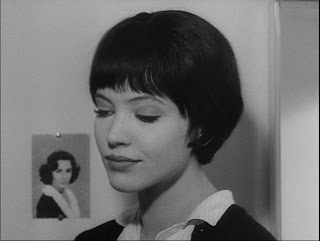
It's a great moment. The Godard is one of my all time favorites

tending to alternate with PIerrot le Fou as my favorite Godard...
The Ozus are masterworks that have been nigh on impossible to see -
but thrilling, in their quintessential


and unquintessential

Ozuness...

it is a bounteous day.

a very welcome delivery in the mail -

the more or less brand new Ozu double box, The Only Son -

and There was a Father -

plus Vivre Sa Vie, which has been out awhile, but I finally bought it....

It's a great moment. The Godard is one of my all time favorites

tending to alternate with PIerrot le Fou as my favorite Godard...

The Ozus are masterworks that have been nigh on impossible to see -

but thrilling, in their quintessential


and unquintessential

Ozuness...

it is a bounteous day.
Wednesday, July 14, 2010
Bastille Day Avec JLG
Happy Bastille Day, France!

It's been a very Godard week for me. I saw the rereleased Breathless over the weekend, watched the 2 or 3 Things I know About Her DVD (mainly to listen to the commentary, this time), dug around the extras on both those DVDs... Had a very Godard-like train ride the other day. It helped that I was reading CinemaScope's Film Socialisme article - but... there was a woman sitting near me, studying flashcards - "Working Capital and its components" the top one read. Across from me, advertisements - one a car ad, with a woman standing in the poster, beside a stack of cars, all different colors and makes. The other - I don't know what it was for - it looked like some kind of art - light blue with white, like clouds, swirls, faces (that looked like the designs in the pull quotes in the CinemaScope article.) There was a tall woman standing in front of me - staring out the window - then turning, and staring past my ear for a moment or two... and the people on the train, all lined up, all blank... and one woman, halfway down the car, who looked from a distance like Marina Vlady. And after this, toward the end of the ride, another woman, in a crowd, holding the bar - all I could see of her was one arm, reaching up to hold the support - she had, tattooed in beautiful script on her arm, a quote from W.E.B. DuBois (it turns out): "I sit with Shakespeare and he winces not."

It's all - something. There's that sense of gratification and wonder you get when you see something through someone else's eyes - to see yourself in a Godard film, in Godard's world... but here - to remember that it's not a particularly pleasant world he's describing. A world of commerce, capital (and its components), the dreary deadening routine of 9 to 5 work, chopped up constricted time, the colonization of the imagination by a language of commerce, authority, conformity - can't deny those things. Though too - can't deny the thrill of higher things - a great bit of language (whatever it means to see it turned into a bit of body art) - or the excitement of anticipating a new Godard film - or the brilliance and beauty of the old Godard films. Or - the realization just how well Godard encapsulated the world, described it, recreated it. Those 60s films saw the future, and the future they describe is closer to the truth than most.

So - there's more to France than Godard, but there's no question, Godard has done the country proud, and there are many worse ways to celebrate the French than by watching a Godard film or two.
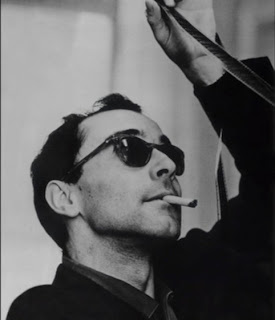

It's been a very Godard week for me. I saw the rereleased Breathless over the weekend, watched the 2 or 3 Things I know About Her DVD (mainly to listen to the commentary, this time), dug around the extras on both those DVDs... Had a very Godard-like train ride the other day. It helped that I was reading CinemaScope's Film Socialisme article - but... there was a woman sitting near me, studying flashcards - "Working Capital and its components" the top one read. Across from me, advertisements - one a car ad, with a woman standing in the poster, beside a stack of cars, all different colors and makes. The other - I don't know what it was for - it looked like some kind of art - light blue with white, like clouds, swirls, faces (that looked like the designs in the pull quotes in the CinemaScope article.) There was a tall woman standing in front of me - staring out the window - then turning, and staring past my ear for a moment or two... and the people on the train, all lined up, all blank... and one woman, halfway down the car, who looked from a distance like Marina Vlady. And after this, toward the end of the ride, another woman, in a crowd, holding the bar - all I could see of her was one arm, reaching up to hold the support - she had, tattooed in beautiful script on her arm, a quote from W.E.B. DuBois (it turns out): "I sit with Shakespeare and he winces not."

It's all - something. There's that sense of gratification and wonder you get when you see something through someone else's eyes - to see yourself in a Godard film, in Godard's world... but here - to remember that it's not a particularly pleasant world he's describing. A world of commerce, capital (and its components), the dreary deadening routine of 9 to 5 work, chopped up constricted time, the colonization of the imagination by a language of commerce, authority, conformity - can't deny those things. Though too - can't deny the thrill of higher things - a great bit of language (whatever it means to see it turned into a bit of body art) - or the excitement of anticipating a new Godard film - or the brilliance and beauty of the old Godard films. Or - the realization just how well Godard encapsulated the world, described it, recreated it. Those 60s films saw the future, and the future they describe is closer to the truth than most.

So - there's more to France than Godard, but there's no question, Godard has done the country proud, and there are many worse ways to celebrate the French than by watching a Godard film or two.

Subscribe to:
Posts (Atom)