Updating my votes, and extended lists, from the ongoing Yearly Polls at Wonders in the Dark. They are, currently, a couple years into the 1950s - a bit of a relief - the 40s are a softer decade for me than most. Not sure why, though I suppose my general obsession with Japanese film is one reason (the 40s being a bad decade for that film industry), though so are my tastes for comedy, musicals, and art films, the first two of which thrived in the 30s, and the art films start to really take off in the 50s and 60s - so...
The Decade as a whole:
PICTURE: It's a Wonderful Life
DIRECTOR: Ozu, Late Spring
LEAD ACTOR: Jimmy Stewart, Wonderful Life
LEAD ACTRESS: Setsuko Hara, Late Spring
SUPPORTING ACTOR: Walter Huston, Sierra Madre
SUPPORTING ACTRESS: Anna Magnani, Open City
SHORT: Spider and Tulip
SCORE: Prokofiev, Ivan the Terrible I
CINEMATOGRAPHY: 47 Ronin
Plus bonus picks::
Script: Late Spring
Sound: Citizen Kane
Documentary: Battle of San Pietro
Musical: Cabin in the Sky
Animated: Pinocchio
1. It's a Wonderful Life
2. Maltese Falcon
3. Late Spring
4. His Girl Friday
5. Ivan the Terrible I
6. The Big Sleep
7. Citizen Kane
8. Fort Apache
9. Third Man
10. Stray Dog
11. Germany Year Zero
12. Bicycle Thieves
13. The Lady Eve
14. Day of Wrath
15. Treasure of the Sierra Madre
16. To Have and Have Not
17. Dead of Night
18. The Shop Around the Corner
19. The 47 Ronin
20. I Walked With a Zombie
1949:
There are a lot of good films this year, but no contest at the top - Late Spring is one of the very short list of great films...
PICTURE: Late Spring
DIRECTOR: Ozu
LEAD ACTOR: Chishu Ryu
LEAD ACTRESS: Setsuko Hara
SUPPORTING ACTOR: Orson Welles, Third Man
SUPPORTING ACTRESS: Haruko Sugimura
SHORT: Begone Dull Care, Norman McLaren
SCORE: Karas, Third Man
CINEMATOGRAPHY: Lasker, Third Man
Plus bonus picks::
Script: Late Spring
1. Late Spring
2. Third Man
3. Stray Dog
4. Jour de Fete
5. Le Plaisir
6. She Wore a Yellow Ribbon
7. Orpheus
8. Battleground
9. Whiskey Galore
10. Kind Hearts and Coronets
1948:
PICTURE: Fort Apache
DIRECTOR: Rosselini, Germany Year Zero
LEAD ACTOR: Bogart, Sierra Madre
LEAD ACTRESS: Jean Arthur, Foreign Affair
SUPPORTING ACTOR: Walter Huston, Sierra Madre
SUPPORTING ACTRESS: Jean Simmons, Hamlet
SHORT: Haredevil Hare
SCORE: Red Shoes
CINEMATOGRAPHY: Red Shoes
Plus bonus picks:
Script: Bicycle Thieves
1. Fort Apache
2. Germany Year Zero
3. Bicycle Thieves
4. Treasure of the Sierra Madre
5. Letter from an Unknown Woman
6. Hamlet
7. The Red Shoes
8. The Fallen Idol
9. Red River
10. Foreign Affair
1947:
PICTURE: Odd Man Out
DIRECTOR: Ozu, Record of a Tenement Gentleman
LEAD ACTOR: James Mason
LEAD ACTRESS: Kinuyo Tanaka, Love of Sumiko the Actress
SUPPORTING ACTOR: Kirk Douglas,Out of the Past
SUPPORTING ACTRESS: Kathleen Ryan, Odd Man Out
SHORT: School for Postmen
SCORE: Webb, Out of the Past
CINEMATOGRAPHY: Krasker, Odd Man Out
Plus bonus picks::
Script: Out of the Past
1. Odd Man Out
2. Love of Sumiko the Actress
3. Spring River Flows East
4. Out of the Past
5. Record of a Tenement Gentleman
6. Quai de Orfevres
7. Lady from Shanghai
8. M. Verdoux
9. Dreams That Money Can Buy
10. Lured
1946:
PICTURE: It's a Wonderful Life
DIRECTOR: Capra
LEAD ACTOR: Jimmy Stewart
LEAD ACTRESS: Ingrid Bergman, Notorious
SUPPORTING ACTOR: Elisha Cook Jr., The Big Sleep
SUPPORTING ACTRESS: Martha Vickers, The Big Sleep
SHORT: Can't vote for this one, I'm afraid
SCORE: Prokofiev
CINEMATOGRAPHY: Henri Alekan; La Belle et la Bête
Plus bonus picks:
Script: The Big Sleep
Music/Sound:
1. It's a Wonderful Life
2. The Big Sleep
3. Notorious
4. Paisan
5. Beauty and the Beast
6. Ivan Terrible II
7. My Darling Clementine
8. Bedlam
9. Murderers Among Us
10. Gilda
1945:
PICTURE: Dead of the Night
DIRECTOR: Rosselini, Open City
LEAD ACTOR: Boris Karloff, Body Snatcher
LEAD ACTRESS: Gene Tierney, Leave her to Heaven
SUPPORTING ACTOR: Michael Redgrave, Dead of Night
SUPPORTING ACTRESS: Ana Magnani, Open City
SHORT: Battle of San Pietro
SCORE: Spellbound
Plus bonus picks:
Cinematography: Leave Her to Heaven
Script: Dead of Night
1. Dead of the Night
2. Open City
3. They Were Expendable
4. The Body Snatcher
5. Leave her to Heaven
6. A Walk in the Sun
7. The Southerner
8. The Clock
9. Children of Paradise
10. Isle of the Dead
1944:
PICTURE: Ivan the Terrible
DIRECTOR: Eisenstein
LEAD ACTOR: Nikolai Cherkasov
LEAD ACTRESS: Stanwyck, Double Indemnity
SUPPORTING ACTOR: William Demarest, Hail the Conquering Hero
SUPPORTING ACTRESS: Ann Carter, Curse of the Cat People
SHORT: I guess Little Red Riding Rabbit
SCORE: Prokofiev
Plus bonus picks:
Cinematography: Meet Me in St. Louis (George Folsey - though it might be something of a combined award for photography and set design...)
Script: To Have and Have Not
Best Song: Have Yourself a Merry Little Christmas
1. Ivan the Terrible
2. To Have and Have Not
3. Meet me in St. Louis
4. Double Indemnity
5. Hail the Conquering Hero
6. Miracle of Morgan Creek
7. The Woman in the Window
8. Henry V
9. Laura
10. Curse of the Cat People
1943:
PICTURE: Day of Wrath
DIRECTOR: Dreyer
LEAD ACTOR: Ferdinand Marian, Romance in a Minor Key
LEAD ACTRESS: Lisbeth Movin, Day of Wrath
SUPPORTING ACTOR: Charles Coburn, The More the Merrier
SUPPORTING ACTRESS: Jean Brooks, Seventh Victim
SHORT: [here the source of the list comes into play: comment included]... Meshes of the Afternoon - a rather difficult choice though; this is (like Sam said) one of the all time greats - but I've seen Spider and Tulip, a beautiful little animated film from Japan. I will defer to the nominations, to resolve this difficulty.
...you'll note that Spider and Tulip, is my pick for the decade
SCORE: Webb, I Walked With a Zombie
Plus bonus picks:
Cinematography: Karl Anderson, Day of Wrath
Script: Cabin in the Sky, Joseph Shrank
Editing: Mark Robson, Zombie
Music/Sound: Cabin in the Sky again. I also lingered long over the actress categories - Ethel Waters in particular is awful close...
1. Day of Wrath
2. I Walked With a Zombie
3. Cabin in the Sky
4. The Leopard Man
5. Romance in a Minor Key
6. Hangmen Also Die
7. Seventh Victim
8. Agnes des Peches
9. Munchhausen
10. Song Lantern
1942:
PICTURE: Palm Beach Story
DIRECTOR: Ozu, There Was a Father
LEAD ACTOR: Chishu Ryu, There Was a Father
LEAD ACTRESS: Claudette Colbert, Palm Beach Story
SUPPORTING ACTOR: Laird Cregar, Black Swan
SUPPORTING ACTRESS: Marie Lohr, Went the Day Well?
SHORT: Der Fuhrer's Face, I suppose, is a hard one to deny.
SCORE:Steiner, Casablanca
Plus bonus picks:
Cinematography: Ambersons (Cortez)
Script: Palm Beach Story
Editing/Sound: Cat People - superbly building atmosphere out of the most minimal resources. A feature of all those Lewton films...
1. Palm Beach Story
2. Went the Day Well
3. Aniki Bobo
4. There Was A Father
5. Cat People
6. Mrs. Miniver
7. In Which We Serve
8. To Be Or Not to Be
9. Magnificent Ambersons
10. The Road to Morocco
1941:
PICTURE: The Maltese Falcon
DIRECTOR: Mizoguchi, 47 Ronin
LEAD ACTOR: Welles, Kane
LEAD ACTRESS: Stanwyck, The Lady Eve
SUPPORTING ACTOR: Sydney Greenstreet
SUPPORTING ACTRESS: ?
SHORT: In the Sweet Pie and Pie
SCORE: Herrmann, Kane
Plus bonus picks:
Cinematography: Toland, Kane
Script: Huston, Maltese Falcon
Music/Sound: Kane - nice use of radio techniques, in a modern sound picture
1. Maltese Falcon
2. Ivan the Terrible, Part I
3. Citizen Kane
4. The Lady Eve
5. 47 Ronin
6. Sergeant York
7. Brothers and Sisters of the Toda Clan
8. Sullivan's Travels
9. Meet John Doe
10. Man Hunt
1940 Votes:
PICTURE: His Girl Friday
DIRECTOR: Hawks, His Girl Friday
LEAD ACTOR: James Stewart, Shop Around the Corner
LEAD ACTRESS: Rosalind Russell, His Girl Friday
SUPPORTING ACTOR: Basil Rathbone, Mark of Zorro
SUPPORTING ACTRESS: Ida Lupino, They Drive by Night
SHORT: A Wild Hare
SCORE: Korngold, The Sea Hawk
Plus bonus picks:
Cinematography: Toland, in Grapes of Wrath
Script: His Girl Friday (Charles Lederer, from the play)
Documentary: London Can Take It - I need to mention it somewhere...
1. His Girl Friday
2. Shop Around the Corner
3. The Mortal Storm
4. Pinocchio
5. Fantasia
6. Philadelphia Story
7. The Bank Dick
8. Grapes of Wrath
9. Mark of Zorro
10. Travelling Actors
Sunday, August 05, 2012

Friday, August 03, 2012
Random Tunage for Another Friday
Let us resume one of the rituals of the blogosphere, the Friday Music List - maybe even as a prelude to some actual movie blogging... With the results of the new Sight & Sound poll out, there is plenty to write about - those things always prove irresistible. I have been arguing about it a bit at Wonders in the Dark - defending Godard mostly, lately... it reminds me that it's been a while - 5 years since I posted a full Top X (100, at it happened) films... and I don't think I have ever posted a ranking of my favorite directors - I may have to address those oversights. Meanwhile - any temptation I might have to post my own Top 10 is going to have to wait - there is a very real chance it might be different by Monday - new print of Celine and Julie Go Boating is showing this weekend... I've seen it once - I am in awe of it and Rivette - seeing it again, might exalt it very far... I certainly am looking forward to it.
And so - random top ten - though first, another internet tradition - The Cat:

Thank you.
1. Wild Flag - Race Horse (damn! a new song!)
2. Terence Trent D'Arby - Wishing Well
3. Pylon - K
4. Mars Volta - Roulette Dares (The Haunt of)
5. The Flying Burrito Brothers - Do You Know HOw It Feels?
6. Young Marble Giants - Salad Days
7. Patti Smith - Seven Ways of Going
8. Fleet Foxes - Lorelai
9. Melvins - The Stupid Creep
10. Ian Dury and the Blockheads - Wake up and Make Love to Me
Can't avoid posting this - "Wishing Well" being one of those songs I only ever heard on TV, back when MTV had videos - and loved....
And - Wild Flag is a good choice here:
Have a great weekend, readers mine!
And so - random top ten - though first, another internet tradition - The Cat:

Thank you.
1. Wild Flag - Race Horse (damn! a new song!)
2. Terence Trent D'Arby - Wishing Well
3. Pylon - K
4. Mars Volta - Roulette Dares (The Haunt of)
5. The Flying Burrito Brothers - Do You Know HOw It Feels?
6. Young Marble Giants - Salad Days
7. Patti Smith - Seven Ways of Going
8. Fleet Foxes - Lorelai
9. Melvins - The Stupid Creep
10. Ian Dury and the Blockheads - Wake up and Make Love to Me
Can't avoid posting this - "Wishing Well" being one of those songs I only ever heard on TV, back when MTV had videos - and loved....
And - Wild Flag is a good choice here:
Have a great weekend, readers mine!
Monday, July 30, 2012
Chris Marker
From personal loss to artistic loss - Chris Marker has died. He was a very great filmmaker, one almost unique - the distillation of the essay film. Essay in content, exploring his subjects - and essayistic in form, trying on the technology, images, sounds, combinations, that make film. Film is montage - the blending of imagery, sound, words, signs - and he perfected it, within film, and beyond film, with his work with photography, video, computers... He was something.
And, you know - cats:
And, you know - cats:
Saturday, July 28, 2012
In Memory
The most recent lack of posting on this blog has sadder causes than usual. My father died, on the 13th. He had been having trouble breathing - maybe pneumonia, maybe something else - it started before the 4th, he got better for a week or so, then got worse again. He was old, 88 and a half, and I guess at that age you are vulnerable to things that don't seem much. He had been having heart problems this year, and we could see him wearing down - though it still came as a bit of a surprise. He had been quite healthy (for 88) up until this last winter - he drove, he got around on his own, he did things around the house, he still taught Sunday School - but this year the years did seem to start catching up with him.
Last summer we made it up to Canada, to visit his family. It was a good thing. It's a bit of a drive up there, and had been particularly hard to make the trip during the last few years of my mother's life. And as it turns out, in the year since that trip, my father and two of his brothers have died - so the timing was very good, as they got to see one another again.
I will miss him.


Last summer we made it up to Canada, to visit his family. It was a good thing. It's a bit of a drive up there, and had been particularly hard to make the trip during the last few years of my mother's life. And as it turns out, in the year since that trip, my father and two of his brothers have died - so the timing was very good, as they got to see one another again.
I will miss him.


Friday, July 13, 2012
Friday 13th Musical Interlude
I've been away, I am back - vacations always seem to make it hard to come up with any content for this blog. You would think otherwise, since I spent this one as much on the computer as ever - but that's how it goes. Anyway - I am back - and I think for today I shall keep it simple - yet another random ten:
1. Sonic Youth - Hey Joni
2. Jeff Beck - Blues De Luxe
3. G.O.N.G. - Inner Temple
4. Wilco - Shot in the Arm (live)
5. The Meters - Sophisticated Cissy
6. Of Montreal - Death of a Shade of Hue
7. Meat Puppets - Ice
8. Johnny Cash - Why Me Lord?
9. Pixies - Crackity Jones
10. Earth - Hell's Winter
But for video - we can celebrate the date a bit:
Pixies, doing No. 13 Baby seem right - I'm in a state...:
And Big Star:
That works. Stay cool, people.
1. Sonic Youth - Hey Joni
2. Jeff Beck - Blues De Luxe
3. G.O.N.G. - Inner Temple
4. Wilco - Shot in the Arm (live)
5. The Meters - Sophisticated Cissy
6. Of Montreal - Death of a Shade of Hue
7. Meat Puppets - Ice
8. Johnny Cash - Why Me Lord?
9. Pixies - Crackity Jones
10. Earth - Hell's Winter
But for video - we can celebrate the date a bit:
Pixies, doing No. 13 Baby seem right - I'm in a state...:
And Big Star:
That works. Stay cool, people.
Sunday, July 08, 2012
Halfway Through the Year - 2012
All right - I haven't done a very good job of keeping up with writing about films, but I've seen enough... rather unfortunate misadventure today - tried to see Beasts of the Southern Wild - the projector broke, so I ended up seeing To Rome With Love instead. That did not turn out well - I'm inclined to go back to seeing Woody Allen films every seven years... Anyway, that's not why I'm here - this is to sum up the Year So Far. So with no further ado - here is what I think - first, top 10 films released in the states so far in 2012:
1. Moonrise Kingdom - far and away... might be the best of the decade (though 2010 was an awful strong year)
2. The Kid With the Bike
3. This is Not a Film
4. Damsels in Distress
5. In Darkness
6. We Need to Talk About Kevin
7. The Deep Blue Sea
8. The Secret World of Arietty
9. Keyhole
10. Bernie
and - I'd do the best 10 made in 2012, but I don't think I have seen 10 films made this year yet. Specifically, 9:
1. Moonrise Kingdom
2. Bernie
3. The Five Year Engagement
4. Safety Not Guaranteed
5. Mirror Mirror
6. The Pirates in an Adventure with Scientists
7. Wanderlust
8. Dark Shadows
9. To Rome With Love
I know I haven't seen as many films new as some years, and I know I've seen a few of this years films multiple times.... but that's rather sad. I'd better do something about that.
Finally - with half a year gone, and the chance to see quite a few stragglers from last year - an updated list of the best of 2011 - with notes on when I saw them and where they came in at the beginning of the year, if they did...
1. Melancholia - #1 last year
2. A Separation (seen in 2012)
3. The Kid With the Bike (ditto)
4. This is Not a Film (ditto)
5. Meek's Cutoff - 3
6. Take Shelter - 4
7. Le Havre - 2 (seems like some meaningless shifting around these films...)
8. Damsels in Distress (released this year - though I think I might be underrating it - I enjoyed this as much as anything short of Moonrise Kingdom, this year and last year together.)
9. Martha Marcy May Marlene - 5
10. The Skin I Live In - 6
1. Moonrise Kingdom - far and away... might be the best of the decade (though 2010 was an awful strong year)
2. The Kid With the Bike
3. This is Not a Film
4. Damsels in Distress
5. In Darkness
6. We Need to Talk About Kevin
7. The Deep Blue Sea
8. The Secret World of Arietty
9. Keyhole
10. Bernie
and - I'd do the best 10 made in 2012, but I don't think I have seen 10 films made this year yet. Specifically, 9:
1. Moonrise Kingdom
2. Bernie
3. The Five Year Engagement
4. Safety Not Guaranteed
5. Mirror Mirror
6. The Pirates in an Adventure with Scientists
7. Wanderlust
8. Dark Shadows
9. To Rome With Love
I know I haven't seen as many films new as some years, and I know I've seen a few of this years films multiple times.... but that's rather sad. I'd better do something about that.
Finally - with half a year gone, and the chance to see quite a few stragglers from last year - an updated list of the best of 2011 - with notes on when I saw them and where they came in at the beginning of the year, if they did...
1. Melancholia - #1 last year
2. A Separation (seen in 2012)
3. The Kid With the Bike (ditto)
4. This is Not a Film (ditto)
5. Meek's Cutoff - 3
6. Take Shelter - 4
7. Le Havre - 2 (seems like some meaningless shifting around these films...)
8. Damsels in Distress (released this year - though I think I might be underrating it - I enjoyed this as much as anything short of Moonrise Kingdom, this year and last year together.)
9. Martha Marcy May Marlene - 5
10. The Skin I Live In - 6
Wednesday, July 04, 2012
Wednesday, June 27, 2012
The Seven Days
Time for another of my occasional series of posts about the Civil War. Today is the 150th anniversary of the battle of Gaines' Mill - the largest, and most decisive battle of the Seven Days battles, itself the culmination of McClellan's peninsular campaign, and the biggest cumulative battle of the war so far. It is - the Seven Days - also Robert E. Lee's first fight as commander of the Army of Northern Virginia.
In some ways, this was really Lee's one good chance at winning the war. He had about as many men as he would ever have, against a Union position that was split across a river, under a commander who, shall we say, was quite beatable. Lee laid out a plan aimed at destroying the Union army - concentrate as many of his forces as possible north of the Chickahominy river, to attack the Federals there while most of the Union army was south of the river. It's a tactic Lee used over and over during the war - divide his force, to concentrate against a vulnerable point and thrash the enemy in detail - here, he had a pretty strong advantage in numbers, almost 2 to 1. And it worked, more or less - though in the end, Gaines' Mill turned out to be almost completely a frontal assault against an entrenched opponent. The Confederates carried the field - a relatively rare instance of such an attack winning during the Civil War - though 2:1 odds helps... the casualties were about the same ratio, before you factor in prisoners - 8,000 to 4,000, though the POW take came close to evening it out. The rebels carried the field, yes, but the Federals (Fitzjohn Porter's V corps) got away across the river, and the fight kept going. The rest of the Seven Days were something of a chase - McClellan, having had 1 of his 5 corps driven back from their somewhat exposed positions to join the rest of the army, decided to "change his base" to the James river, on the southern side of the peninsular, and pulled the army out of its lines and moved south; Lee tried to come to grips with them, trying to cut the retreat in half, to trap them, something, that would break the Union army. He failed - the Army of the Potomac made it out - a number of battles were fought along the way, but Lee never really caught them. At the end, on July 1st, Lee did catch up with them, at Malvern Hill - but here, as at Gaines' Mill, the northerners (mostly Porter, again) were dug in, on a hill, with most of the army's artillery in support. Lee attacked, and this time, was blown halfway to hell. That was the end - and a lesson in the killing power of massed artillery that neither side forgot. (Except in the heat of battle, more than once...)
All right. I want to go back to the point I made in my Seven Pines post - at this point in the war, no one, not even Robert E. Lee, seemed to know how to execute a battle. This campaign was masterfully planned - a bold strike that stood a fair chance of breaking his enemy, causing, at least, a headlong retreat - but the execution? First - even Lee seemed to think he could arrange complicated movements by multiple forces, under multiple leaders, over multiple roads, with sketchy maps and 19th century communication technologies - in such a way as to have everyone arrive at the same point at the same time and act in concert. No, it didn't work. Second - even given the inherent problems of coordinated movement, Lee's generals did not acquit themselves well. Later in the battle (at Savage Station and Glendale), lesser Confederates (Holmes and Huger and Magruder) made mistakes and let their commander down - but from the start, none other than Stonewall Jackson failed to carry out his part of the plan - and failed repeatedly. He didn't show up at Mechanicsville (the first big fight, the day before Gaines' Mill) - he was late at Gaines' Mill - he was passive at Savage Station and Glendale... Reading about it in detail, it sounds as if Jackson was suffering from something - a concussion? sleep deprivation? He had brought his men in from the Shenandoah Valley just as the battle started - they and he had had a busy stretch... The results - of his lethargy, the confusion on the battlefield, the shortcomings of other officers - were that Lee was never able to concentrate his forces for another effective strike at the Union after Gaines' Mill - all the subsequent battles were fought piecemeal, at even or less odds, and the Army of the Potomac got away.
On the other hand... there's George McClellan. Who, it probably has to be said, managed a fairly masterful retreat under pressure from the confederate army - which he outnumbered, something like 5:4 at this point (by the far the lowest odds the union had in the war, admittedly), and generally beat on the field of battle. Even Gaines' Mill, which the confederates won, fair and square and pretty unambiguously - didn't really do the Federals much harm. Porter got across the river, giving the northerners numerical advantages again - the army was hardly beaten. And while all this was happening, with Lee's 60,000 north of the river, the Union had at least 2:1, maybe 3:1 advantage south of the river in front of Richmond - not that they tried to do anything about it. Looking at this campaign - it's hard not to think that Lee was the luckiest general on either side of the war. Here - he attacked - every day - attacked, in the face of whatever odds were in front of him. His subordinates handled the battle poorly - breaking up his attacks, losing whatever advantages of numbers they might have had by moving fast; on the field, the union soldiers generally gave as good as they got - and McClellan kept going back, against the advice (and sometimes wrathful near insubordination) of his generals, who had won the field, and thought they could keep winning... But he kept retreating.
It kept happening, too. Lee got to fight McClellan, who had skill, but seemed paralyzed by the thought of actually fighting; John Pope - a nincompoop; then Ambrose Burnside - who could start things well, but froze up when circumstances changed (I assume I'll write more about this come Fredericksburg's anniversary in December); Joe Hooker - who is very hard to explain, because of the lot he seems by far the most competent - but who froze up like a jacked deer when the bullets started flying at Chancellorsville... all of them either incompetent or with a crack, that split wide open when faced with the ultimate test. All of them blew it - did stupid things - didn't do things that could have won decisive battles - all of them went to pieces in some sense, when Lee hit them. It didn't stop until Gettysburg, where Meade simply kept fighting until he was beaten - which is the real point of so many of these men. They gave up long before they were beaten. But not Meade. And when Grant came east, that stuff was done. It's one of the marks of the best generals of the war - certainly of Lee, Jackson, Longstreet, as well as Meade, Grant, Thomas, Sheridan and Sherman - that they did not stop until they were actually beaten, and even then, were loath to admit it.
In some ways, this was really Lee's one good chance at winning the war. He had about as many men as he would ever have, against a Union position that was split across a river, under a commander who, shall we say, was quite beatable. Lee laid out a plan aimed at destroying the Union army - concentrate as many of his forces as possible north of the Chickahominy river, to attack the Federals there while most of the Union army was south of the river. It's a tactic Lee used over and over during the war - divide his force, to concentrate against a vulnerable point and thrash the enemy in detail - here, he had a pretty strong advantage in numbers, almost 2 to 1. And it worked, more or less - though in the end, Gaines' Mill turned out to be almost completely a frontal assault against an entrenched opponent. The Confederates carried the field - a relatively rare instance of such an attack winning during the Civil War - though 2:1 odds helps... the casualties were about the same ratio, before you factor in prisoners - 8,000 to 4,000, though the POW take came close to evening it out. The rebels carried the field, yes, but the Federals (Fitzjohn Porter's V corps) got away across the river, and the fight kept going. The rest of the Seven Days were something of a chase - McClellan, having had 1 of his 5 corps driven back from their somewhat exposed positions to join the rest of the army, decided to "change his base" to the James river, on the southern side of the peninsular, and pulled the army out of its lines and moved south; Lee tried to come to grips with them, trying to cut the retreat in half, to trap them, something, that would break the Union army. He failed - the Army of the Potomac made it out - a number of battles were fought along the way, but Lee never really caught them. At the end, on July 1st, Lee did catch up with them, at Malvern Hill - but here, as at Gaines' Mill, the northerners (mostly Porter, again) were dug in, on a hill, with most of the army's artillery in support. Lee attacked, and this time, was blown halfway to hell. That was the end - and a lesson in the killing power of massed artillery that neither side forgot. (Except in the heat of battle, more than once...)
All right. I want to go back to the point I made in my Seven Pines post - at this point in the war, no one, not even Robert E. Lee, seemed to know how to execute a battle. This campaign was masterfully planned - a bold strike that stood a fair chance of breaking his enemy, causing, at least, a headlong retreat - but the execution? First - even Lee seemed to think he could arrange complicated movements by multiple forces, under multiple leaders, over multiple roads, with sketchy maps and 19th century communication technologies - in such a way as to have everyone arrive at the same point at the same time and act in concert. No, it didn't work. Second - even given the inherent problems of coordinated movement, Lee's generals did not acquit themselves well. Later in the battle (at Savage Station and Glendale), lesser Confederates (Holmes and Huger and Magruder) made mistakes and let their commander down - but from the start, none other than Stonewall Jackson failed to carry out his part of the plan - and failed repeatedly. He didn't show up at Mechanicsville (the first big fight, the day before Gaines' Mill) - he was late at Gaines' Mill - he was passive at Savage Station and Glendale... Reading about it in detail, it sounds as if Jackson was suffering from something - a concussion? sleep deprivation? He had brought his men in from the Shenandoah Valley just as the battle started - they and he had had a busy stretch... The results - of his lethargy, the confusion on the battlefield, the shortcomings of other officers - were that Lee was never able to concentrate his forces for another effective strike at the Union after Gaines' Mill - all the subsequent battles were fought piecemeal, at even or less odds, and the Army of the Potomac got away.
On the other hand... there's George McClellan. Who, it probably has to be said, managed a fairly masterful retreat under pressure from the confederate army - which he outnumbered, something like 5:4 at this point (by the far the lowest odds the union had in the war, admittedly), and generally beat on the field of battle. Even Gaines' Mill, which the confederates won, fair and square and pretty unambiguously - didn't really do the Federals much harm. Porter got across the river, giving the northerners numerical advantages again - the army was hardly beaten. And while all this was happening, with Lee's 60,000 north of the river, the Union had at least 2:1, maybe 3:1 advantage south of the river in front of Richmond - not that they tried to do anything about it. Looking at this campaign - it's hard not to think that Lee was the luckiest general on either side of the war. Here - he attacked - every day - attacked, in the face of whatever odds were in front of him. His subordinates handled the battle poorly - breaking up his attacks, losing whatever advantages of numbers they might have had by moving fast; on the field, the union soldiers generally gave as good as they got - and McClellan kept going back, against the advice (and sometimes wrathful near insubordination) of his generals, who had won the field, and thought they could keep winning... But he kept retreating.
It kept happening, too. Lee got to fight McClellan, who had skill, but seemed paralyzed by the thought of actually fighting; John Pope - a nincompoop; then Ambrose Burnside - who could start things well, but froze up when circumstances changed (I assume I'll write more about this come Fredericksburg's anniversary in December); Joe Hooker - who is very hard to explain, because of the lot he seems by far the most competent - but who froze up like a jacked deer when the bullets started flying at Chancellorsville... all of them either incompetent or with a crack, that split wide open when faced with the ultimate test. All of them blew it - did stupid things - didn't do things that could have won decisive battles - all of them went to pieces in some sense, when Lee hit them. It didn't stop until Gettysburg, where Meade simply kept fighting until he was beaten - which is the real point of so many of these men. They gave up long before they were beaten. But not Meade. And when Grant came east, that stuff was done. It's one of the marks of the best generals of the war - certainly of Lee, Jackson, Longstreet, as well as Meade, Grant, Thomas, Sheridan and Sherman - that they did not stop until they were actually beaten, and even then, were loath to admit it.
Sunday, June 24, 2012
Moonrise Kingdom
I have seen Moonrise Kingdom three times already. It's not entirely because it is the best film of the year so far (a place it's likely to hold) - it's also because there haven't been a lot of options I'm dying to see. I mentioned that before - though lately, it's been an accumulation of things: indifference to other films that are out, some odd scheduling decisions (10:45 am starting times - what's that about?) - and the simple fact that Moonrise Kingdom is there to be seen, and its so much better than anything else... why fight it? Though I suppose even that is more of a rationalization than it should be - the biggest reason for seeing it three times is that it is a rapturous film, and I can't get enough of it.
Simple enough story: an orphan 12 year old boy runs away from the khaki scouts with a lonely 12 year old girl whose parents hate each other and who is far too smart for anyone around her. They cross the island they live on through the woods, while everyone else scrambles in their wake, the searchers spending as much time fighting among themselves as looking for the kids. But they are found, though not before they stab one of the other scouts and fall in love - they are hauled off, and Social Services called in to take him away - maybe to juvenile refuge; maybe for shock treatment; maybe to have a piece of his brain cut out. So - as usual in Wes Anderson films, the rest of the gang gets together and saves the heroes. They escape again, but there's a storm a-coming... All this is set in 1965, on an island off the coast of Maine (it seems) - there is just a hint of a times they are a changing' vibe going on, things like Sam's brooch (not meant for a male to wear, but he doesn't give a damn), though it's not the point. Though French films might be the point.
It's quietly movie mad, in Anderson's way - with Godard and Ozu prominent as usual (though hardly the only influences). Pierrot le Fou, with its lovers on the lam, and Floating Weeds, with its lighthouses and harbors and torrential downpours and lost and found fathers and sons seem particularly relevant here. But I suppose it's even more steeped in the types of books Suzzy reads - about near teens, usually girls, having adventures, on this or foreign worlds, usually with magic powers, always running away, forced to save themselves, on their own. The film itself plays like a daydream about a book like that, set in a real place, and acted out in this place. That's an underrated part of Anderson's style, the locations - aesthetically precise as they are (and they are usually as precise as the sets), they are always very real looking. This film looks more or less absolutely right - the woods, the jagged ledges, the little lakes and tidal pools, the houses docks and fields. Some of it, to be sure, seems a bit too inland - some of those streams seem like they'd be hard to muster in September in New England on an island - but that's a quibble. And a quibble that misses the point by a far piece - it's a daydream - the nature of which is to take the real enough world the kids are in and turn it into a wonderland, a setting for adventure.
That is, in the end, Wes Anderson's world - his films are about art, about transforming the world that is into an image of a world, that focuses and clarifies the world as it is. His characters are all artists, usually literally, sometimes figuratively (which usually makes them con artists, like Royal), but always there trying to make sense of the world by making art out of it. (And Sam is a painter; Suzzy is more ambiguous, less explicitly making art, but she is in a play when Sam meets her, and she is immersed in those books, and seems to be immersed in their imaginative world as well; she seems to be Margot Tenenbaum in the making.) They are all making themselves up as they go along, trying to make up the world as they go along - though the world never quite seems to stop being what it is. They shape and adapt and get along, however well they can.
Which does pull this back to the film references (the specific ones I mentioned.) That's Pierrot le Fou; it's also Floating Weeds. People who try to make the world into their own fiction, do it, but find the world just as determined to write itself - so they have to figure out what to do with it. Anderson is usually more optimistic than his models - this is a doomed romance that is saved; this is a story of a fatherless boy finding a father of sorts, the opposite of the father who has to deny his son in the Ozu film.
And so on. All of this, meanwhile, is put together with skill that is worthy of comparison to Godard or Ozu - Anderson is as good a filmmaker as anyone in the world now. Everything he does uses the art of film completely - his photography, the editing, the integration of music into the film, the performances, and how they are all put together. He gets plenty of attention for his set designs, compositions and so on, deservedly, but these things are always more than that - they flow; they create a world, they provide the material for the stories to take place. And they create deep pleasure (for me anyway) in the basic material of the film - cuts, camera movements, a camera angle, can make you laugh, or take your breath away. There is pure pleasure in something as simple as the perfect rhythm of the cuts in the voiceover reading of a note... And, as is characteristic of his films, he has created a whole suite of characters, the kids at the center, the adults surrounding them, and assembled a cast to do them justice. He gets a distinctive style from his cast - it's not a naturalistic style, but it still manages to make actors seem to be born into their roles. All right. A great film.
Simple enough story: an orphan 12 year old boy runs away from the khaki scouts with a lonely 12 year old girl whose parents hate each other and who is far too smart for anyone around her. They cross the island they live on through the woods, while everyone else scrambles in their wake, the searchers spending as much time fighting among themselves as looking for the kids. But they are found, though not before they stab one of the other scouts and fall in love - they are hauled off, and Social Services called in to take him away - maybe to juvenile refuge; maybe for shock treatment; maybe to have a piece of his brain cut out. So - as usual in Wes Anderson films, the rest of the gang gets together and saves the heroes. They escape again, but there's a storm a-coming... All this is set in 1965, on an island off the coast of Maine (it seems) - there is just a hint of a times they are a changing' vibe going on, things like Sam's brooch (not meant for a male to wear, but he doesn't give a damn), though it's not the point. Though French films might be the point.
It's quietly movie mad, in Anderson's way - with Godard and Ozu prominent as usual (though hardly the only influences). Pierrot le Fou, with its lovers on the lam, and Floating Weeds, with its lighthouses and harbors and torrential downpours and lost and found fathers and sons seem particularly relevant here. But I suppose it's even more steeped in the types of books Suzzy reads - about near teens, usually girls, having adventures, on this or foreign worlds, usually with magic powers, always running away, forced to save themselves, on their own. The film itself plays like a daydream about a book like that, set in a real place, and acted out in this place. That's an underrated part of Anderson's style, the locations - aesthetically precise as they are (and they are usually as precise as the sets), they are always very real looking. This film looks more or less absolutely right - the woods, the jagged ledges, the little lakes and tidal pools, the houses docks and fields. Some of it, to be sure, seems a bit too inland - some of those streams seem like they'd be hard to muster in September in New England on an island - but that's a quibble. And a quibble that misses the point by a far piece - it's a daydream - the nature of which is to take the real enough world the kids are in and turn it into a wonderland, a setting for adventure.
That is, in the end, Wes Anderson's world - his films are about art, about transforming the world that is into an image of a world, that focuses and clarifies the world as it is. His characters are all artists, usually literally, sometimes figuratively (which usually makes them con artists, like Royal), but always there trying to make sense of the world by making art out of it. (And Sam is a painter; Suzzy is more ambiguous, less explicitly making art, but she is in a play when Sam meets her, and she is immersed in those books, and seems to be immersed in their imaginative world as well; she seems to be Margot Tenenbaum in the making.) They are all making themselves up as they go along, trying to make up the world as they go along - though the world never quite seems to stop being what it is. They shape and adapt and get along, however well they can.
Which does pull this back to the film references (the specific ones I mentioned.) That's Pierrot le Fou; it's also Floating Weeds. People who try to make the world into their own fiction, do it, but find the world just as determined to write itself - so they have to figure out what to do with it. Anderson is usually more optimistic than his models - this is a doomed romance that is saved; this is a story of a fatherless boy finding a father of sorts, the opposite of the father who has to deny his son in the Ozu film.
And so on. All of this, meanwhile, is put together with skill that is worthy of comparison to Godard or Ozu - Anderson is as good a filmmaker as anyone in the world now. Everything he does uses the art of film completely - his photography, the editing, the integration of music into the film, the performances, and how they are all put together. He gets plenty of attention for his set designs, compositions and so on, deservedly, but these things are always more than that - they flow; they create a world, they provide the material for the stories to take place. And they create deep pleasure (for me anyway) in the basic material of the film - cuts, camera movements, a camera angle, can make you laugh, or take your breath away. There is pure pleasure in something as simple as the perfect rhythm of the cuts in the voiceover reading of a note... And, as is characteristic of his films, he has created a whole suite of characters, the kids at the center, the adults surrounding them, and assembled a cast to do them justice. He gets a distinctive style from his cast - it's not a naturalistic style, but it still manages to make actors seem to be born into their roles. All right. A great film.
Friday, June 22, 2012
Normal Friday Service Resumes
Well - the old computer hard drive is still working, so I have my music back once more. The results - not exactly obscure, but digging into the recesses of all that music... here we go:
1. Sonic Youth - Anti-orgasm
2. John Cale - Taking it All Away
3. Son Volt - World Waits for You
4. The Soft Machine - Why Are We Sleeping?
5. Louvin Brothers - Is that You Myrtle?
6. Richard & Linda Thompson - Shame of Doing Wrong (live) - really one of the greatest songs ever...
7. Love - Doggone
8. Melt Banana - Dog Song
9. Flaming Lips - All We Have Now
10. Bob Marley and the Wailers - Get Up STand Up (live)
and video? Sonic Youth is a welcome sight this morning:
And - I suppose I could make some kind of comment on the theme of the end of great rock and roll marriages, as this comes from pretty close to the end, I think, for the Thompsons, as the above does for Gordon and Moore - but really, it's the song. That casually brilliant solo at the end... yes.
1. Sonic Youth - Anti-orgasm
2. John Cale - Taking it All Away
3. Son Volt - World Waits for You
4. The Soft Machine - Why Are We Sleeping?
5. Louvin Brothers - Is that You Myrtle?
6. Richard & Linda Thompson - Shame of Doing Wrong (live) - really one of the greatest songs ever...
7. Love - Doggone
8. Melt Banana - Dog Song
9. Flaming Lips - All We Have Now
10. Bob Marley and the Wailers - Get Up STand Up (live)
and video? Sonic Youth is a welcome sight this morning:
And - I suppose I could make some kind of comment on the theme of the end of great rock and roll marriages, as this comes from pretty close to the end, I think, for the Thompsons, as the above does for Gordon and Moore - but really, it's the song. That casually brilliant solo at the end... yes.
Wednesday, June 20, 2012
Andrew Sarris
Andrew Sarris has died. I am not alone in considering this to be holy writ:
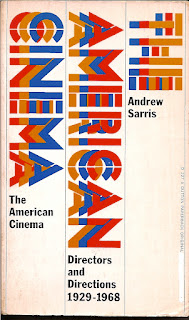
I read that devotedly, especially in the early days of my full scale cinephilia, generally taking Sarris' judgments as starting points for my own, though coming to an understanding of my own tastes and ideas about films quite often by way of arguing with him. He wrote in a way that invited argument, I think - stating a position, but in a way that left of room for counter positions, that were, themselves, easier to state because of the clarity with which he made his case. It felt that way to me. I always found his opinions generous and open, and grounded in curiosity and joy in watching films - he was a perfect guide. It helped that his tastes and mine ran together - but like I say, even when they didn't (and I doubted from the start his assessment of people like Frank Capra, John Huston, Billy Wilder - especially Capra, who I believed then and now was the greatest American filmmaker of them all), I found his case against them necessary to consider. And so it goes.
That's just me - but I know enough people who could probably say something close to the same (my long time internet friend Joseph B, for example...). Whether The American Cinema, or his reviews, or the sum total of his writing - he has been as influential as critics come.
And one more thing - that book: that is a cover for the ages. Everyone seems to be posting a scan or picture or something of their copy - that's what you see above. They all seem to be similar - a bit battered, discolored, a book likely to have spent a fair amount of time stuck in back pockets and such (it's the perfect size). Most of the pictures are straight on, like mine, which perhaps obscures the condition of the pages - downturned and stained and stuck through with bookmarks (there's a stub from Kenneth Brannagh's Hamlet, 10:00 AM show, 1/26/97, $4.75 (matinee price), marking the Preston Sturges entry, in mine)... It is a thing of beauty, and one as much used as any book I own.

I read that devotedly, especially in the early days of my full scale cinephilia, generally taking Sarris' judgments as starting points for my own, though coming to an understanding of my own tastes and ideas about films quite often by way of arguing with him. He wrote in a way that invited argument, I think - stating a position, but in a way that left of room for counter positions, that were, themselves, easier to state because of the clarity with which he made his case. It felt that way to me. I always found his opinions generous and open, and grounded in curiosity and joy in watching films - he was a perfect guide. It helped that his tastes and mine ran together - but like I say, even when they didn't (and I doubted from the start his assessment of people like Frank Capra, John Huston, Billy Wilder - especially Capra, who I believed then and now was the greatest American filmmaker of them all), I found his case against them necessary to consider. And so it goes.
That's just me - but I know enough people who could probably say something close to the same (my long time internet friend Joseph B, for example...). Whether The American Cinema, or his reviews, or the sum total of his writing - he has been as influential as critics come.
And one more thing - that book: that is a cover for the ages. Everyone seems to be posting a scan or picture or something of their copy - that's what you see above. They all seem to be similar - a bit battered, discolored, a book likely to have spent a fair amount of time stuck in back pockets and such (it's the perfect size). Most of the pictures are straight on, like mine, which perhaps obscures the condition of the pages - downturned and stained and stuck through with bookmarks (there's a stub from Kenneth Brannagh's Hamlet, 10:00 AM show, 1/26/97, $4.75 (matinee price), marking the Preston Sturges entry, in mine)... It is a thing of beauty, and one as much used as any book I own.
Tuesday, June 19, 2012
Springtime Worth of New Films
It's been a long time since I have done this, even as basic a thing as a list of films seen - it's ridiculously long, really. The end of March. Time, I suppose, to get back into it. My excuse is gone - I could blame that WWII class - not now. The Euros? maybe, but still...
This is going to be simple - there is one important point about this spring - there is a vast, vast gap between the best films I have seen and the rest. Most of the rest, that is - there are actually some first rate films in this list, that probably deserve more attention than this. But having not done this forever, I think it wise to just plow through it, and try to come back to the more recent films, especially the two that really floored me... off we go!
Chico And Rita - 9/15 - animated film about a pianist who meets a singer, romances her, writes her songs, and so on - they are a hit, they are lovers, but they keep breaking up, over miscellaneous nonsense and jealous Americans. Set in Cuba - features quite magnificent music, and neat looking animation, though the story seems a bit awkward and forced. Lovely to look at and listen to, though.
We Need to Talk About Kevin - 11/15 - half forgot I saw this - it's a good film though - fractured tale of a mother whose son has done something unthinkable (murdered a bunch of classmates - and his father and sister as well). Plays mostly as a nasty comedy about child-rearing as horror movie, like Erasorhead - though it gets more serious t the end (when it also abandons a lot of the jumping around in time...) Quite effective piece of filmmaking, to be honest.
Mirror Mirror - 9/15 - Tarsem does Snow White, with Julia Roberts as the evil stepmother. Starts from the stepmother's perspective, but mostly drops it, for better or worse. snow white - starts fromt he stepmopther's perspective, but Snow White takes over. Falls in with dwarves who teach her to fight so she becomes a rebel. AS one would expect from Tarsem, it is gorgeous looking, and rather witty as well, though some of the dialogue gets a bit forced. An amusing trifle in the end.
Kid With the Bike - 12/15 - Another very fine film I saw and haven't thought about since, really. The Dardennes brothers, doing their usual thing - here following a boy whose in a home after his father disappeared on him. The kid keeps running away - he meets a woman who helps him after a while, but he's still obsessed with his father and hanging out with a bad crowd - things go wrong. But then, they get a little better - or worse - or better... It is very much like their other films, same settings, same types of characters, same tendency to spend the whole film chasing someone who seems to be running for their life. It is a fine career the brothers have mapped out, rich and detailed and precise and always well worth seeing.
The Deep Blue Sea - 11/15 - Terrence Davies melodrama (though not a tragedy, not sophocles) about a married woman who meets a young man and falls hopelessly in love with him - though he only sort of likes her. Looping around through the end and beginning of their affair... An unknown woman story all the way down, with its inadaquate men. And - seeing in the middle of all those WWII films highlights the degree to which it is a post-war story - it's 1950, but Freddy lives in 1941 (in 1950) - and the film is shot through with hints of the lingering devastation of the war. A fantastic closing shot that just nails it - the heroine looks out her window, Davies cuts outside, see her in the window, the landlady bringing in the milk, and the camera tracks along the street and stops on a bombed out house where some kids are playing. The first we've seen of that ruin, but we can guess how much of the misery we have seen is a result of the war. All told, a lush and beautiful movie, anchored by Rachel Weisz' outstanding performance.
Five Year Engagement - 10/15 - nice rom com about a chef and student who get engaged, then she gets a job in Michigan - what will they do? He goes, he sinks, she rises, they break up, but get back together again in the end. It's an interesting story, some neat ideas, and well written and acted, but there is just nothing to look at! Why can't films like this hire fucking directors? The material is good enough if someone with any sense of style tried it, it would come out fine.
This is Not a Film - 12/15 - something made in Jafar Panahi's house while under house arrest, waiting to be sentenced. He calls a friend over, who shoots him, reading from a script he'd written, half acting bits of it out - the story of a girl who is accepted in university but her parents won't let her go. They lock her up - the drama takes place in her house - a grandmother who visits, a sister who can't come in because the door is locked, a boy outside she falls for, but he's not what he seems - he's an "agent" says Panahi. (This is based on Chekhov, he says.) He only gets so far in this - if you could tell a film, why would you make one? he says. So it turns to criticism - how the unpredictablity of actors gives you more than his direction could; how the location, for example, creates emotion as much as the acting or story. Eventually, he starts shooting the cameraman shooting him - when the cameraman leaves, he shoots the man collecting garbage in the apartment - and shoots the fireworks outside through the door... All this, for all its constraints, is a pretty typical Panahi film, does all the things he talks about. The set certainly directs for him; the world impinges on the film - here, the sound of fireworks all day long, though it takes a while for him to tell us what day it is - Iranians probably would understand, though it's not guaranteed. The way he takes off his cast - like the girl in Mirror - is to the point. He does it more than once - addressing the camera directly; giving up on retelling the script; then bringing the cameraman and the man in the elevator into the film. It's pretty close to a great film - or whatever it is, if not a film...
Dark Shadows - 9/15 - somewhere along about the end of April, the world seemed to have run out of films. So since then, I have seen Damsels in Distress (which is going to get its own post) and Moonrise Kingdom (ditto) half a dozen times between them - while looking for other films to see as well. It's not easy - there hasn't been much to catch my eye. A new Tim Burton, though - all right - worth a shot, huh? maybe. Amusing enough, but kind of dopey, and what is there to say about it?
Bernie - 10/15 - Richard Linklater directs Jack Black - a part true-crime, part fake documentary, about a funeral director who murders an old woman. It's Jack Black's film (along with Matthew McConaughey, who steals his scenes) - singing, charming the old ladies, caring for the dead, directing plays... It's good - it's clever - but it's just a film.
The Pirates! An Adventure with Scientists (or, in the USA, land of the god-bothering nitwits, Band of Misfits) - 9/15 - amusing claymation tale, a bit silly and somewhat less than it could have been. A Pirate captain wants to be pirate of the year, but he is a failure - but he has a dodo for a parrot, and Charles Darwin is impressed - so they go to London, win prizes, but he sells his soul - and has to save the day... Plenty of fun, for the jokes, especially the visual jokes (the end credits might be better than the whole film), but I don't think I can say much more for it...
And so? that brought us up to Memorial Day - a good place to stop for the moment...
This is going to be simple - there is one important point about this spring - there is a vast, vast gap between the best films I have seen and the rest. Most of the rest, that is - there are actually some first rate films in this list, that probably deserve more attention than this. But having not done this forever, I think it wise to just plow through it, and try to come back to the more recent films, especially the two that really floored me... off we go!
Chico And Rita - 9/15 - animated film about a pianist who meets a singer, romances her, writes her songs, and so on - they are a hit, they are lovers, but they keep breaking up, over miscellaneous nonsense and jealous Americans. Set in Cuba - features quite magnificent music, and neat looking animation, though the story seems a bit awkward and forced. Lovely to look at and listen to, though.
We Need to Talk About Kevin - 11/15 - half forgot I saw this - it's a good film though - fractured tale of a mother whose son has done something unthinkable (murdered a bunch of classmates - and his father and sister as well). Plays mostly as a nasty comedy about child-rearing as horror movie, like Erasorhead - though it gets more serious t the end (when it also abandons a lot of the jumping around in time...) Quite effective piece of filmmaking, to be honest.
Mirror Mirror - 9/15 - Tarsem does Snow White, with Julia Roberts as the evil stepmother. Starts from the stepmother's perspective, but mostly drops it, for better or worse. snow white - starts fromt he stepmopther's perspective, but Snow White takes over. Falls in with dwarves who teach her to fight so she becomes a rebel. AS one would expect from Tarsem, it is gorgeous looking, and rather witty as well, though some of the dialogue gets a bit forced. An amusing trifle in the end.
Kid With the Bike - 12/15 - Another very fine film I saw and haven't thought about since, really. The Dardennes brothers, doing their usual thing - here following a boy whose in a home after his father disappeared on him. The kid keeps running away - he meets a woman who helps him after a while, but he's still obsessed with his father and hanging out with a bad crowd - things go wrong. But then, they get a little better - or worse - or better... It is very much like their other films, same settings, same types of characters, same tendency to spend the whole film chasing someone who seems to be running for their life. It is a fine career the brothers have mapped out, rich and detailed and precise and always well worth seeing.
The Deep Blue Sea - 11/15 - Terrence Davies melodrama (though not a tragedy, not sophocles) about a married woman who meets a young man and falls hopelessly in love with him - though he only sort of likes her. Looping around through the end and beginning of their affair... An unknown woman story all the way down, with its inadaquate men. And - seeing in the middle of all those WWII films highlights the degree to which it is a post-war story - it's 1950, but Freddy lives in 1941 (in 1950) - and the film is shot through with hints of the lingering devastation of the war. A fantastic closing shot that just nails it - the heroine looks out her window, Davies cuts outside, see her in the window, the landlady bringing in the milk, and the camera tracks along the street and stops on a bombed out house where some kids are playing. The first we've seen of that ruin, but we can guess how much of the misery we have seen is a result of the war. All told, a lush and beautiful movie, anchored by Rachel Weisz' outstanding performance.
Five Year Engagement - 10/15 - nice rom com about a chef and student who get engaged, then she gets a job in Michigan - what will they do? He goes, he sinks, she rises, they break up, but get back together again in the end. It's an interesting story, some neat ideas, and well written and acted, but there is just nothing to look at! Why can't films like this hire fucking directors? The material is good enough if someone with any sense of style tried it, it would come out fine.
This is Not a Film - 12/15 - something made in Jafar Panahi's house while under house arrest, waiting to be sentenced. He calls a friend over, who shoots him, reading from a script he'd written, half acting bits of it out - the story of a girl who is accepted in university but her parents won't let her go. They lock her up - the drama takes place in her house - a grandmother who visits, a sister who can't come in because the door is locked, a boy outside she falls for, but he's not what he seems - he's an "agent" says Panahi. (This is based on Chekhov, he says.) He only gets so far in this - if you could tell a film, why would you make one? he says. So it turns to criticism - how the unpredictablity of actors gives you more than his direction could; how the location, for example, creates emotion as much as the acting or story. Eventually, he starts shooting the cameraman shooting him - when the cameraman leaves, he shoots the man collecting garbage in the apartment - and shoots the fireworks outside through the door... All this, for all its constraints, is a pretty typical Panahi film, does all the things he talks about. The set certainly directs for him; the world impinges on the film - here, the sound of fireworks all day long, though it takes a while for him to tell us what day it is - Iranians probably would understand, though it's not guaranteed. The way he takes off his cast - like the girl in Mirror - is to the point. He does it more than once - addressing the camera directly; giving up on retelling the script; then bringing the cameraman and the man in the elevator into the film. It's pretty close to a great film - or whatever it is, if not a film...
Dark Shadows - 9/15 - somewhere along about the end of April, the world seemed to have run out of films. So since then, I have seen Damsels in Distress (which is going to get its own post) and Moonrise Kingdom (ditto) half a dozen times between them - while looking for other films to see as well. It's not easy - there hasn't been much to catch my eye. A new Tim Burton, though - all right - worth a shot, huh? maybe. Amusing enough, but kind of dopey, and what is there to say about it?
Bernie - 10/15 - Richard Linklater directs Jack Black - a part true-crime, part fake documentary, about a funeral director who murders an old woman. It's Jack Black's film (along with Matthew McConaughey, who steals his scenes) - singing, charming the old ladies, caring for the dead, directing plays... It's good - it's clever - but it's just a film.
The Pirates! An Adventure with Scientists (or, in the USA, land of the god-bothering nitwits, Band of Misfits) - 9/15 - amusing claymation tale, a bit silly and somewhat less than it could have been. A Pirate captain wants to be pirate of the year, but he is a failure - but he has a dodo for a parrot, and Charles Darwin is impressed - so they go to London, win prizes, but he sells his soul - and has to save the day... Plenty of fun, for the jokes, especially the visual jokes (the end credits might be better than the whole film), but I don't think I can say much more for it...
And so? that brought us up to Memorial Day - a good place to stop for the moment...
Friday, June 15, 2012
Post Apocalyptic Friday Random Ten
That is, my own personal apocalypse. There area ways to get at the bulk of my music, but for now, I still just have the stuff I bought at iTunes on my laptop - so that is the pol for this random ten.
1. U2 - A Sort of Homecoming
2. Chambers Brothers - What the World Needs Now is Love
3. James Brown - Papa's Got a Brand New Bag
4. Van Halen - Jamie's Cryin'
5. Echo and the Bunnymen - Lips Like Sugar
6. Michael Jackson - Billie Jean
7. Joy Division - Love Will Tear Us Apart
8. David Thomas & Two Pale Boys - Nebraska Alcohol Abuse
9. Cat Stevens - Another Saturday Night
10. Superchunk - Slack Motherfucker
Not bad, I suppose. Video? Old U2 is not a bad idea, I think. This video the usual mix of bombast, sentimentality, documentary, Bono's ego blotting out the sun, and a fucking catchy tune...
And - it would be wrong not to add some James Brown - here he is live, in full flight, 1967:
1. U2 - A Sort of Homecoming
2. Chambers Brothers - What the World Needs Now is Love
3. James Brown - Papa's Got a Brand New Bag
4. Van Halen - Jamie's Cryin'
5. Echo and the Bunnymen - Lips Like Sugar
6. Michael Jackson - Billie Jean
7. Joy Division - Love Will Tear Us Apart
8. David Thomas & Two Pale Boys - Nebraska Alcohol Abuse
9. Cat Stevens - Another Saturday Night
10. Superchunk - Slack Motherfucker
Not bad, I suppose. Video? Old U2 is not a bad idea, I think. This video the usual mix of bombast, sentimentality, documentary, Bono's ego blotting out the sun, and a fucking catchy tune...
And - it would be wrong not to add some James Brown - here he is live, in full flight, 1967:
Thursday, June 14, 2012
Quick Baseball Notes
The last couple weeks have turned into quite a run for the no-nos. First Johan Santana; then the Mariners, en masse. Now Matt Cain throws a perfect game, with 14 strikeouts tossed in for spice. And there's still a chance for another no hitter last night - R. A. Dickey and the Mets are appealing his 1 hitter, claiming the hit should have been ruled an error - long shot, but what the heck? Great fun.
All this on top of Philip Humber (also perfect) and Jared Weaver, in April and May- that makes five so far....
All this on top of Philip Humber (also perfect) and Jared Weaver, in April and May- that makes five so far....
Monday, June 11, 2012
The Geek's Nightmare

I hate to trouble you, world, with tales of my computer woes, but - I have to write something about my computer woes. It has been a trial, this weekend - what you see above is the sight that greeted me when I came home Friday and booted up the old iMac: a black screen - and nothing could change it. It may be complicated - at first I thought it was just dead, but in the process of trying to resurrect the thing, I noticed it seemed to be booting: I hear the start up chime; I hear the disk spinning; all the USB stuff lights up.... There might be hope - I even went the trouble of buying an external monitor, in hopes I could get that to show me whats on the machine - didn't work, but who knows. If some video component is gone, I could still get the guts out of it.
None of this is quite as bad as it could be. I bought a new laptop last year, and was thinking, even then, that I might want to hedge against the age of the iMac. It's 4 years old, and getting close to where things stop working - usually because software stops working - I bought the laptop because my old laptop (vintage 2004) wouldn't run any of the Intel chip software for the mac - or flash - or... On the other hand, I was thinking about similar incompatibilities with the iMac, not a hardware failure. And it is a bitter blow, as one of the things I thought I could do with it, if I stopped using it as an everyday computer was treat it like an region-2 DVD player - that nice screen and all... Looks like that hope's out the window. But - because I had the laptop, I have been able to get back running without too much trouble, and with an upgraded computer to boot.
No - it's the frustration and the panic of it that gets me. And some missing data. That to could be worse - fortunately, I am reasonably careful about backups, doing a couple big ones every year, and enough intermediate ones to keep me from losing to much. Having a laptop helps - I move things back and forth between the machines quite a bit, so again, I have almost everything almost up to date. Even pictures, which could be a worry - I have taken to loading most pictures and video onto both machines, so even though the desktop had the main iPhoto library, it was backed up, and the recent stuff was on the laptop. Lost a lot of cat pictures, but that's about it. The one big exception - and big is the right word - is music. I don't think I have backed up iTunes since 2009 - I guess the Friday 10s could get a lot less varied in the coming weeks. On the other hand, it's probably a good thing that I haven't been buying all that much music in the last few years - if I restored my music from 2009 I'd have 90% of it, I suspect. Still.... I am not sure I am going to do that, though - at least not until I know whether I can get the data off the other one.
Partly because I have all of it loaded on my iPod - which, 5 years after I bought it, is still going strong. (No - that's a lie, though a strange lie. The iPod referred to in that post did not last a day - all that whining about windows? turned out, the problem was the iPod. I took it back, got a different one, and that is the machine that is working as well today as it did then, and that very well indeed. It plays fine, it holds a charge, whether I use it 6 hours at a stretch or leave it alone for a month, and I still have half the capacity to go. I should have loaded my jazz records in there, though that would have been that much more to lose...) And since I don't buy all that many records these days, and when I do, it can take me months to get around to the simple task of loading them in to iTunes - well - I could pretty much continue my current musical existence without missing a beat. So there's that.
Still. Still. That iMac was a nice machine. It is convenient having a desktop and a laptop with separate functions. Laptops, used as laptops, are always vulnerable - much more likely to be lost or broken or something - and that would be a disaster. I have been loose with my backing up (partly because I was moving enough stuff between the two machines) - that has to stop. And - the new laptop being fairly new, and running Lion - well, looks like I will have to upgrade a bunch of software to keep things running. And some of the connections are different. And - whatever. It is a pain. I live on these things, and am quite lost without them.
Oh - and to add insult (and injury) to this injury - this happened to my favorite softball bat! what a terrible week for machinery!

Friday, June 08, 2012
Cosey & Welch
I was going to make this Friday music post in honor of Pete Cosey - one of the really great guitarists. And I still will - though now I learn, that Bob Welch, one of Fleetwood Mac's many guitar players, has also died. That's a lot of obituary to deal with....
I'll start with Welch - Fleetwood Mac on Midnight Special, with Welch and Bob Weston on guitars:
And Welch singing Ebony Eyes with Stevie Nicks...
And as for Cosey - he is one of my favorites - I love his style - dense and distorted, a bit inhuman - just a fantastic guitar player. Here, playing with Miles:
Here, more recently:
And for the obligatory Friday list - how about my five favorite Miles Davis collaborators?
1. John Coltrane
2. Pete Cosey (if you have 27 minutes to spare...)
3. John McLaughlin (here, with most of Miles' band, without Miles)
4. Tony Williams
5. Wayne Shorter
I'll start with Welch - Fleetwood Mac on Midnight Special, with Welch and Bob Weston on guitars:
And Welch singing Ebony Eyes with Stevie Nicks...
And as for Cosey - he is one of my favorites - I love his style - dense and distorted, a bit inhuman - just a fantastic guitar player. Here, playing with Miles:
Here, more recently:
And for the obligatory Friday list - how about my five favorite Miles Davis collaborators?
1. John Coltrane
2. Pete Cosey (if you have 27 minutes to spare...)
3. John McLaughlin (here, with most of Miles' band, without Miles)
4. Tony Williams
5. Wayne Shorter
Wednesday, June 06, 2012

Monday, June 04, 2012
Friday, June 01, 2012
Friday Random Ten
Let's get straight to it...
1. Yo La Tengo - The Lie and How We Told It
2. Doctor Nerve - Three Curiously Insubstantial Duets: II
3. Roxy Music - The Strand
4. Gogol Bordello - Start Wearing Purple
5. Throwing Muses - Dragonhead
6. Nina Simone - Trouble in Mind
7. Grateful Dead - St. Stephen
8. Grateful Dead - Truckin' - ah, iTunes...
9. Wilco - Heavy Metal Drummer (live)
10. Focus Three - 10,000 Years Behind My Mind
Video - Do the Strand!
And then - here are the Throwing Muses, live:
And finally, just music, but Nina Simone, live:
1. Yo La Tengo - The Lie and How We Told It
2. Doctor Nerve - Three Curiously Insubstantial Duets: II
3. Roxy Music - The Strand
4. Gogol Bordello - Start Wearing Purple
5. Throwing Muses - Dragonhead
6. Nina Simone - Trouble in Mind
7. Grateful Dead - St. Stephen
8. Grateful Dead - Truckin' - ah, iTunes...
9. Wilco - Heavy Metal Drummer (live)
10. Focus Three - 10,000 Years Behind My Mind
Video - Do the Strand!
And then - here are the Throwing Muses, live:
And finally, just music, but Nina Simone, live:
Thursday, May 31, 2012
Battle of Seven Pines
Today, May 31, marks the 150th anniversary of the first day of the battle of Seven Pines (or Fair Oaks) - and another of my occasional posts on the Civil War. I'm back to reading about the war (after taking the spring to take that WWII class) - in the middle of Shelby Foote's first volume right now. There's a great host of material to read, and I hope to get through a lot of it in the next couple years. Not just battles, either - though so far, I have tended to stick to the military side of things. (Last year, largely Stephen Sears.) There's time...
So today - Seven Pines. It's a significant battle - the first really big fight of the Peninsular campaign - and the battle where Joe Johnston was wounded, and Robert E. Lee took over the Confederate army in front of Richmond. We all know how that turned out.
But I want to stick to the battle for now. It's interesting in itself - it's rather startling to read about the early battles of the war, especially in a detailed account, like Sears' (in To The Gates of Richmond). It's one thing to talk about the fog of battle - but those early Civil War fight are mind-boggling in their confusion and the ineptitude of their leaders. It's not just old fashioned tactics, or the time it took to realize the killing power of Civil War rifles - it's the complete lack of control generals had in those days. It took a long time for the armies to figure out how to maintain any sort of battlefield organization - and more, it took them a long time to figure out marching coordination. And it took them a long while to figure out what they could and couldn't do. In those early days, generals were constantly formulating elaborate plans, flanking attacks and coordinated assaults and feints and bluffs and what not, out of the school books - and getting them completely wrong. No one seemed to know how to write an order - no one seemed to take into account things like roads and terrain and the like when they planned these attacks. And when they started moving - no one seemed to know how to keep in touch with anyone else. Battle after battle in the first couple years turned into complete chaos, units disappearing, getting tangled up, units not getting into the fight, or coming in at the wrong time or place - and when they got there - just piling in en masses, to die. It happened at Shiloh, where the Confederates marching order got their units all snarled up on the roads and delayed the fight for two days; it happened with a vengeance at Seven Pines, where Johnston's plan - advance along three roads that converged at Seven Pines itself, to attack simultaneously at daybreak - turned to hash. Generals took the wrong road (good generals - James Longstreet); at least one general (Huger) didn't even know there was supposed to be a fight until someone else (not Johnston) told him; units got in each others way, got lost, bogged down in swamps - and the whole thing ended up starting at 2 in the afternoon (not dawn), involving half the forces arranged to attack, and failed generally.
Now - there are reasons for this, I think, and when you read about battles in order, you can start to see the armies learning as they went. Later on, armies could, occasionally, perform some pretty effective maneuvers - Lee and Jackson at Chancellorsville; Grant at Vicksburg, and during a couple of the stages of his invasion of Virginia, say... They learned - they developed the staff work and command structures to move and fight a bit better. Though - technology being what it was - there were always delays and confusion and mistakes, at every level. But in the early days - it's not surprising what happened. The United States did not have large scale armies before the Civil War. Washington never had more than 20,000 men (including the French) under his command; Scott in the Mexican-American war had some 12,000, at most. A good number of officers in the Civil War had experience fighting Mexico - but most were junior officers, hardly in a position of command, and not of 1000s of men. Even in peacetime - who had had to control even 10,000 men at a time? But by the second year of the Civil War, they were called on to do it. They knew warfare from books, from studying Napoleon's campaigns - they were trying to execute that sort of thing with no experience at it, with predictable results. It was a war where people had to learn as they went. It was a young man's war - it's startling to realize how young most of the major leaders of the war were. Lee, 54 when the war started, was something of a grizzled oldster - Grant was 39, McClellan 35 - shoot, Henry Halleck ("old brains") was 46 - Longstreet 40, Jackson 37, Jeb Stuart 28 - and so on...
The result of all this confusion and learning on the job was mainly slaughter. It happened at Shiloh - all the complicated marching orders that confused things so badly leading to the fight that turned into a simple free for all when the shooting started. Troops were piled in on top of one another, with no regard for organization, with no orders or consideration of how to maneuver on the battlefield - just pile in and try to overwhelm the enemy. It happened at Seven Pines - when DH Hill had too much waiting he sent his men in directly and blasted it out with the Yankees for a few hours, with whatever troops Longstreet could bring up supporting him, and whatever reinforcements the Union could find bolstering their lines. (Not a lot - the Union didn't handle this fight very well either. Keyes' corps (the IV) was in front, and got shot up pretty bad - Heintzelman's III corp was behind them, 2 of the bets divisions in the army at that time, but only one ever got called into the fight... McClellan of course was nowhere to be found - though at least this day he was on the other side of the flooded Chickahominy river, and had malaria, for his absence is understandable.) After a few hours of this, Johnston got the left wing of his army moving, but just in time to get smacked by reinforcements from Sumner's II corp. They all blasted away at each other for a while, and that was that. Except they did it again on the 1st, for a while, without a lot of enthusiasm...
And so it goes. I'll come back to this - the Seven Days battles, in particular, ought to be an inspiration for another post... This time, tactics - maybe then, more strategy - though I do want to note the strategy of the Peninsular campaign. It gets a bad reputation - since it failed, and Grant ignored the possibility when he was charged with winning the east - and because it fits so neatly with McClellan's failures as a general. He could plan and scheme, but he wouldn't fight - and this attempted end run of the rebel army looks like yet another way to avoid fighting. But the fact is - it wasn't all that bad a plan. It came pretty close to working, even with McClellan in command. If he had had an ounce of initiative, no the battlefield - if he hadn't decided to besiege an imaginary army at Yorktown; if he had pressed the pursuit up the peninsular when the confederates retreated; if he had noticed the weakness of the lines in front of Richmond, or the times the rebels divided their army - he could have gotten somewhere. But it was not in his nature to fight, and it was in his nature to imagine dangers, and to overreact to them, and so the campaign turned into a caricature of its general - a wild goose chase, designed more to avoid battle than to win the war. And a campaign that, in fact, cost a lot of lives - since if McClellan didn't want to fight, his enemies were surely willing....
So today - Seven Pines. It's a significant battle - the first really big fight of the Peninsular campaign - and the battle where Joe Johnston was wounded, and Robert E. Lee took over the Confederate army in front of Richmond. We all know how that turned out.
But I want to stick to the battle for now. It's interesting in itself - it's rather startling to read about the early battles of the war, especially in a detailed account, like Sears' (in To The Gates of Richmond). It's one thing to talk about the fog of battle - but those early Civil War fight are mind-boggling in their confusion and the ineptitude of their leaders. It's not just old fashioned tactics, or the time it took to realize the killing power of Civil War rifles - it's the complete lack of control generals had in those days. It took a long time for the armies to figure out how to maintain any sort of battlefield organization - and more, it took them a long time to figure out marching coordination. And it took them a long while to figure out what they could and couldn't do. In those early days, generals were constantly formulating elaborate plans, flanking attacks and coordinated assaults and feints and bluffs and what not, out of the school books - and getting them completely wrong. No one seemed to know how to write an order - no one seemed to take into account things like roads and terrain and the like when they planned these attacks. And when they started moving - no one seemed to know how to keep in touch with anyone else. Battle after battle in the first couple years turned into complete chaos, units disappearing, getting tangled up, units not getting into the fight, or coming in at the wrong time or place - and when they got there - just piling in en masses, to die. It happened at Shiloh, where the Confederates marching order got their units all snarled up on the roads and delayed the fight for two days; it happened with a vengeance at Seven Pines, where Johnston's plan - advance along three roads that converged at Seven Pines itself, to attack simultaneously at daybreak - turned to hash. Generals took the wrong road (good generals - James Longstreet); at least one general (Huger) didn't even know there was supposed to be a fight until someone else (not Johnston) told him; units got in each others way, got lost, bogged down in swamps - and the whole thing ended up starting at 2 in the afternoon (not dawn), involving half the forces arranged to attack, and failed generally.
Now - there are reasons for this, I think, and when you read about battles in order, you can start to see the armies learning as they went. Later on, armies could, occasionally, perform some pretty effective maneuvers - Lee and Jackson at Chancellorsville; Grant at Vicksburg, and during a couple of the stages of his invasion of Virginia, say... They learned - they developed the staff work and command structures to move and fight a bit better. Though - technology being what it was - there were always delays and confusion and mistakes, at every level. But in the early days - it's not surprising what happened. The United States did not have large scale armies before the Civil War. Washington never had more than 20,000 men (including the French) under his command; Scott in the Mexican-American war had some 12,000, at most. A good number of officers in the Civil War had experience fighting Mexico - but most were junior officers, hardly in a position of command, and not of 1000s of men. Even in peacetime - who had had to control even 10,000 men at a time? But by the second year of the Civil War, they were called on to do it. They knew warfare from books, from studying Napoleon's campaigns - they were trying to execute that sort of thing with no experience at it, with predictable results. It was a war where people had to learn as they went. It was a young man's war - it's startling to realize how young most of the major leaders of the war were. Lee, 54 when the war started, was something of a grizzled oldster - Grant was 39, McClellan 35 - shoot, Henry Halleck ("old brains") was 46 - Longstreet 40, Jackson 37, Jeb Stuart 28 - and so on...
The result of all this confusion and learning on the job was mainly slaughter. It happened at Shiloh - all the complicated marching orders that confused things so badly leading to the fight that turned into a simple free for all when the shooting started. Troops were piled in on top of one another, with no regard for organization, with no orders or consideration of how to maneuver on the battlefield - just pile in and try to overwhelm the enemy. It happened at Seven Pines - when DH Hill had too much waiting he sent his men in directly and blasted it out with the Yankees for a few hours, with whatever troops Longstreet could bring up supporting him, and whatever reinforcements the Union could find bolstering their lines. (Not a lot - the Union didn't handle this fight very well either. Keyes' corps (the IV) was in front, and got shot up pretty bad - Heintzelman's III corp was behind them, 2 of the bets divisions in the army at that time, but only one ever got called into the fight... McClellan of course was nowhere to be found - though at least this day he was on the other side of the flooded Chickahominy river, and had malaria, for his absence is understandable.) After a few hours of this, Johnston got the left wing of his army moving, but just in time to get smacked by reinforcements from Sumner's II corp. They all blasted away at each other for a while, and that was that. Except they did it again on the 1st, for a while, without a lot of enthusiasm...
And so it goes. I'll come back to this - the Seven Days battles, in particular, ought to be an inspiration for another post... This time, tactics - maybe then, more strategy - though I do want to note the strategy of the Peninsular campaign. It gets a bad reputation - since it failed, and Grant ignored the possibility when he was charged with winning the east - and because it fits so neatly with McClellan's failures as a general. He could plan and scheme, but he wouldn't fight - and this attempted end run of the rebel army looks like yet another way to avoid fighting. But the fact is - it wasn't all that bad a plan. It came pretty close to working, even with McClellan in command. If he had had an ounce of initiative, no the battlefield - if he hadn't decided to besiege an imaginary army at Yorktown; if he had pressed the pursuit up the peninsular when the confederates retreated; if he had noticed the weakness of the lines in front of Richmond, or the times the rebels divided their army - he could have gotten somewhere. But it was not in his nature to fight, and it was in his nature to imagine dangers, and to overreact to them, and so the campaign turned into a caricature of its general - a wild goose chase, designed more to avoid battle than to win the war. And a campaign that, in fact, cost a lot of lives - since if McClellan didn't want to fight, his enemies were surely willing....
Monday, May 28, 2012
Friday, May 25, 2012
Music For Friday
10 songs, randomly generated...
1. Liars - To Hold You, Drum
2. Rites of Spring - Hidden Wheel
3. Deerhoof - +81
4. Wipers - Taking too Long
5. Dungen - Tyst Minut
6. John Zorn - A Shot in the Dark
7. Jay Farrar - Make it Alright
8. Earth - Coda Maestoso in F (Flat) Minor
9. Loren Connors - Airs #18
10. Heroin - The Obvious
Well - this is not an obvious week whatsoever. Well - we can do what we can. We can start with the late departed Robin Gibb - some vintage footage:
And it's not just the singing, it's the songs - here's Nina Simone, singing one of the Gibbs' best:
And from the list - here's some Loren Connors, a piece of very beautiful experimental guitar:
And some vintage (and looking it) video of Rites of Spring:
1. Liars - To Hold You, Drum
2. Rites of Spring - Hidden Wheel
3. Deerhoof - +81
4. Wipers - Taking too Long
5. Dungen - Tyst Minut
6. John Zorn - A Shot in the Dark
7. Jay Farrar - Make it Alright
8. Earth - Coda Maestoso in F (Flat) Minor
9. Loren Connors - Airs #18
10. Heroin - The Obvious
Well - this is not an obvious week whatsoever. Well - we can do what we can. We can start with the late departed Robin Gibb - some vintage footage:
And it's not just the singing, it's the songs - here's Nina Simone, singing one of the Gibbs' best:
And from the list - here's some Loren Connors, a piece of very beautiful experimental guitar:
And some vintage (and looking it) video of Rites of Spring:
Monday, May 21, 2012
1930s Votes
One of the most enjoyable ongoing projects on the web is Allan Fish's Wonders Yearly Awards Poll, at Wonders in the Dark. It's been going on a while - I jumped in late, mid-20s - they have just completed the 1930s, and that makes a good time to expand a bit on my voting. It's been a while since I've posted a great big list post... So - here are my votes, plus a year by year top 10, and a best of the decade, which I guess will be top 20. If comments occur to me, I will add them, though if I add too much I will never get around to posting it. The 1930s are my favorite decades worth of film, by some margin, and it's sometimes hard to get through the things I would like to say about it...
UPDATE (8/5) - I just noticed that I didn't actually finish this post - left out most of the extra categories....
Decade as a whole:
PICTURE: M
DIRECTOR: Fritz Lang, M
LEAD ACTOR: Peter Lorre, M
LEAD ACTRESS: Barbara Stanwyck in The Miracle Woman
SUPPORTING ACTOR: Dwight Frye, Dracula
SUPPORTING ACTRESS: Kay Francis, Trouble in Paradise
SHORT: Rose Hobart
SCORE: George and Ira Gershwin, Shall We Dance
Some of these should be cumulative as well:
DIRECTOR: Ozu (with Capra not far behind)
LEAD ACTOR: Cary Grant (nipping Stewart, and maybe Fred Astaire, though he'd be there for performer, more than actor)
LEAD ACTRESS: this is also Stanwyck
SUPPORTING ACTOR: Basil Rathbone, who steals everything he's in
SUPPORTING ACTRESS: Joan Blondell
And the extras:
Cinematography: Joseph Walker, Platinum Blonde (he's also the best of the decade, I'd say)
Script: Mr. Smith Goes to Washington or Duck Soup
Editing: M, though with a strong challenge from The Only Son
Music/Sound: M
Top 20:
1. M
2. Rules of the Game
3. Mr. Smith Goes to Washington
4. Duck Soup
5. I Was Born, but...
6. Blue Angel
7. Bride of Frankenstein
8. Trouble in Paradise
9. Osaka Elegy
10. Frankenstein
11. Make Way for Tomorrow
12. The Testament of Dr. Mabuse
13. Wife! Be Like a Rose!
14. Bringing Up Baby
15. Crimes of M. Lange
16. Platinum Blonde
17. Love Me Tonight
18. Top Hat
19. Zero for Conduct
20. The Awful Truth
And now - I was not sure whether to start at the beginning or the end - I think I will start at the beginning, because, though 1939 is the year most people talk about, the first half of the decade is where the action is. So start in 1930...
1930:
This one is almost a sweep...
Film: Blue Angel
Director: Josef von Sternberg
Actor: Emil Jannings
Actress: Marlene Dietrich, in Blue Angel
Supporting Actor: Louis Wolfheim – All Quiet on the Western Front
Supporting Actress: Beryl Mercer – All Quiet…
Short: The Golf Specialist… I think I like it better when it was recycled in You’re Telling Me, but it is great stuff.
Plus – Cinematography: I think I would say Earth – one of the most beautiful movies ever. Editing – All Quiet on the Western Front. Script – Blue Angel.
Top 10:
1. Blue Angel
2. Earth
3. All Quiet on the Western Front
4. Under the Roofs of Paris
5. Morocco
6. The Blood of a Poet
7. That Night's Wife
8. Animal Crackers
9. The Bat Whispers
10. Walk Cheerfully
1931:
The fact is, it's all downhill from here - my favorite film ever, close to my favorite direction of a film, probably the best performance, probably best supporting performance - certainly of the decade, probably ever. Stanwyck gets the decade's honors too. But it goes beyond that. This is my favorite period in all of film history, 1930-1933, more or less - before sound became routine, codified, when everyone was making it up as they went along. With the great 20s directors still working at close to the top of their game - Lang, Murnau, Chaplin, Vertov; the next generation coming into their own - Ozu, Naruse, Mamoulian, Capra - just a spectacular year. And really, that's true of the years around it too - 30, 32, 33 - just as astonishing. And oh yeah - an Oliveira film, making this the only year in the decade to feature a film by a director who makes one of my yearly ten bests in the 2010s!
Best Picture: M
Director: Fritz Lang
Lead Actor: Peter Lorre (M)
Supporting Actor: Dwight Frye (Dracula)
Lead Actress: Barbara Stanwyck (Miracle Woman, if I have to choose one)
Supporting Actress: Joan Blondell (Night Nurse)
Short: I'll say Douro, Working River
Playing with other categories:
Cinematography = Joseph Walker, Platinum Blonde
Screenplay = Thea von Harbou & Lang for M
Sound design = M – though this is a great year for sound. Before everyone figured out how films were supposed to sound, they were all making it up as they went, and the results are exhilarating. M, Enthusiasm, Dr. Jekyll and Mr. Hyde, Platinum Blonde, etc. are all endlessly inventive and surprising.
Editing = Dr. Jekyll and Mr. Hyde
Top 10:
1. M
2. Frankenstein
3. Platinum Blonde
4. Dr. Jeckyll and Mr. Hyde
5. Tabu
6. City Lights
7. Tokyo Chorus
8. Dracula
9. Enthusiasm
10. Flunky Work Hard!
1932:
This is another year with an impossibly rich selection...
Film: I Was Born, But…
Director: Ozu (for I Was Born, But…)
Lead Actor: Karloff, in the Mummy (though my god, this is a tough one to choose – Karloff, Lee Tracy in Blessed Event, Laughton in Island of Lost Souls, are all on the short list all time.)
Supporting Actor: Ernest Thesiger (Old Dark House)
Lead Actress: Miriam Hopkins, in Trouble in Paradise
Supporting Actress: Kay Francis, Trouble in Paradise
Short Film: The Dentist, I suppose – I do love WC Fields
And adding a couple categories:
Script: Trouble in Paradise (Samson Raphaelson)
DP: I think I’ll go with Arthur Edeson’s work on Impatient Maiden, a typically handsome James Whale film shot in and around old Los Angeles – Bunker HIll and such.
Sound/Music: Love Me Tonight, for both, and their integration.
Top 10:
1. I Was Born, but...
2. Trouble in Paradise
3. Love Me Tonight
4. The Mummy
5. Blessed Event
6. HOrsefeathers
7. Island of Lost SOuls
8. Vampyr
9. Blonde Venus
10. Scarface
1933:
Continuing the theme, another spectacular year. Maybe the last one - things start to tighten up after this. Politics gets in the way - the Nazis didn't exactly kill German cinema, but they drove off the top talent, and turned the rest just a bit too cautious to get close to these kinds of lists. In the US - after 1934, Joseph Breen gave the Hays code teeth, and turned American films notably softer. Though the increased codification of sound films - the use of scores, the more conventional look of mature sound takes a bit of a toll as well. Oh well - enjoy it while we can, huh?
PICTURE: Duck Soup
DIRECTOR: Fritz Lang
LEAD ACTOR: again, I don’t know how to choose. Too bad we don’t have actor in comedy/actor in drama… I have to say Warren William, Employees Entrance, because – if you don’t like it, “go ahead and shoot! what are you, yellow?”
LEAD ACTRESS: not much easier… Jean Harlow, Bombshell it is though
SUPPORTING ACTOR: Tokkan Kozo (Tomio Aoki) – Passing Fancy
SUPPORTING ACTRESS: personally, I would as soon nominate the whole cast of the Warner Brothers’ musicals, but if not – Aline MacMahon (Gold Diggers of 1933) makes a good representative…
SHORT: The Fatal Glass of Beer… though if I were cheating, I’d say “By A Waterfall” from Footlight Parade – those Berkeley bits are basically short films in themselves…
Plus bonus picks:
Cinematography: Karl Freund on The Kiss Before the Mirror
Editing: Naruse’s Every Night’s Dream
Script: Bombshell
Music/Sound: Testament of Dr. Mabuse – again, what Lang did with sound in his early sound films is almost unequaled.
Top 10:
1. Duck Soup
2. Testament of Dr. Mabuse
3. Zero for Conduct
4. Passing Fancy
5. Goddiggers of 1933
6. King Kong
7. Bombshell
8. Every Night's DReam
9. 42nd Street
10. Design for Living
1934:
This holds up pretty well itself - though I think it's already starting to slip.
PICTURE: The Gay Divorcee
DIRECTOR: Ozu, Floating Weeds
LEAD ACTOR: John Barrymore, 20th Century
LEAD ACTRESS: Carole Lombard
SUPPORTING ACTOR: Peter Lorre, The Man Who Knew Too Much
SUPPORTING ACTRESS: Kathleen Howard in It’s a Gift…
SHORT: The Mascot
SCORE: not sure about a score, but the Gay Divorcee has the best music.
Bonus picks:
Cinematography: The Scarlet Empress, I think
Script: Twentieth Century
Top 10:
1. The Gay Divorcee
2. It Happened One Night
3. Twentieth Century
4. You're Telling Me
5. The Merry Widow
6. Story of Floating Weeds
7. The Thin Man
8. It's a Gift
9. The Man Who Knew Too Much
10. L'Atalante
1935:
PICTURE: Bride of Frankenstein
DIRECTOR: Ozu (Inn in Tokyo)
LEAD ACTOR: Takashi Sakamoto, Inn in Tokyo
LEAD ACTRESS: Ginger Rogers, Top Hat
SUPPORTING ACTOR: Ernest Thesinger
SUPPORTING ACTRESS: Helen Broderick, Top Hat
SHORT: Hoi Polloi? (that is a best Stooges films, though)
SCORE: Bride of Frankenstein (if it's a score as such; soundtrack would be Top Hat)
Plus bonus picks:
Cinematography: John Mescal, Bride of Frankenstein
Script: Top Hat
Music/Sound: need a special category for Wife! Be Like a Rose! - by 1935, sound was becoming normalized in American films - but in Japan, it was still a novelty, and there, as elsewhere, the first few years were just incredibly inventive in the right hands. Naruse being the right hands.
Top 10:
1. Bride of Frankenstein
2. Top Hat
3. Wife! Be Like a Rose!
4. Inn in Tokyo
5. Night at the Opera6.
6. Ruggles of Red Gap
7. Crime and Punishment
8. Gold Diggers of 1935
9. The Man on the Flying Trapeze
10. The Devil is a Woman
1936
PICTURE: Osaka Elegy
DIRECTOR: Ozu, for The Only Son
LEAD ACTOR: William Powell - My Man Godfrey
LEAD ACTRESS: Choko Ida, the Only Son
SUPPORTING ACTOR: Jimmy Stewart, After the Thin Man
SUPPORTING ACTRESS: Helen Morgan, Showboat
SHORT: Rose Hobart, Joseph Cornell
SCORE: Chaplin, Modern Times, I guess - though I can't say the original scores of the day are a match for the musicals. I'll take Show Boat, thanks.
Plus bonus picks:
Cinematography: Joseph Walker, Mr. Deeds Goes to Town
Script: The Crime of M. Lange
Editing: The Only Son - Ozu's editing was always astonishing, but from this point on, it encompasses sound as much as sight; it's otherworldly
Song: Old Man River, of course
top 10:
1. Osaka Elegy
2. Crimes of M Lange
3. The Only Son
4. Sisters of the Gion
5. Modern Times
6. Arigato San
7. My Man Godfrey
8. Mr. Deeds goes to Town
9. Fury
10. Show Boat
1937:
PICTURE: Make Way for Tomorrow
DIRECTOR: I voted for Renoir and the Grande Illusion, but I am tempted to give it to Detlef Sirk, for La Habenera - proof that they wee making some good iflms in Germany, even at this late date.
LEAD ACTOR: Cary Grant, in the Awful Truth
LEAD ACTRESS: Barbara Stanwyck, Stella Dallas
SUPPORTING ACTOR: Erich von Stroheim, The Grand Illusion
SUPPORTING ACTRESS: I'd be remiss if I didn't drop an Ozu film in here somewhere, so I'll vote for Michiko Kuwano, the troublemaking niece in one of his funniest films, What Did the Lady Forget?
SCORE: since the music in Shall We Dance was written, for the movie, by George Gershwin, I don't have to mutter about the distinction between film scores and film music. The distinction here is meaningless. And this is exceedingly good.
Plus bonus picks:
Cinematography: I lean toward Karl Freund on The Good Earth
Script: The Awful Truth
Song: You Can't Take that Away From Me, by the Gershwins
top 10
1. Make Way for Tomorrow
2. The Awful Truth
3. The Grande Illusion
4. What did the Lady Forget?
5. Shall We Dance?
6. A Day at the Races
7. Pepe le Moko
8. La Habenera
9. Stella Dallas
10. Green Fields
1938:
PICTURE: Bringing Up Baby
DIRECTOR: Eisenstein, Alexander Nevsky
LEAD ACTOR: Cary Grant, Bringing Up Baby
LEAD ACTRESS: Katherine Hepburn, Bringing Up Baby
SUPPORTING ACTOR: Basil Rathbone, in The Adventures of Robin Hood
SUPPORTING ACTRESS: May Whitty, The Lady Vanishes
SHORT: Violent is the Word for Curly
SCORE: Prokofiev, Alexander Nevsky
Bonus Picks:
Cinematography: Adventures of Robin Hood (Sal Polito and Tony Gaudio)
Script: Bringing Up Baby (Dudley Nichols and Hagar Wilde)
Editing: We have an Eisenstein to marvel at!
This is an interesting fact - I have seen a lot more films from the beginning of the decade than I have from the end. I am not sure why that is - though I suspect a big part of it is that pre-code films get revived a bit more often than the post-code films do. And since most of my film watching has been in theaters (revival houses), that probably is enough to tip the numbers in favor of the pre-34 stuff. Anyway - I'm fairly amazed at how few films I have sen from some of these later years. I mean - Room Service? (Though I think it is a bit underrated...)
1. Bringing up Baby
2. Adventures of Robin Hood
3. Alexander Nevsky
4. The Lady Vanishes
5. The 39 Steps
6. Holiday
7. Olympia
8. La Bete Humaine
9. You Can't Take it With You
10. Room Service
1939:
PICTURE: Rules of the Game
DIRECTOR: Renoir, Rules of the Game (though this is impossible by any standards - Capra, Mizoguchi, Naruse are all impossible to let go of...)
LEAD ACTOR: James Stewart, Mr. Smith...
LEAD ACTRESS: Jean Arthur, Mr. Smith...
SUPPORTING ACTOR: Ray Bolger, Wizard of Oz
SUPPORTING ACTRESS: Maria Ouspenskaya, Love Story
SHORT: The City
SCORE: Wizard of Oz, I suppose.
Bonus Picks:
Cinematography: Joseph Walker, Mr. Smith...
Script: Sydney Buchman, Mr. Smith Goes to Washington
Song/Sound: Arlen and Yarburg deserve mention too...
Editing: I will be perverse, but the key to great editing is the choices you make, and the choice not to cut is a choice - so Story of the Last Chrysanthemums gets it, because the choices are impeccable.
And, another year I'm shocked at the films I haven't seen. THis is a great year - there must be 10 great films I haven't seen...
1. Rules of the Game
2. Mr. Smith Goes to Washington
3. The Wizard of Oz
4. Stagecoach
5. Love Affair
6. Story of the Last Chrysanthemum
7. The Whole Family Works
8. Destry Rides Again
9. Gunga Din
10. Ninotchka
And that is all! See you again when the poll hits the 50s.
UPDATE (8/5) - I just noticed that I didn't actually finish this post - left out most of the extra categories....
Decade as a whole:
PICTURE: M
DIRECTOR: Fritz Lang, M
LEAD ACTOR: Peter Lorre, M
LEAD ACTRESS: Barbara Stanwyck in The Miracle Woman
SUPPORTING ACTOR: Dwight Frye, Dracula
SUPPORTING ACTRESS: Kay Francis, Trouble in Paradise
SHORT: Rose Hobart
SCORE: George and Ira Gershwin, Shall We Dance
Some of these should be cumulative as well:
DIRECTOR: Ozu (with Capra not far behind)
LEAD ACTOR: Cary Grant (nipping Stewart, and maybe Fred Astaire, though he'd be there for performer, more than actor)
LEAD ACTRESS: this is also Stanwyck
SUPPORTING ACTOR: Basil Rathbone, who steals everything he's in
SUPPORTING ACTRESS: Joan Blondell
And the extras:
Cinematography: Joseph Walker, Platinum Blonde (he's also the best of the decade, I'd say)
Script: Mr. Smith Goes to Washington or Duck Soup
Editing: M, though with a strong challenge from The Only Son
Music/Sound: M
Top 20:
1. M
2. Rules of the Game
3. Mr. Smith Goes to Washington
4. Duck Soup
5. I Was Born, but...
6. Blue Angel
7. Bride of Frankenstein
8. Trouble in Paradise
9. Osaka Elegy
10. Frankenstein
11. Make Way for Tomorrow
12. The Testament of Dr. Mabuse
13. Wife! Be Like a Rose!
14. Bringing Up Baby
15. Crimes of M. Lange
16. Platinum Blonde
17. Love Me Tonight
18. Top Hat
19. Zero for Conduct
20. The Awful Truth
And now - I was not sure whether to start at the beginning or the end - I think I will start at the beginning, because, though 1939 is the year most people talk about, the first half of the decade is where the action is. So start in 1930...
1930:
This one is almost a sweep...
Film: Blue Angel
Director: Josef von Sternberg
Actor: Emil Jannings
Actress: Marlene Dietrich, in Blue Angel
Supporting Actor: Louis Wolfheim – All Quiet on the Western Front
Supporting Actress: Beryl Mercer – All Quiet…
Short: The Golf Specialist… I think I like it better when it was recycled in You’re Telling Me, but it is great stuff.
Plus – Cinematography: I think I would say Earth – one of the most beautiful movies ever. Editing – All Quiet on the Western Front. Script – Blue Angel.
Top 10:
1. Blue Angel
2. Earth
3. All Quiet on the Western Front
4. Under the Roofs of Paris
5. Morocco
6. The Blood of a Poet
7. That Night's Wife
8. Animal Crackers
9. The Bat Whispers
10. Walk Cheerfully
1931:
The fact is, it's all downhill from here - my favorite film ever, close to my favorite direction of a film, probably the best performance, probably best supporting performance - certainly of the decade, probably ever. Stanwyck gets the decade's honors too. But it goes beyond that. This is my favorite period in all of film history, 1930-1933, more or less - before sound became routine, codified, when everyone was making it up as they went along. With the great 20s directors still working at close to the top of their game - Lang, Murnau, Chaplin, Vertov; the next generation coming into their own - Ozu, Naruse, Mamoulian, Capra - just a spectacular year. And really, that's true of the years around it too - 30, 32, 33 - just as astonishing. And oh yeah - an Oliveira film, making this the only year in the decade to feature a film by a director who makes one of my yearly ten bests in the 2010s!
Best Picture: M
Director: Fritz Lang
Lead Actor: Peter Lorre (M)
Supporting Actor: Dwight Frye (Dracula)
Lead Actress: Barbara Stanwyck (Miracle Woman, if I have to choose one)
Supporting Actress: Joan Blondell (Night Nurse)
Short: I'll say Douro, Working River
Playing with other categories:
Cinematography = Joseph Walker, Platinum Blonde
Screenplay = Thea von Harbou & Lang for M
Sound design = M – though this is a great year for sound. Before everyone figured out how films were supposed to sound, they were all making it up as they went, and the results are exhilarating. M, Enthusiasm, Dr. Jekyll and Mr. Hyde, Platinum Blonde, etc. are all endlessly inventive and surprising.
Editing = Dr. Jekyll and Mr. Hyde
Top 10:
1. M
2. Frankenstein
3. Platinum Blonde
4. Dr. Jeckyll and Mr. Hyde
5. Tabu
6. City Lights
7. Tokyo Chorus
8. Dracula
9. Enthusiasm
10. Flunky Work Hard!
1932:
This is another year with an impossibly rich selection...
Film: I Was Born, But…
Director: Ozu (for I Was Born, But…)
Lead Actor: Karloff, in the Mummy (though my god, this is a tough one to choose – Karloff, Lee Tracy in Blessed Event, Laughton in Island of Lost Souls, are all on the short list all time.)
Supporting Actor: Ernest Thesiger (Old Dark House)
Lead Actress: Miriam Hopkins, in Trouble in Paradise
Supporting Actress: Kay Francis, Trouble in Paradise
Short Film: The Dentist, I suppose – I do love WC Fields
And adding a couple categories:
Script: Trouble in Paradise (Samson Raphaelson)
DP: I think I’ll go with Arthur Edeson’s work on Impatient Maiden, a typically handsome James Whale film shot in and around old Los Angeles – Bunker HIll and such.
Sound/Music: Love Me Tonight, for both, and their integration.
Top 10:
1. I Was Born, but...
2. Trouble in Paradise
3. Love Me Tonight
4. The Mummy
5. Blessed Event
6. HOrsefeathers
7. Island of Lost SOuls
8. Vampyr
9. Blonde Venus
10. Scarface
1933:
Continuing the theme, another spectacular year. Maybe the last one - things start to tighten up after this. Politics gets in the way - the Nazis didn't exactly kill German cinema, but they drove off the top talent, and turned the rest just a bit too cautious to get close to these kinds of lists. In the US - after 1934, Joseph Breen gave the Hays code teeth, and turned American films notably softer. Though the increased codification of sound films - the use of scores, the more conventional look of mature sound takes a bit of a toll as well. Oh well - enjoy it while we can, huh?
PICTURE: Duck Soup
DIRECTOR: Fritz Lang
LEAD ACTOR: again, I don’t know how to choose. Too bad we don’t have actor in comedy/actor in drama… I have to say Warren William, Employees Entrance, because – if you don’t like it, “go ahead and shoot! what are you, yellow?”
LEAD ACTRESS: not much easier… Jean Harlow, Bombshell it is though
SUPPORTING ACTOR: Tokkan Kozo (Tomio Aoki) – Passing Fancy
SUPPORTING ACTRESS: personally, I would as soon nominate the whole cast of the Warner Brothers’ musicals, but if not – Aline MacMahon (Gold Diggers of 1933) makes a good representative…
SHORT: The Fatal Glass of Beer… though if I were cheating, I’d say “By A Waterfall” from Footlight Parade – those Berkeley bits are basically short films in themselves…
Plus bonus picks:
Cinematography: Karl Freund on The Kiss Before the Mirror
Editing: Naruse’s Every Night’s Dream
Script: Bombshell
Music/Sound: Testament of Dr. Mabuse – again, what Lang did with sound in his early sound films is almost unequaled.
Top 10:
1. Duck Soup
2. Testament of Dr. Mabuse
3. Zero for Conduct
4. Passing Fancy
5. Goddiggers of 1933
6. King Kong
7. Bombshell
8. Every Night's DReam
9. 42nd Street
10. Design for Living
1934:
This holds up pretty well itself - though I think it's already starting to slip.
PICTURE: The Gay Divorcee
DIRECTOR: Ozu, Floating Weeds
LEAD ACTOR: John Barrymore, 20th Century
LEAD ACTRESS: Carole Lombard
SUPPORTING ACTOR: Peter Lorre, The Man Who Knew Too Much
SUPPORTING ACTRESS: Kathleen Howard in It’s a Gift…
SHORT: The Mascot
SCORE: not sure about a score, but the Gay Divorcee has the best music.
Bonus picks:
Cinematography: The Scarlet Empress, I think
Script: Twentieth Century
Top 10:
1. The Gay Divorcee
2. It Happened One Night
3. Twentieth Century
4. You're Telling Me
5. The Merry Widow
6. Story of Floating Weeds
7. The Thin Man
8. It's a Gift
9. The Man Who Knew Too Much
10. L'Atalante
1935:
PICTURE: Bride of Frankenstein
DIRECTOR: Ozu (Inn in Tokyo)
LEAD ACTOR: Takashi Sakamoto, Inn in Tokyo
LEAD ACTRESS: Ginger Rogers, Top Hat
SUPPORTING ACTOR: Ernest Thesinger
SUPPORTING ACTRESS: Helen Broderick, Top Hat
SHORT: Hoi Polloi? (that is a best Stooges films, though)
SCORE: Bride of Frankenstein (if it's a score as such; soundtrack would be Top Hat)
Plus bonus picks:
Cinematography: John Mescal, Bride of Frankenstein
Script: Top Hat
Music/Sound: need a special category for Wife! Be Like a Rose! - by 1935, sound was becoming normalized in American films - but in Japan, it was still a novelty, and there, as elsewhere, the first few years were just incredibly inventive in the right hands. Naruse being the right hands.
Top 10:
1. Bride of Frankenstein
2. Top Hat
3. Wife! Be Like a Rose!
4. Inn in Tokyo
5. Night at the Opera6.
6. Ruggles of Red Gap
7. Crime and Punishment
8. Gold Diggers of 1935
9. The Man on the Flying Trapeze
10. The Devil is a Woman
1936
PICTURE: Osaka Elegy
DIRECTOR: Ozu, for The Only Son
LEAD ACTOR: William Powell - My Man Godfrey
LEAD ACTRESS: Choko Ida, the Only Son
SUPPORTING ACTOR: Jimmy Stewart, After the Thin Man
SUPPORTING ACTRESS: Helen Morgan, Showboat
SHORT: Rose Hobart, Joseph Cornell
SCORE: Chaplin, Modern Times, I guess - though I can't say the original scores of the day are a match for the musicals. I'll take Show Boat, thanks.
Plus bonus picks:
Cinematography: Joseph Walker, Mr. Deeds Goes to Town
Script: The Crime of M. Lange
Editing: The Only Son - Ozu's editing was always astonishing, but from this point on, it encompasses sound as much as sight; it's otherworldly
Song: Old Man River, of course
top 10:
1. Osaka Elegy
2. Crimes of M Lange
3. The Only Son
4. Sisters of the Gion
5. Modern Times
6. Arigato San
7. My Man Godfrey
8. Mr. Deeds goes to Town
9. Fury
10. Show Boat
1937:
PICTURE: Make Way for Tomorrow
DIRECTOR: I voted for Renoir and the Grande Illusion, but I am tempted to give it to Detlef Sirk, for La Habenera - proof that they wee making some good iflms in Germany, even at this late date.
LEAD ACTOR: Cary Grant, in the Awful Truth
LEAD ACTRESS: Barbara Stanwyck, Stella Dallas
SUPPORTING ACTOR: Erich von Stroheim, The Grand Illusion
SUPPORTING ACTRESS: I'd be remiss if I didn't drop an Ozu film in here somewhere, so I'll vote for Michiko Kuwano, the troublemaking niece in one of his funniest films, What Did the Lady Forget?
SCORE: since the music in Shall We Dance was written, for the movie, by George Gershwin, I don't have to mutter about the distinction between film scores and film music. The distinction here is meaningless. And this is exceedingly good.
Plus bonus picks:
Cinematography: I lean toward Karl Freund on The Good Earth
Script: The Awful Truth
Song: You Can't Take that Away From Me, by the Gershwins
top 10
1. Make Way for Tomorrow
2. The Awful Truth
3. The Grande Illusion
4. What did the Lady Forget?
5. Shall We Dance?
6. A Day at the Races
7. Pepe le Moko
8. La Habenera
9. Stella Dallas
10. Green Fields
1938:
PICTURE: Bringing Up Baby
DIRECTOR: Eisenstein, Alexander Nevsky
LEAD ACTOR: Cary Grant, Bringing Up Baby
LEAD ACTRESS: Katherine Hepburn, Bringing Up Baby
SUPPORTING ACTOR: Basil Rathbone, in The Adventures of Robin Hood
SUPPORTING ACTRESS: May Whitty, The Lady Vanishes
SHORT: Violent is the Word for Curly
SCORE: Prokofiev, Alexander Nevsky
Bonus Picks:
Cinematography: Adventures of Robin Hood (Sal Polito and Tony Gaudio)
Script: Bringing Up Baby (Dudley Nichols and Hagar Wilde)
Editing: We have an Eisenstein to marvel at!
This is an interesting fact - I have seen a lot more films from the beginning of the decade than I have from the end. I am not sure why that is - though I suspect a big part of it is that pre-code films get revived a bit more often than the post-code films do. And since most of my film watching has been in theaters (revival houses), that probably is enough to tip the numbers in favor of the pre-34 stuff. Anyway - I'm fairly amazed at how few films I have sen from some of these later years. I mean - Room Service? (Though I think it is a bit underrated...)
1. Bringing up Baby
2. Adventures of Robin Hood
3. Alexander Nevsky
4. The Lady Vanishes
5. The 39 Steps
6. Holiday
7. Olympia
8. La Bete Humaine
9. You Can't Take it With You
10. Room Service
1939:
PICTURE: Rules of the Game
DIRECTOR: Renoir, Rules of the Game (though this is impossible by any standards - Capra, Mizoguchi, Naruse are all impossible to let go of...)
LEAD ACTOR: James Stewart, Mr. Smith...
LEAD ACTRESS: Jean Arthur, Mr. Smith...
SUPPORTING ACTOR: Ray Bolger, Wizard of Oz
SUPPORTING ACTRESS: Maria Ouspenskaya, Love Story
SHORT: The City
SCORE: Wizard of Oz, I suppose.
Bonus Picks:
Cinematography: Joseph Walker, Mr. Smith...
Script: Sydney Buchman, Mr. Smith Goes to Washington
Song/Sound: Arlen and Yarburg deserve mention too...
Editing: I will be perverse, but the key to great editing is the choices you make, and the choice not to cut is a choice - so Story of the Last Chrysanthemums gets it, because the choices are impeccable.
And, another year I'm shocked at the films I haven't seen. THis is a great year - there must be 10 great films I haven't seen...
1. Rules of the Game
2. Mr. Smith Goes to Washington
3. The Wizard of Oz
4. Stagecoach
5. Love Affair
6. Story of the Last Chrysanthemum
7. The Whole Family Works
8. Destry Rides Again
9. Gunga Din
10. Ninotchka
And that is all! See you again when the poll hits the 50s.
Friday, May 18, 2012
Friday Disco Special
RIP to Donna Summer - I won't pretend to be too much of a fan, but I won't deny that she caught the ear. Hating disco was something my demographic was supposed to do, but I guess I was lucky enough to be living in the woods of Maine and not realize we were supposed to hate it, until later, by which time it had mostly morphed into certain strands of new wave, and then came Madonna - things that were never hated quite like disco... a good thing, since you could listen to them in peace. But I never minded the thing itself, until the rock groups started trying to fake it, and then it became comical...
None of which has much to do with Donna Summer - her songs were always just striking music to me... so - I will let Genius generate the list today, from everyone's favorite - MacArthur Park, which seems to bring back more varied results...
1. Donna Summer - MacArthur Park
2. ABC - Poison Arrow
3. Chic - Dance Dance Dance
4. George Michael - Kissing a Fool
5. Madonna - Borderline
6. Kate Bush - The Man With the Child in His Eyes
7. Gary Numan - Cars
8. Pretenders - Brass in Pocket
9. Tears for Fears - Mad World
10. New Order - Blue Monday
Video? MacArthur Park, live, in 2005 or so:
This may or may not have anything to do with being 12 or so when it came out, but this song has always made an impression...
Though I Feel Love is the song that can still grab you. The way Summer's voice is the only identifiably human element on the track - and the complete commitment to the electronics... This still sounds fantastic, and the video below, miming or not, gets the quality across - maybe better because it's mimed... complete with doing the robot... it;s close to glorious.
None of which has much to do with Donna Summer - her songs were always just striking music to me... so - I will let Genius generate the list today, from everyone's favorite - MacArthur Park, which seems to bring back more varied results...
1. Donna Summer - MacArthur Park
2. ABC - Poison Arrow
3. Chic - Dance Dance Dance
4. George Michael - Kissing a Fool
5. Madonna - Borderline
6. Kate Bush - The Man With the Child in His Eyes
7. Gary Numan - Cars
8. Pretenders - Brass in Pocket
9. Tears for Fears - Mad World
10. New Order - Blue Monday
Video? MacArthur Park, live, in 2005 or so:
This may or may not have anything to do with being 12 or so when it came out, but this song has always made an impression...
Though I Feel Love is the song that can still grab you. The way Summer's voice is the only identifiably human element on the track - and the complete commitment to the electronics... This still sounds fantastic, and the video below, miming or not, gets the quality across - maybe better because it's mimed... complete with doing the robot... it;s close to glorious.
Monday, May 14, 2012
For the Love of Film III

Just a quick note, that the For the Love of Film: The Film Preservation Blogathon III blogathon is currently running, at Ferdy on Films, The Self-Styled Siren and This Island Rod. The theme is Hitchcock - there is much to see and read.
All of it for the cause of Film Preservation.
Sunday, May 13, 2012
Oshima Post
It's been a couple weeks since my last Sunday screen shot post - the reason is, maybe predictably, the World War II class I have been taking - it's paper time... I was writing about prison camp movies (mostly) - and giving pride of place to this one: Nagisa Oshima's Merry Christmas Mr. Lawrence. More precisely, I suppose, I was writing about the depiction of the enemy - and face to face interaction between enemies - a theme given rich opportunities for development in prison camps.

Merry Christmas Mr. Lawrence is pretty much about just that - it's about seeing the other side from the other side: it is close to unique, a Japanese film, with a famous Japanese director, made from a book by a South African, co-written and produced by Englishmen, that's committed to looking at both sides, from both sides, and from outside as well. Digging into the political and social divisions on both sides of the war, exploring all the perspectives. Including on outside, analytical perspective - look at all those long shots, high angles - dispassionate and objective, though always alongside explorations of what the characters perceive. I know people sometimes compare Oshima to Godard - that may not be as helpful as it sounds, but this they have in common - an approach that tries to move back and forth between seeing things from inside, as their characters see them - and outside, analytically, "objectively" - and putting these perspectives on film.

Oshima is also one of the great political filmmakers - he never lets us forget who holds the whip - or how power is exercised up and down the system. Individuals are swallowed, and individuals fight back, and individual desires and psychology constantly interfere - his films do all that, and keep it in a real, analytical setting in the world. So we see the Japanese hierarchy - the officers, a bunch of cultured arrogant brutes, lording it over their non-coms - who lord it over the privates - who here, get to lord it over the Koreans, as well as the prisoners. It's certainly consistently with Oshima's work, his interest in the treatment of Koreans - here, the film starts with a Korean guard being beaten, an act that touches off the whole series of actions...

That's relatively common in Japanese films about the war - at least the ones I've seen, mostly from New Wave directors like Oshima. I mentioned it regarding Fires on the Plain - the amount of divisiveness you see in Japanese war films, far more than I think usually appears in other country's films. A lot of these films - Fires, as well as Fighting Elegy, or Kobayashi's The Human Condition - date from the late 50s and 60s, a particularly fractious time in Japan; Oshima's films, all of them, are particularly steeped in the chaotic politics of the 1960s. But Merry Christmas Mr. Lawrence is just as interested in the divisions among the allies - the main officers there - Colonel Lawrence, Group Commander Hicksley, Major Jack Celliers - are as different as Captain Yanoi is from Sergeant Hara (the main Japanese characters.) Hicksley as rather ridiculous, by the book, regular military type; Celliers a heroic, flamboyant and a bit self-destructive free spirit (played by David Bowie as something of an alien - at least as seen by Captain Yanoi)

...and Lawrence as a kind of Easternized westerner - a world traveller who speaks Japanese, and spends the film trying (it seems) to explain the Japanese to the British and the British to the Japanese. It never really works - the Japanese have guns, they don't have to listen; the other officers - well - Hicksley doesn't understand him; and Jack is too determined to get himself killed.


Yanoi is interesting enough himself, a Shakespeare quoting radical aesthete, who survived the February 26th incident, and Hara, played by Beat Takeshi, his first film role, but already the kind of performer who can hold his own with David Bowie and Ryuichi Sakamoto - a salt of the earth professional who dreams of Merlene Deitrich and kills like a machine.

And Oshima does a superb job of making them all count - Lawrence is the center of the film, the pivot - everyone interacts through him... And Celliers is the engine of the plot - he comes to the camp and turns everything upside down. He's a fascinating character - an overt Christ figure, with his initials, and his otherworldliness and martyrdom - though also Judas, specializing in betrayal and destroying Yanoi with a kiss.

But - in a film full of religious imagery - churches, hymns, Christian allusions (Jesus and Judas), as well as Buddhism, direct and indirectly portrayed -

- it's Hara who is the one genuinely religious character. He's the one chanting sutras for the dead; he's shaven headed in his cell at the end, with his prayer beads and monk's composure.

And he is Father Christmas, giving life to the others:

And so.... I've found that every time I see an Oshima film, I have liked it more - the more I see his work, think about his work, the more impressive he becomes. I suppose some of that is the political nature of the work - it can be hard to process the first time through - and maybe distracts from the rest of what he does. There's no denying what a beautiful filmmaker he is. And how clever he is - this one manages to work in in-jokes about his other films ("did she cut it off?"), its stars (Bowie wishing he could sing), other films - it's a joy. And he knows how to use the stars he has, exploiting Bowie's charisma, Sakamoto's presence, and Takeshi's face...


Merry Christmas Mr. Lawrence is pretty much about just that - it's about seeing the other side from the other side: it is close to unique, a Japanese film, with a famous Japanese director, made from a book by a South African, co-written and produced by Englishmen, that's committed to looking at both sides, from both sides, and from outside as well. Digging into the political and social divisions on both sides of the war, exploring all the perspectives. Including on outside, analytical perspective - look at all those long shots, high angles - dispassionate and objective, though always alongside explorations of what the characters perceive. I know people sometimes compare Oshima to Godard - that may not be as helpful as it sounds, but this they have in common - an approach that tries to move back and forth between seeing things from inside, as their characters see them - and outside, analytically, "objectively" - and putting these perspectives on film.

Oshima is also one of the great political filmmakers - he never lets us forget who holds the whip - or how power is exercised up and down the system. Individuals are swallowed, and individuals fight back, and individual desires and psychology constantly interfere - his films do all that, and keep it in a real, analytical setting in the world. So we see the Japanese hierarchy - the officers, a bunch of cultured arrogant brutes, lording it over their non-coms - who lord it over the privates - who here, get to lord it over the Koreans, as well as the prisoners. It's certainly consistently with Oshima's work, his interest in the treatment of Koreans - here, the film starts with a Korean guard being beaten, an act that touches off the whole series of actions...

That's relatively common in Japanese films about the war - at least the ones I've seen, mostly from New Wave directors like Oshima. I mentioned it regarding Fires on the Plain - the amount of divisiveness you see in Japanese war films, far more than I think usually appears in other country's films. A lot of these films - Fires, as well as Fighting Elegy, or Kobayashi's The Human Condition - date from the late 50s and 60s, a particularly fractious time in Japan; Oshima's films, all of them, are particularly steeped in the chaotic politics of the 1960s. But Merry Christmas Mr. Lawrence is just as interested in the divisions among the allies - the main officers there - Colonel Lawrence, Group Commander Hicksley, Major Jack Celliers - are as different as Captain Yanoi is from Sergeant Hara (the main Japanese characters.) Hicksley as rather ridiculous, by the book, regular military type; Celliers a heroic, flamboyant and a bit self-destructive free spirit (played by David Bowie as something of an alien - at least as seen by Captain Yanoi)

...and Lawrence as a kind of Easternized westerner - a world traveller who speaks Japanese, and spends the film trying (it seems) to explain the Japanese to the British and the British to the Japanese. It never really works - the Japanese have guns, they don't have to listen; the other officers - well - Hicksley doesn't understand him; and Jack is too determined to get himself killed.


Yanoi is interesting enough himself, a Shakespeare quoting radical aesthete, who survived the February 26th incident, and Hara, played by Beat Takeshi, his first film role, but already the kind of performer who can hold his own with David Bowie and Ryuichi Sakamoto - a salt of the earth professional who dreams of Merlene Deitrich and kills like a machine.

And Oshima does a superb job of making them all count - Lawrence is the center of the film, the pivot - everyone interacts through him... And Celliers is the engine of the plot - he comes to the camp and turns everything upside down. He's a fascinating character - an overt Christ figure, with his initials, and his otherworldliness and martyrdom - though also Judas, specializing in betrayal and destroying Yanoi with a kiss.

But - in a film full of religious imagery - churches, hymns, Christian allusions (Jesus and Judas), as well as Buddhism, direct and indirectly portrayed -

- it's Hara who is the one genuinely religious character. He's the one chanting sutras for the dead; he's shaven headed in his cell at the end, with his prayer beads and monk's composure.

And he is Father Christmas, giving life to the others:

And so.... I've found that every time I see an Oshima film, I have liked it more - the more I see his work, think about his work, the more impressive he becomes. I suppose some of that is the political nature of the work - it can be hard to process the first time through - and maybe distracts from the rest of what he does. There's no denying what a beautiful filmmaker he is. And how clever he is - this one manages to work in in-jokes about his other films ("did she cut it off?"), its stars (Bowie wishing he could sing), other films - it's a joy. And he knows how to use the stars he has, exploiting Bowie's charisma, Sakamoto's presence, and Takeshi's face...

Friday, May 11, 2012
Friday Music Time
Happy end of another week... dive right in to the randomizer - iTunes seems quite willful today...
1. John Cale - Momamma Scuba
2. Wiley - Wot do U Call It?
3. Black Mountain - Heart of Snow
4. Bonzo Dog Doo-rah Band - Humanoid Boogie
5. David Sylvain - Late Night Shopping
6. Melvins - Boris
7. Minor Threat - Good Guys (Don't Wear White)
8. Slapp Happy/Henry Cow - In the Sickbay
9. Don Byron - Frailach Jamboree
10. Bruce Springsteen - Jackson CAge
And video? Who doesn't love Minor Threat?
And - since I can't find video of Don Byron playing Klezmer - here's Byron playing "Heathcliff Slocumb":
And Mickey Katz himself, with "Borscht Riders in the Sky":
1. John Cale - Momamma Scuba
2. Wiley - Wot do U Call It?
3. Black Mountain - Heart of Snow
4. Bonzo Dog Doo-rah Band - Humanoid Boogie
5. David Sylvain - Late Night Shopping
6. Melvins - Boris
7. Minor Threat - Good Guys (Don't Wear White)
8. Slapp Happy/Henry Cow - In the Sickbay
9. Don Byron - Frailach Jamboree
10. Bruce Springsteen - Jackson CAge
And video? Who doesn't love Minor Threat?
And - since I can't find video of Don Byron playing Klezmer - here's Byron playing "Heathcliff Slocumb":
And Mickey Katz himself, with "Borscht Riders in the Sky":
Friday, May 04, 2012
A Friday Riff Fest
Another week has gone - time for some music. Today, as usual, randomly selected from iTunes...
1. Chicago - Questions 67 and 68
2. Deerhoof - Family of Others
3. Motorhead - Dirty Love
4. Dungen - Lejonet & Kulan
5. U2 - New Year's Day
6. Ric Ocasek - Not Shocked
7. Pere Ubu - Cloud 149 (live - Shape of Things)
8. Pearl Jam - Why Go
9. George Harrison - What is Life (instrumental)
10. Led Zeppelin - The Song Remains the Same
Video? let's riff it up a bit, shall we? It's why Jimmy Page was put on this earth.
And, while not in Jimbo's league quite, The Edge could churn out a riff when he wanted.
And one of Mr. Harrison's best riffs, for good measure:
1. Chicago - Questions 67 and 68
2. Deerhoof - Family of Others
3. Motorhead - Dirty Love
4. Dungen - Lejonet & Kulan
5. U2 - New Year's Day
6. Ric Ocasek - Not Shocked
7. Pere Ubu - Cloud 149 (live - Shape of Things)
8. Pearl Jam - Why Go
9. George Harrison - What is Life (instrumental)
10. Led Zeppelin - The Song Remains the Same
Video? let's riff it up a bit, shall we? It's why Jimmy Page was put on this earth.
And, while not in Jimbo's league quite, The Edge could churn out a riff when he wanted.
And one of Mr. Harrison's best riffs, for good measure:
Tuesday, May 01, 2012
Subscribe to:
Posts (Atom)